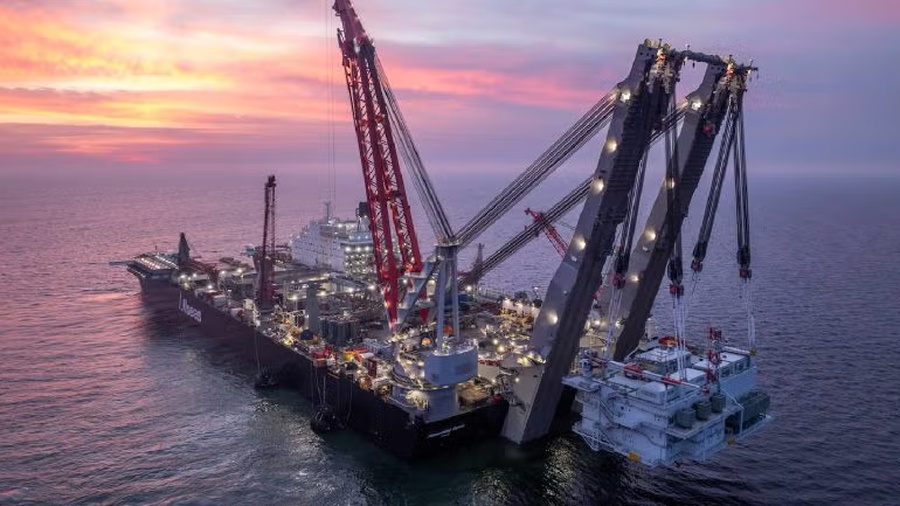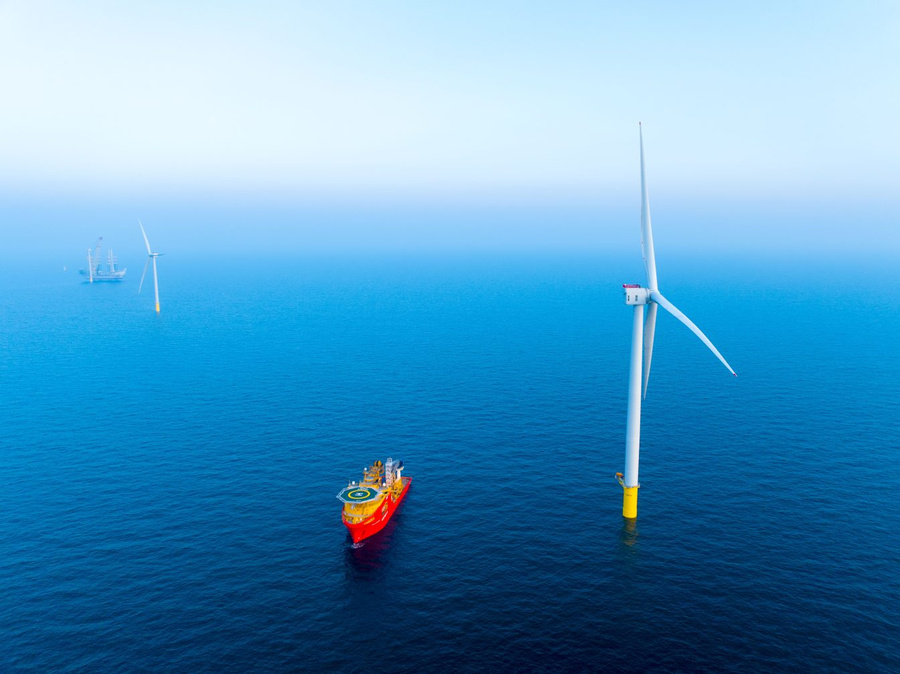
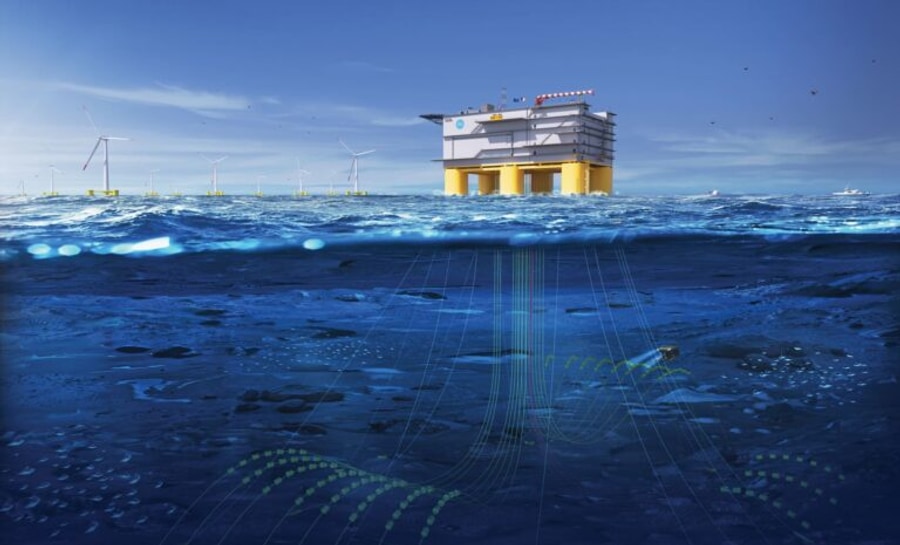
A French consortium has launched the RHODÉ research and development project to prepare floating high-voltage direct current (HVDC) grid connection technology for future deepwater offshore wind farms.
The project brings together Chantiers de l’Atlantique, France Energies Marines, Fondation OPEN-C, GE Vernova, Nexans, RTE and SuperGrid Institute. The partners aim to support the deployment of France’s first 320 kV and 525 kV floating HVDC connections from 2040 onward.
As part of RHODÉ, the consortium will develop and test key technologies needed for high-power floating HVDC connections. The work will also include two floating substation designs, one rated at 320 kV and the other at 525 kV.
The initiative is focused on offshore wind projects in water depths of more than 100 m and located far from shore. In these conditions, fixed-bottom substations may face technical and economic limits.
The project scope includes design work, numerical modeling, laboratory testing, environmental studies, hydrodynamic basin testing, and offshore demonstrations.
RHODÉ has received EUR 16 million in funding from the French State under the France 2030 program operated by ADEME.