Japan is pushing a broader reset of its shipbuilding industry, combining state support, investment and consolidation to restore competitiveness after years of lost ground to China and South Korea.
The country’s yards have continued to hold positions in parts of the commercial vessel market through steady design improvement, reliable contract execution and product quality. Even so, Japan’s share of commercial newbuilding volume has fallen from about 40% in the 1990s to around 10% today. China now accounts for close to 70% of orders by deadweight, while South Korean yards hold about 20%.
In response, Tokyo has raised shipbuilding’s strategic status and set out a long-term recovery plan. The Shipbuilding Industry Revitalization Roadmap targets an annual construction volume of about 18 million gross tons by 2035, while aiming to cut build costs by 10%. The government plans to create a fund of about Yen 350 billion, or $2.2 billion, and support total public-private investment of Yen 1 trillion, equivalent to $6.3 billion, over the next 10 years.
The plan calls for production-site automation through robotics and AI in the first stage, followed by equipment renewal and capacity expansion, before moving to actual production growth in the following phase. The government also sees further integration across the sector as necessary to improve resilience.
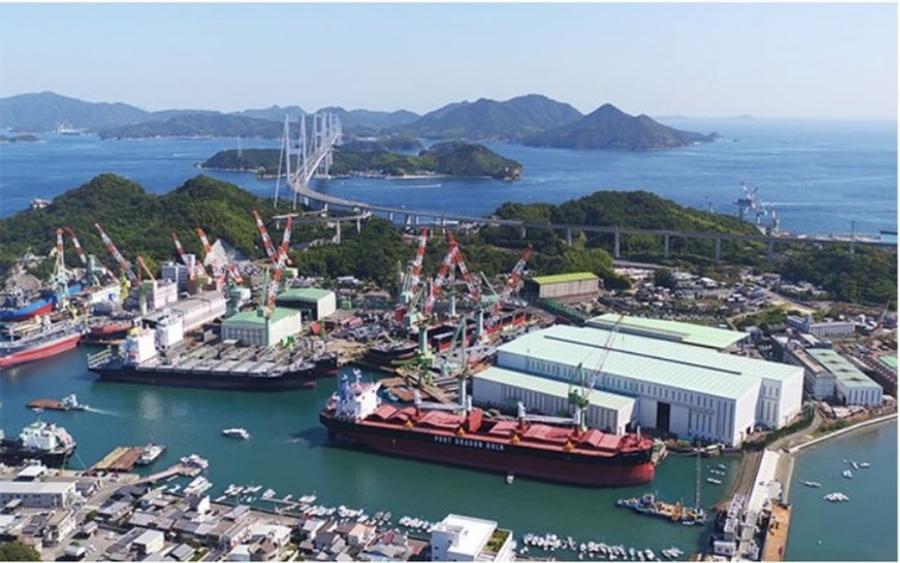
That process is already advancing. Imabari Shipbuilding has raised its stake in Japan Marine United from 30% to 60%, making JMU a subsidiary. The move deepens operating ties between the two groups, which were already linked through Nihon Shipyard, their ship design and project venture. Imabari delivered 65 newbuildings in 2025, totaling about 3.4 million gross tons across multiple vessel types.
Further consolidation came when Tsuneishi Shipbuilding completed the takeover of its joint venture with Mitsui E&S Shipbuilding, bringing Mitsui’s exit from shipbuilding to its final stage. The business now operates as Tsuneishi Solutions Tokyobay, focused on engineering services and support for alternative-fuel and gas-related equipment.
Japan still faces labor shortages, an aging workforce, and higher steel prices than China. But with stronger policy backing and ongoing industry restructuring, the country is trying to strengthen its position in global shipbuilding.