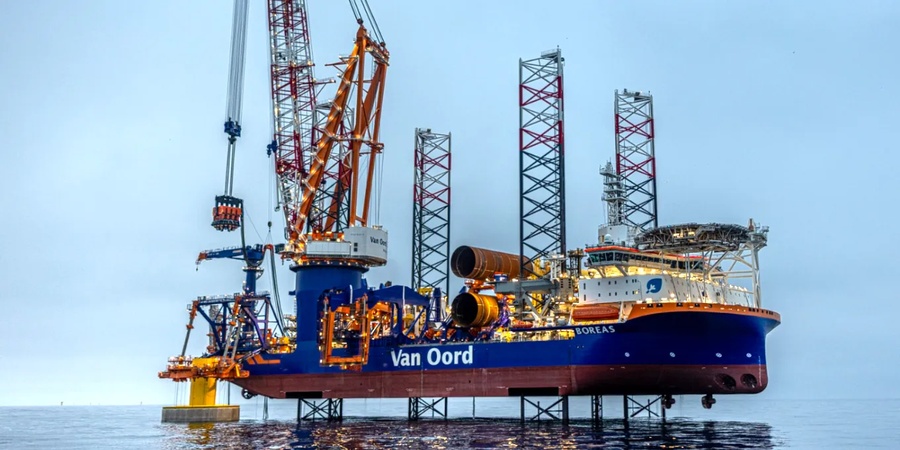
On 9 April 2026, Van Oord completed the installation of three monopile foundations at Ecowende’s Hollandse Kust West wind farm using GBM Works’ jetting system together with CAPE Holland’s vibro lifting technology. The work was carried out with Van Oord’s offshore wind installation vessel Boreas and marked the first commercial-scale use of the combined method.
The installation method was deployed to reduce underwater noise and limit the impact on marine life. GBM Works’ VibroJet® technology combines vibration with controlled water jets inside the monopile to fluidize the soil and reduce resistance during installation. The company said operations were guided by its Fluidflow® prediction model, which supported control under different soil conditions, including the dense sand layers found in the Dutch North Sea.
The VibroJet® work was carried out together with CAPE Holland’s vibro technology, which uses vertical vibrations to temporarily lower soil resistance and allow monopiles to sink under their own weight. According to the companies, the three installations confirmed the method at commercial scale under difficult seabed conditions.
The work also formed part of the wider foundation campaign at Hollandse Kust West. Van Oord said all 52 monopiles for the project were installed using Boreas. Data collected during the vibro and VibroJet® installation works will be used to validate predictive models for underwater sound and pile behavior.
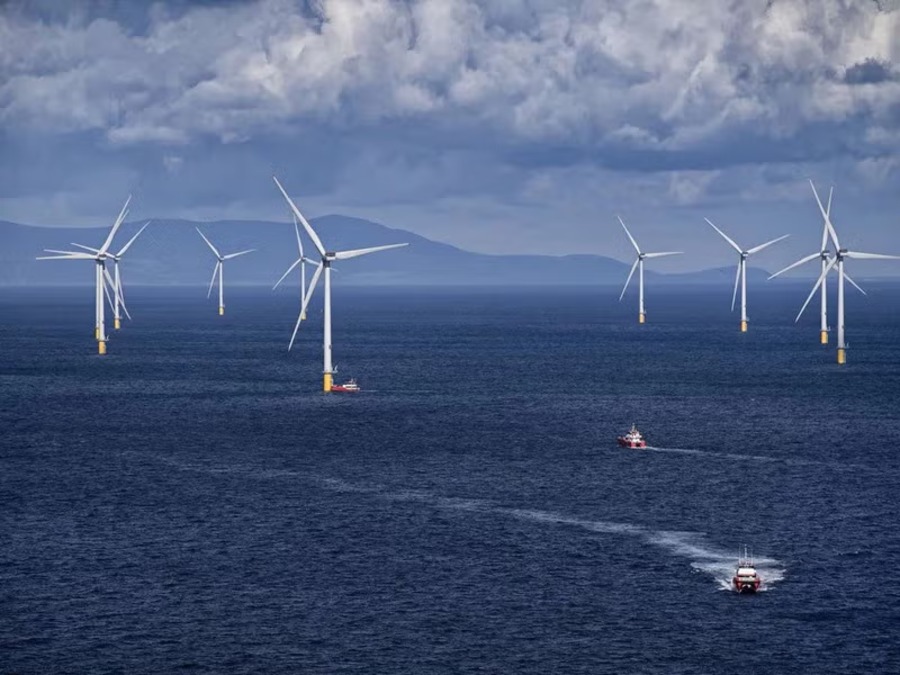
Ecowende, a joint venture between Shell, Eneco and Chubu, is developing the 760 MW offshore wind farm about 53,000 m off the Dutch coast near IJmuiden. The project is expected to supply around 3% of the current Dutch electricity demand, with full commissioning planned by the end of 2026. As a contractor, Van Oord is responsible for transporting and installing the foundations, laying the inter-array cables, and transporting and installing the wind turbines at sea.