Belgium has completed a major offshore construction stage for Princess Elisabeth Island, the artificial energy hub being developed in the North Sea, while the first offshore wind tender connected to the project remains unresolved.
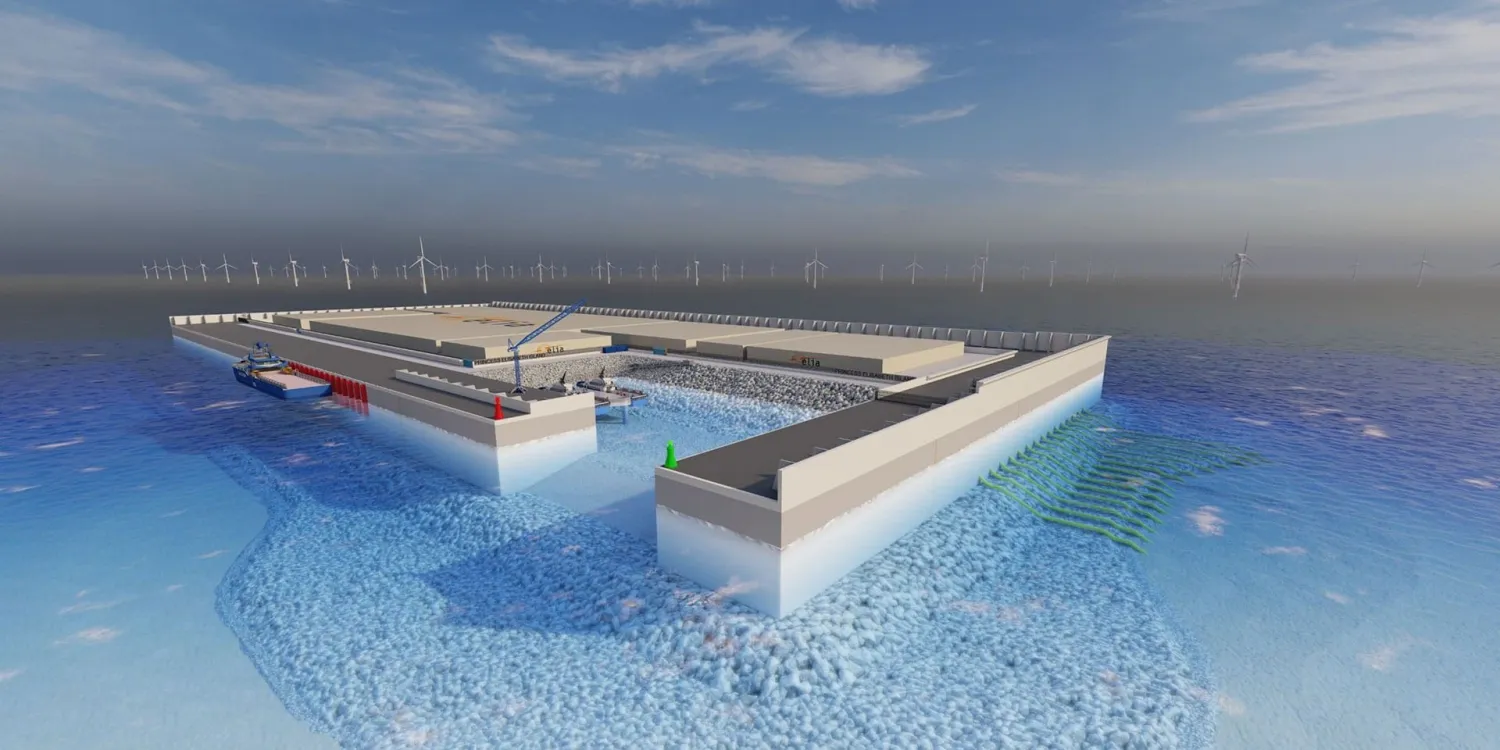
DEME is building the island for Elia, Belgium’s high-voltage grid operator. The facility will connect future offshore wind farms in the Princess Elisabeth Zone to the mainland grid and serve as a central point for switching and power conversion. Its role is also expected to reduce the number of export cables required between the wind farms and shore.
The 2025 offshore campaign ended in mid-September after the final caisson was placed at sea. The island’s outer structure is formed by 23 large concrete caissons. More than 300 workers and 15 specialized vessels were involved in the North Sea campaign.
By January 2026, all 23 caissons had been completed at the Vlissingen yard in the Netherlands and were undergoing final finishing before tow-out and offshore installation. With the onshore production phase completed, the next stage depends mainly on suitable sea conditions.
Offshore installation work is scheduled to restart in spring 2026, subject to weather. Wind and wave limits remain critical for this type of marine construction, meaning poor offshore conditions could affect the completion schedule without changing the project scope.
The tender process has not moved at the same pace. Belgian federal authorities opened the first 700 MW plot in the Princess Elisabeth Zone for tender on 25 November 2024. The process was later put on hold in July 2025 by the country’s Energy Minister.
Following industry consultations, the government published proposed changes to the tender framework in April 2026. Discussions on permit conditions and procedural updates were still ongoing as of April 2026, and no award had been made for the first lot.
This leaves the project on two different timelines. Grid infrastructure construction is progressing through a defined marine works programme, while the process to select the developer of the first wind farm remains open.
Princess Elisabeth Island is intended to support several future offshore wind farms in the Princess Elisabeth Zone. Possible interconnector links with neighboring countries also give the project a wider North Sea energy network role.
For the maritime supply chain, the project continues to support demand for heavy marine construction, specialized vessels, offshore crews and installation equipment. Contractors and vessel owners are working toward the spring 2026 offshore restart, while wind developers continue to wait for regulatory clarity.
Belgian authorities have not confirmed when the first offshore wind tender will be formally relaunched or awarded.