China is expanding its reach in global shipbuilding as a broad renewal cycle for older vessels lifts demand for new tonnage, increasing pressure on South Korea’s position in higher-value segments.
A market outlook from Arrow Shipbroking Group said 46,000 vessels are expected to be ordered worldwide over the next 15 years, with the order cycle likely to reach its high point in the mid-2030s. Ships delivered during the 2009–2012 boom are now moving into replacement age, while geopolitical instability is accelerating logistics realignment and prompting some owners to place orders sooner.
Tighter supply is reinforcing that trend. Current production capacity implies a global order backlog of more than four years. Small LPG carriers, small and midsize container ships, and large LNG carriers are already facing limited availability. Replacement demand is also growing for large bulkers and tankers, while seaborne trade is projected to rise 10% by 2030.
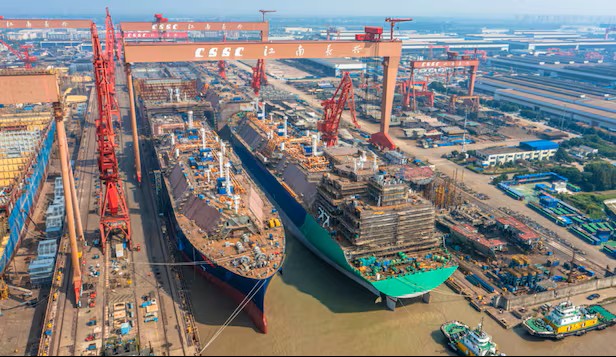
China is moving aggressively to meet that demand. Its annual building capacity, estimated at about 20 million CGT in 2024, is expected to increase to 35 million CGT by 2028, close to the current global capacity of 40.5 million CGT. South Korea, by comparison, is expected to produce 11.17 million CGT this year and remains cautious on major facility expansion because of restructuring after a prolonged downturn and ongoing labor shortages.
That capacity buildout is feeding directly into market share. Of the 5.21 million CGT ordered worldwide in February, Chinese yards secured 4.15 million CGT, equal to 80%, while South Korea took 570,000 CGT, or 11%. China also accounted for 62% of the global backlog of 183.56 million CGT last month, compared with South Korea’s 20%. In crude tankers, Chinese yards won 69 of the 91 vessels ordered globally in January and February.
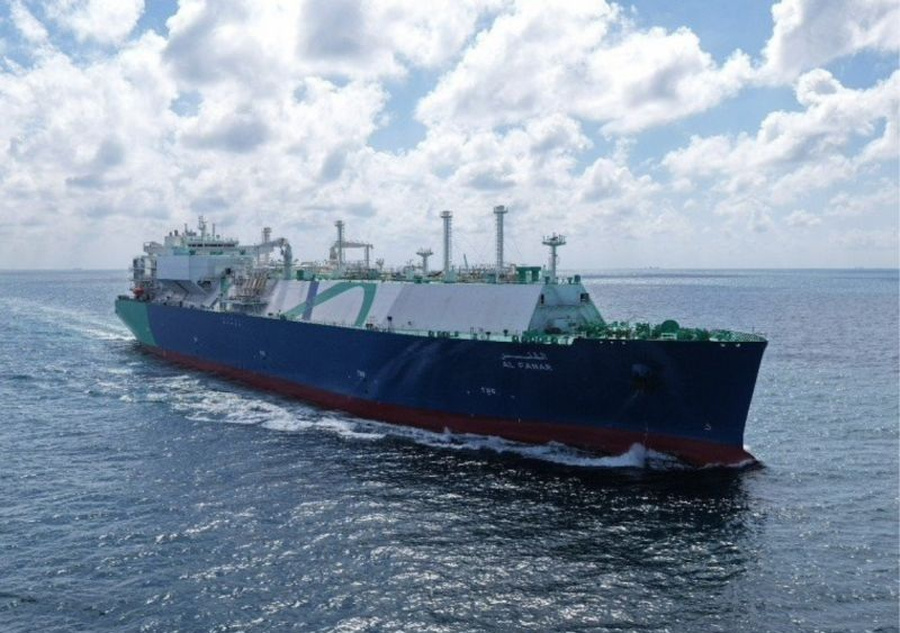
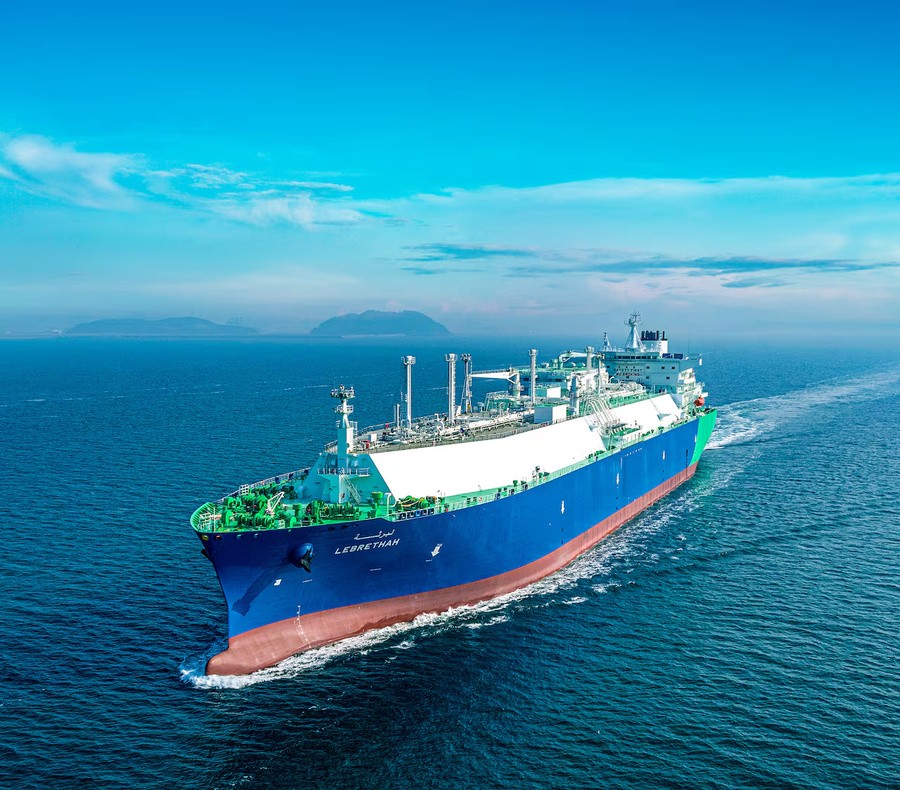
The competitive gap is narrowing even in LNG carriers, where South Korean builders have long held an advantage. In January, Jiangnan Shipyard won an order from East Pacific Shipping for two 175,000-cubic-meter LNG carriers, while Hudong-Zhonghua Shipbuilding secured six 174,000-cubic-meter vessels from TMS Cardiff Gas. TMS Cardiff Gas, a repeat LNG carrier customer of Korean yards, placed such an order in China for the first time. East Pacific Shipping also selected China for its first LNG carrier order.
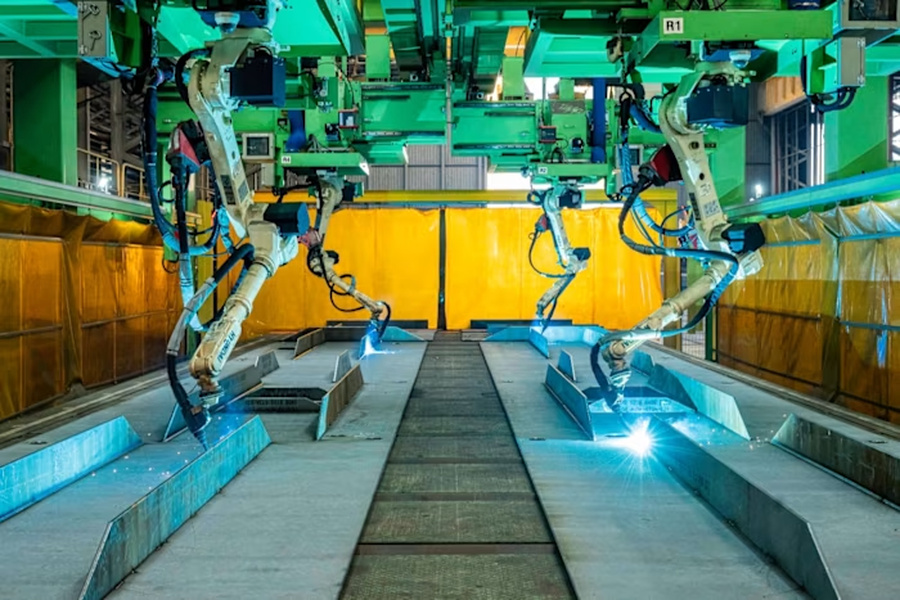
Chinese builders are offering large LNG carriers at prices about 10% below Korean levels. Delivery performance is also improving, with Hudong-Zhonghua Shipbuilding said to have reduced LNG carrier construction time from 36 months to 16 months through the localization of key equipment.
The shift is raising concern in South Korea that technology leadership alone may not be enough unless it is maintained in core ship types and backed by a broader order-winning strategy.