Two U.S. senators have introduced bipartisan legislation aimed at preventing Chinese and Russian government-linked vessels from conducting research operations in U.S. Arctic waters, citing growing security concerns in the region.
The Arctic Security and Diplomacy Act, introduced by Republican Senator Mike Lee and Democratic Senator Jeanne Shaheen, would prohibit vessels connected to adversarial nations from carrying out research activities within the U.S. Exclusive Economic Zone (EEZ) and on the U.S. continental shelf.
According to the lawmakers, the measure is intended to address concerns that survey and scientific missions could be used to support espionage or intelligence-gathering activities in strategically important Arctic waters.
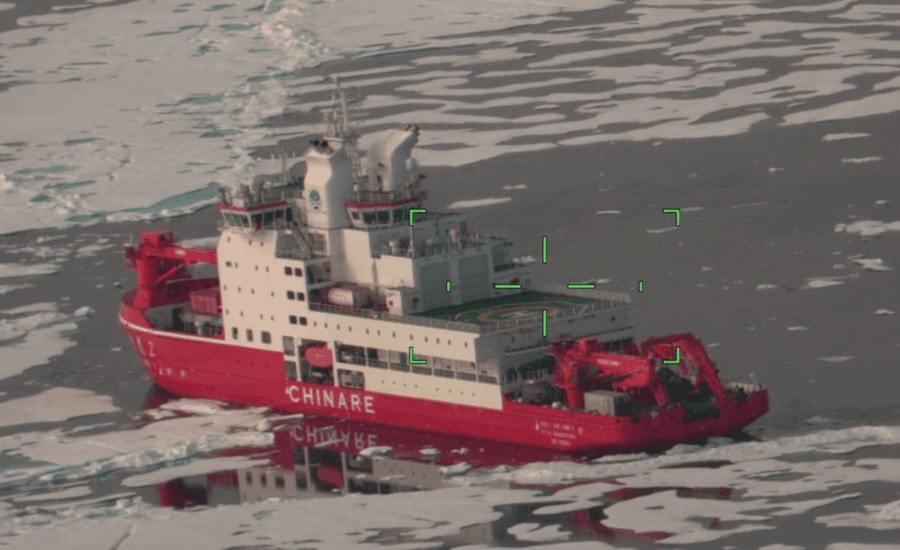
The proposal follows an increase in Chinese research vessel activity near Alaska. In August 2025, the U.S. Coast Guard reported monitoring five Chinese research vessels operating in or near the U.S. Arctic, including the polar icebreaker Xue Long 2.
Maritime security experts have noted that seabed mapping, hydrographic surveys and oceanographic research can generate data with both civilian and military applications.
During the 2025 Arctic season, Chinese vessels operating near U.S. waters conducted submersible operations and deep-water research activities. Such missions can improve understanding of underwater terrain, communications infrastructure and submarine operating environments.
The legislation also reflects concerns over expanding cooperation between China and Russia in the Arctic. In 2024, four Russian and Chinese vessels carried out joint operations near Alaska and transited the Bering Strait on multiple occasions.
Russia controls more than half of the Arctic coastline and has continued to develop military infrastructure across its northern territories. China has expanded its fleet of icebreakers, research vessels and other ships capable of operating in polar regions.
The U.S. Coast Guard currently relies primarily on the icebreakers Healy and Storis to maintain its Arctic presence and monitor foreign vessel activity near Alaska.
To strengthen long-term capabilities in the region, the service is pursuing a future fleet of Arctic Security Cutters designed to provide a more persistent U.S. presence in the Arctic.
The proposed legislation is scheduled to be considered by the Senate Committee on Foreign Relations on 17 June.