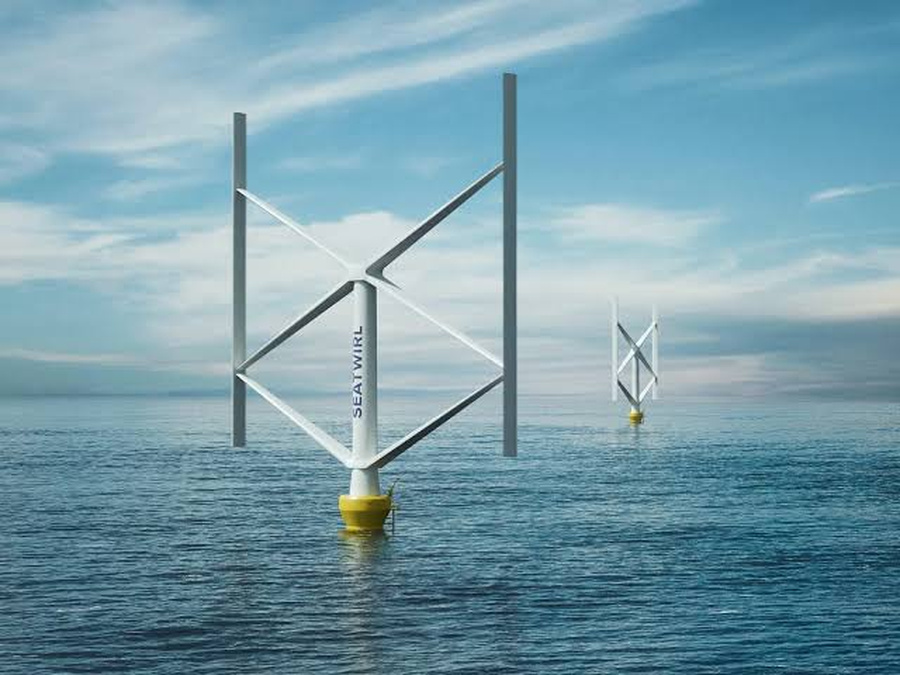
The VERTI-GO basic design is complete for SeaTwirl’s 2 MW floating vertical-axis offshore wind turbine, and work is moving into detailed design. The next phase is intended to establish the technical basis for a final investment decision (FID). That decision will also depend on a grid-connected test site and the remaining funding, according to SeaTwirl. The company’s announcement says the turbine is intended to be fabricated, installed and operated at sea.
The design sets out the turbine’s major components, dimensions and interfaces. Engineers also considered how to use existing infrastructure and equipment for manufacturing and installation. Björn Fagerström, who leads engineering for VERTI-GO, said the design limits the number of systems to reduce complexity and maintenance, while keeping installation flexible and avoiding dependence on expensive crane vessels.
SeaTwirl gave the documentation to project coordinator University College Cork, which submitted it to the European Climate, Infrastructure and Environment Executive Agency (CINEA) on 29 September 2026. CINEA does not formally approve the basic design. At the time of the company’s announcement, it had not requested changes or additional information.
The planned turbine’s 2 MW capacity is almost 70 times the rated capacity of SeaTwirl’s 30 kW S1 prototype. S1 was deployed off Lysekil in 2015 and decommissioned in November 2025. VERTI-GO brings together 11 partners from nine countries and has received approximately EUR 15 million from Horizon Europe, about half allocated to SeaTwirl. The Swedish Energy Agency has also approved transferring just over SEK 38 million in remaining S2x grant funding to the project.
VERTI-GO’s construction and operations phase is planned to run until the end of 2029.