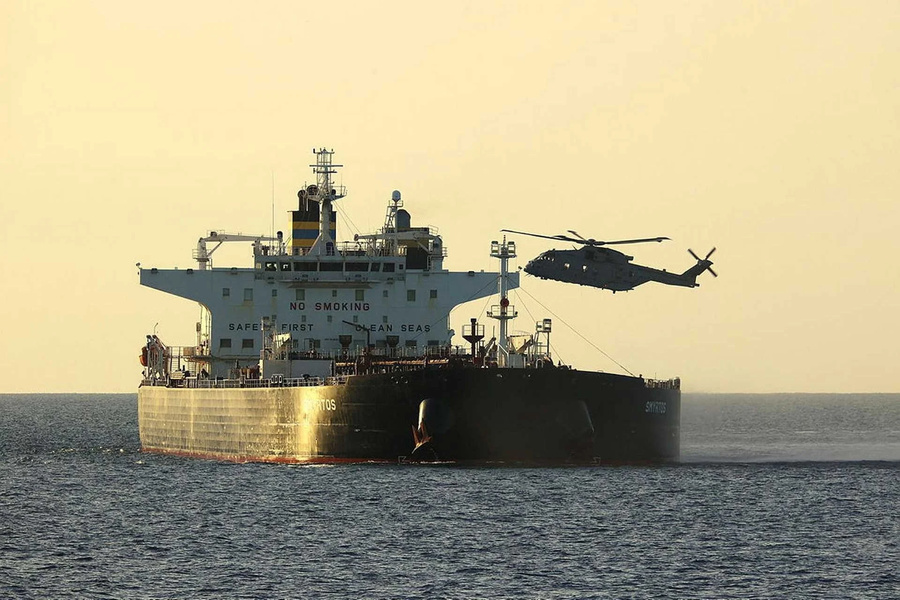
More commercial vessels have been attacked in the Strait of Hormuz as negotiations over the Middle East conflict remain stalled and the United States prepares additional economic measures against Iran.
UK Maritime Trade Operations said on Saturday that it had received a report of a projectile striking the hull of a bulk carrier.
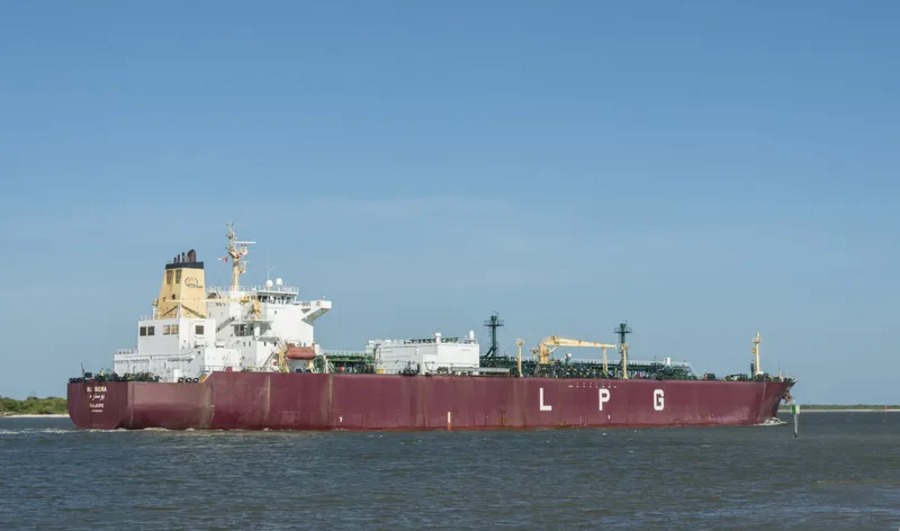
Two vessels operated by Abu Dhabi National Oil Co. were struck while transiting the Strait of Hormuz on Thursday. Another Abu Dhabi National Oil Co. vessel was hit on Friday evening, according to reports from the United Arab Emirates’ state-run WAM news agency. No injuries were reported.
About one-fifth of the world’s oil and gas transited the Strait of Hormuz before the war. The waterway has become a central issue in efforts to reach an agreement after almost six months of fighting.
The United States is seeking the restoration of free passage through the route linking the Persian Gulf with the Gulf of Oman and the Arabian Sea, while Iran has said it intends to retain control of the strait.
Brent crude rose almost 6% during the week as expectations of a rapid resolution to the deadlock weakened and disruption to oil and other commodity flows continued.
As of 11 August, about 65 confirmed incidents involving vessels had been recorded in the Strait of Hormuz and the wider Middle East during the conflict, according to the International Maritime Organization. Seventeen seafarers had died.
The conflict began on 28 February when the United States and Israel launched air strikes against Iran. Thousands of people have since been killed, most of them in Iran.
US President Donald Trump told Fox News on Friday that Washington planned to increase economic pressure on Iran. In a separate speech on Long Island, Trump said a US blockade of Iranian ports had allowed Washington to effectively govern the Strait of Hormuz.
Iran and Oman have continued technical talks over the establishment of a shipping route through the waterway. The United States is not participating in those discussions.
Iranian Foreign Minister Abbas Araghchi said the technical talks with Oman were continuing and could be concluded soon. He said, however, that an agreement would not itself lead to the reopening of the strait.
Araghchi also said Qatar and Pakistan were passing messages between Tehran and Washington, but added that Iran had not decided to resume negotiations with the United States.
US Treasury Secretary Scott Bessent said in a Newsmax interview on Thursday that further economic measures against Iran would be announced the following week. He did not specify what those measures would include.
Iran’s industrial capacity has been damaged during the conflict, while its crude exports have been severely reduced by the US blockade. Previous sanctions have not forced Iran to change its position on its nuclear programme or relinquish control of the Strait of Hormuz.