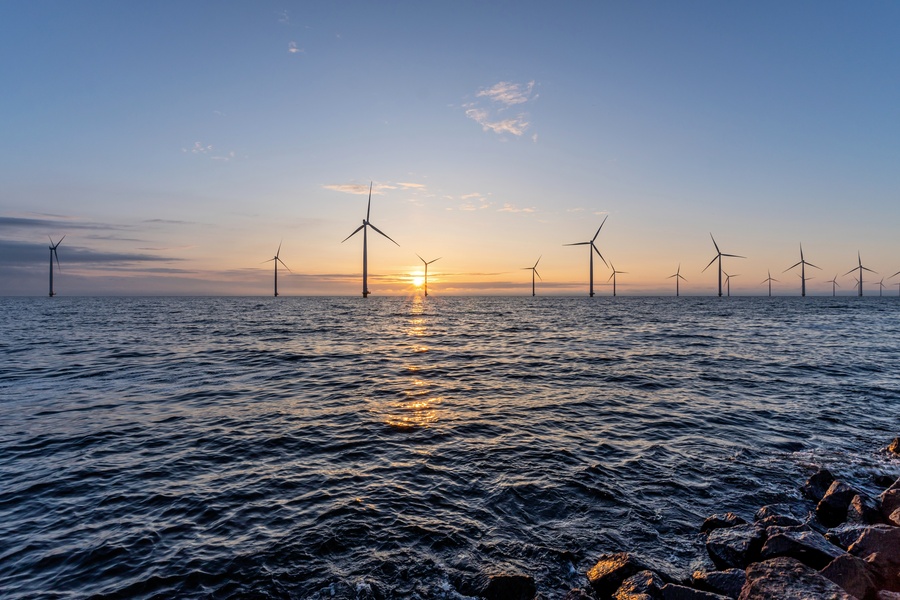
Japan is progressing plans to develop a large-scale floating offshore wind farm near the Izu island chain, targeting at least 1 GW of installed capacity by 2035.
The project is intended to supply electricity to both the island communities and the Tokyo mainland. While its installed capacity would be comparable to a single nuclear reactor, actual output would vary due to wind conditions and lower capacity factors typical of offshore wind.
If realized, the development would become the largest floating offshore wind farm globally, significantly exceeding Norway’s current leading project, which operates below 100 MW.
Since fiscal 2025, the Tokyo Metropolitan Government has been engaging with residents, fisheries and shipping stakeholders across key island municipalities, including Oshima, Niijima, Kozushima, Miyake and Hachijo.
To advance the next phase, the fiscal 2026 budget has been increased to ¥2.7 billion ($17 million). The funding will be allocated to wind resource assessments, seabed soil investigations and subsea cable routing studies.
Upcoming field surveys will focus on seabed conditions, weather patterns and marine environments, forming the basis for future commercial tendering.
Floating offshore wind turbines are installed on buoyant platforms secured by mooring systems rather than fixed foundations. This approach enables deployment in deeper waters, such as the 100 m to 200 m depths identified in the project area. It may also reduce seabed disruption compared to conventional bottom-fixed installation methods.
Electricity generated offshore would be transmitted via high-voltage subsea cables, linking the offshore site with island grids and the Tokyo mainland network.
The initiative supports Japan’s broader target of achieving 45 GW of offshore wind capacity by 2040 and its net-zero emissions goal by 2050. Strong wind conditions in the Izu region are considered favorable for long-term generation.
However, the project remains at an early development stage. The Izu area is currently classified as a preparation zone, and some analysts have raised concerns over the feasibility of the 2035 timeline, noting that offshore wind developments often require more than a decade to reach operation.
Investment risk is another factor. In 2025, Mitsubishi Corp. withdrew from major offshore wind projects in northern Japan, citing increased material costs and currency pressures.
Technical challenges are also significant. Turbines and floating platforms must be engineered to withstand typhoons, strong ocean currents and seismic activity. Grid integration, variability management, environmental impact and access to fishing areas are also under review.
Government estimates indicate the project could supply electricity to approximately 850,000 households. In addition, platform fabrication is expected to provide opportunities for Japanese shipyards and support employment in coastal regions.