Equinor aims to bring the Grimsnes discovery in the North Sea on stream within a three-year period, using a subsea connection to the Oseberg Sør platform. The company and its partners, Petoro and TotalEnergies, estimate recoverable resources at 19–50 million barrels of oil equivalent.
Under the planned Grimsnes development, production would flow through the existing Stjerne subsea installation to Oseberg Sør. The likely configuration comprises two or three wells using a standard four-slot subsea template.
The partners could decide on investment next summer at the earliest, according to Gunnar Nakken, Equinor’s senior vice president for projects and subsea on the Norwegian continental shelf. Procurement of subsea production equipment is planned for early next year, ahead of project sanction. Standardised equipment could be assigned to another development if the partners or authorities do not approve Grimsnes.
The schedule forms part of Equinor’s effort to cut subsea development costs and the interval between discovery and production by half. The company intends to simplify project execution, reuse designs and apply industry standards more widely. It also intends to make greater use of development planning before the start of exploration drilling.
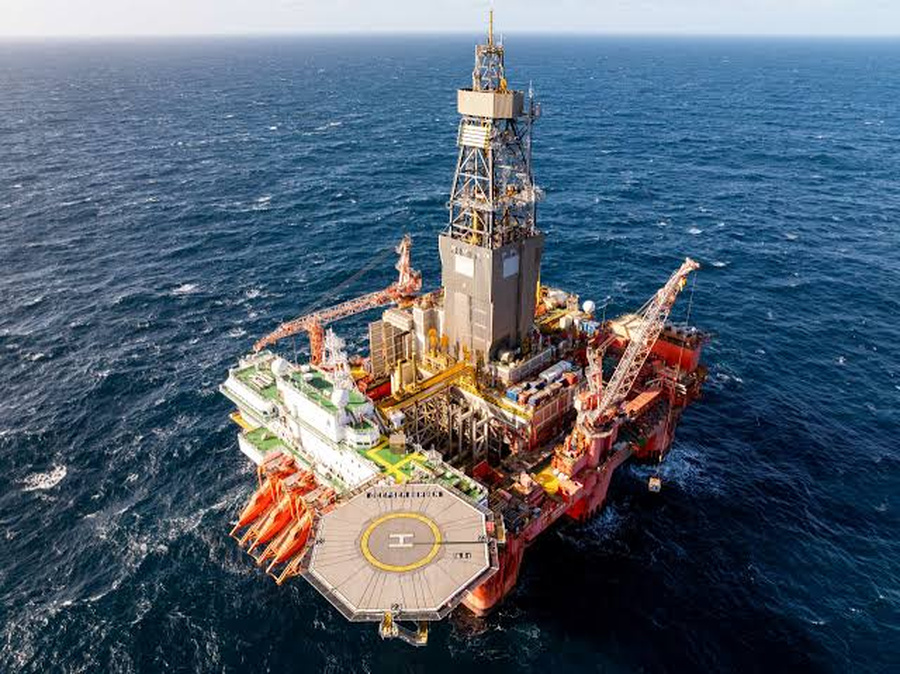
The Grimsnes find was made by the Deepsea Bergen semi-submersible at exploration well 30/8-7 S in production licence PL 190. The location is approximately 15 kilometres southwest of Oseberg Sør, in 96 metres of water. The estimated resource range is also expressed as 3–8 million standard cubic metres of oil equivalent.
According to the Norwegian Offshore Directorate, the principal target was the Middle Jurassic Tarbert Formation, with the Ness and Etive formations designated as secondary targets. Tarbert contained a 39-metre gas column and a 15-metre oil column. Of the formation’s 264-metre thickness, sandstone accounted for 111 metres, with reservoir quality rated moderate to good.
The Ness interval contained 289 metres of sandstone, whose reservoir quality varied between poor and very good. It was water-bearing, although some zones potentially contained hydrocarbons. Etive contained 10 metres of water-bearing sandstone; its reservoir quality was assessed as moderate.
Drilling ended in the Lower Jurassic Drake Formation at a vertical depth of 3,752 metres below sea level. Extensive data and samples were collected. The well was permanently plugged and abandoned. Deepsea Bergen is scheduled to move to Visund Sør for development drilling.
PL 190 has now had five exploration wells. The licence was awarded in Norway’s 14th licensing round in 1993. Equinor Energy operates the licence with a 50% interest, alongside Petoro with 40% and TotalEnergies EP Norge with 10%. The licence also contains Tune, which started producing in 2002.
Oseberg Sør began production in 2000. Its steel-jacket platform houses production and drilling facilities together with living quarters and receives production from three subsea installations: J, K and Stjerne. Oil is routed to Sture terminal via the Oseberg field centre and the Oseberg transport system.
Equinor plans 200 exploration wells near existing fields and approximately 75 subsea projects towards 2035. Its Norwegian continental shelf production target for that year is 1.3 million barrels of oil equivalent per day, with approximately 70% expected from newly drilled wells and new development projects.