deugro has completed the transport of nearly 110 km of 132 kV CTS submarine cables from China to the Port of Jazan, Saudi Arabia, for the Farasan–Madayah Submarine Cable Project.
The shipment was coordinated by deugro China, which served as the project control tower, together with deugro Saudi Arabia, deugro Chartering and dteq Transport Engineering Solutions.
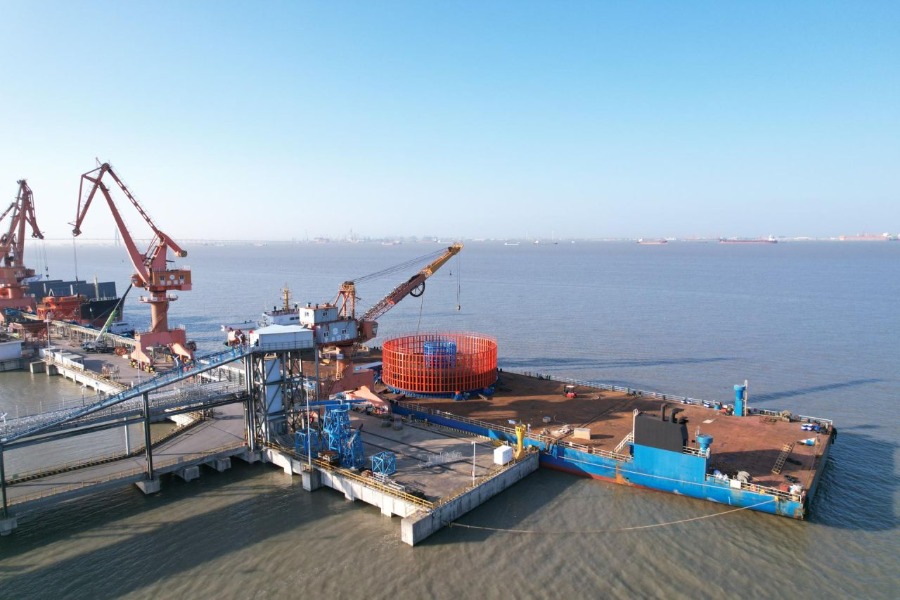
The cables were collected at the Port of Changshu in China. The transport required a deck carrier with sufficient deck space and structural capacity for the cables and cable carousel, which together weighed more than 5,380 tonnes. The required cargo arrangement included dimensions of 25 x 25 x 9.6 m.
deugro China worked with deugro Chartering to secure a suitable vessel within the project schedule. A deck carrier meeting the required technical and deck-space requirements was subsequently chartered despite limited vessel availability.
Engineering work then focused on installing the cable carousel and preparing the vessel for both the sea passage and cable spooling operations. dteq Transport Engineering Solutions provided local engineering support in China, while personnel from deugro China and dteq Transport Engineering Solutions supervised the installation and coordinated with the vessel owner, contractors, engineering specialists and cable supplier.
A review of the longitudinal strength calculations identified an issue with the proposed loading condition. The concentrated weight of the submarine cable placed the original calculation outside the specified acceptance criteria.
In coordination with the barge design institute, the allowable still-water bending moment and shear force values were reassessed to reflect the actual loading arrangement. Following the revised calculation process, the overall longitudinal strength was verified against the applicable transport safety requirements.
The engineering team also addressed concentrated loads on the local deck structure. Small steel shims were installed beneath cable support areas so that the loads could be transferred to the deck longitudinal girders and transverse beams. This distributed the load across multiple structural points and kept local deck stresses within the permitted limits.
The steel shims created steel-to-steel contact, reducing horizontal friction at the support points. Sea-fastening calculations were therefore reviewed and the amount and arrangement of lashing material were adjusted to provide the required resistance to sliding and overturning caused by vessel motion.
Additional modifications were made to the A-type stoppers used to restrain the circular carousel. Steel plates were fitted at the contact areas to increase the bearing surface and reduce concentrated stresses on the stoppers and carousel.
Carousel installation was completed over 15 days by a 30-person team. The deck carrier then moved to the cable supplier’s loading terminal, where the cables were spooled directly from the quayside onto the carousel.
The loading operation continued around the clock under the supervision and coordination of local deugro and dteq Transport Engineering Solutions personnel. After 10 days of spooling, the cables were secured for the sea voyage and the vessel departed for Saudi Arabia on schedule.
Following arrival at the Port of Jazan, deugro Saudi Arabia coordinated the delivery of the cables in line with the project schedule, allowing the planned cable-laying activities to proceed.