Boskalis reported revenue of EUR 1.90 billion and EBITDA of EUR 553 million for the first half of 2026, down from EUR 2.35 billion and EUR 748 million respectively a year earlier. Net profit fell to EUR 275 million from EUR 426 million.
Offshore Energy remained an important contributor during the period. Major offshore wind projects supported Contracting, while Subsea Cables benefited from installation work in Europe and North America. Marine Services also performed well.
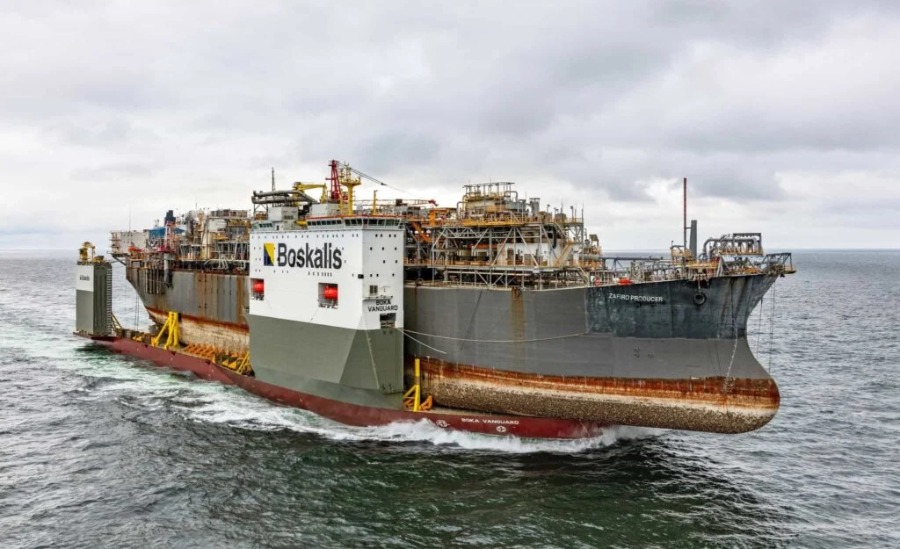
Conditions were more difficult for Heavy Marine Transport, Subsea Services and Marine Survey. Boskalis said unrest in the Middle East and the effective closure of the Persian Gulf had a particular impact on Marine Survey and also affected Heavy Marine Transport.
Fleet investment continued during the half year. Boskalis invested EUR 249 million, mainly in fleet renewal and strategic assets. The new 31,000-cubic-metre trailing suction hopper dredger Seaway entered service after completing sea trials.
The converted 45,500 t subsea rock installation vessel Windpiper also began its first project in the Baltic Sea. Boskalis is also planning a high-capacity cable-laying vessel with two 12,000 t cable carousels, with entry into service expected in 2029.
Dredging & Inland Infra was affected by lower fleet utilisation, particularly in Asia and the Middle East. The company also said conditions in the Middle East disrupted operations and affected project awards.
Towage & Salvage recorded a weaker first half, mainly because Salvage handled relatively few emergency response contracts. Towage activity remained broadly stable, supported by long-term contracts.
The order book stood at EUR 6.8 billion at the end of June, compared with EUR 7.0 billion at the end of 2025. Growth in Dredging & Inland Infra was offset by a lower Offshore Energy order book as major projects moved further through execution and completion.
At the end of June, Boskalis had net cash of EUR 862 million, including lease liabilities. Around EUR 1.4 billion of financing remained available, while the solvency ratio was 57%.
For the second half of 2026, Boskalis expects EBITDA to remain around the level achieved in the first six months, provided there are no unexpected developments.