Norwegian investment bank DNB Carnegie has suggested that Maersk Offshore Wind may eventually withdraw from the offshore wind turbine installation market following its recent decision to terminate a major newbuild vessel order with Singapore’s Seatrium.
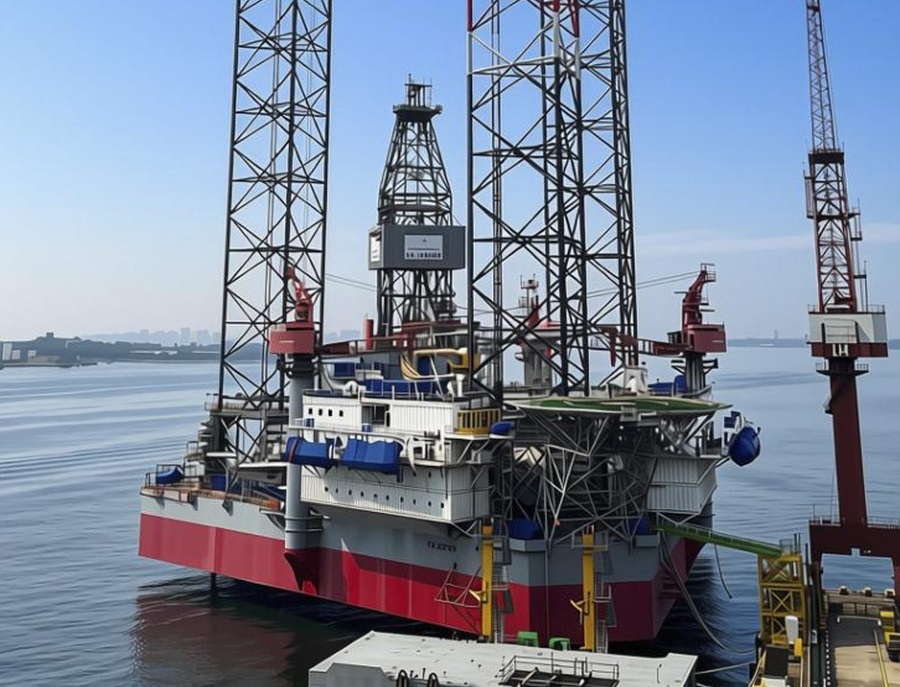
The cancelled order concerned a Wind Turbine Installation Vessel (WTIV) originally commissioned for use in the Empire Wind project, jointly developed by Equinor and BP off the U.S. East Coast. The vessel, valued at approximately US$475 million, was reportedly 99% complete when the contract was terminated earlier this month.
According to DNB’s market note, the project’s financial and operational viability has come under pressure after multiple offshore wind developers in the U.S. scaled back projects due to rising costs and permitting delays. Analysts at DNB Carnegie said it would be “logical for Maersk to reconsider its offshore wind strategy” given the current vessel oversupply and margin compression in the global installation market.
The vessel had been ordered from Seatrium’s yard in Singapore and was scheduled for delivery in late 2025. Following Maersk’s withdrawal, Seatrium stated it is evaluating legal options to recover losses and is exploring potential buyers for the nearly completed ship.
Maersk Offshore Wind, part of the A.P. Moller Group, had entered the offshore wind installation segment with ambitions to become a key player in the U.S. and European turbine market. However, the current market slowdown—driven by inflation, component price hikes, and reduced developer spending—has reshaped project economics across the sector.
DNB’s analysis notes that exiting the WTIV segment could allow Maersk to focus on more stable service lines, such as operations, maintenance, and logistics support for existing offshore wind farms. The bank emphasized that the move would be “strategically sound” in light of the market’s capital intensity and uncertain near-term demand outlook.
Industry observers now expect a reshuffling of competition in the turbine installation market, with Asian yards and European operators reassessing newbuild plans for 2026–2028.