DEME has secured a Zeevonk turbine installation contract to transport and install 69 wind turbines at the first phase of the offshore wind farm in the Dutch North Sea, adding to its earlier foundation installation award for the same project.
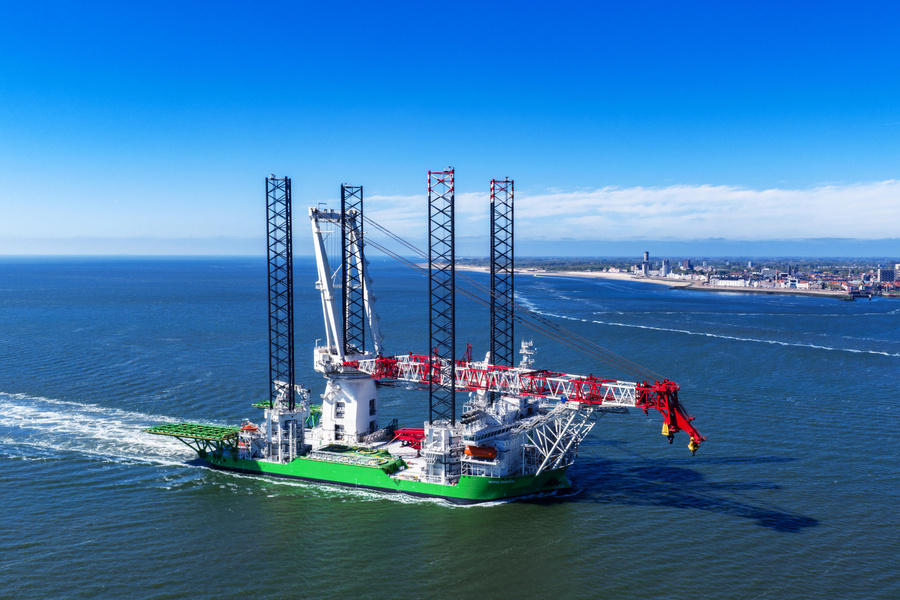
The Belgian offshore contractor will deploy its jack-up vessel Norse Energi for the turbine installation campaign. The contract was announced on 14 October 2026, although its financial value was not disclosed.
Zeevonk is being developed jointly by Vattenfall and Copenhagen Infrastructure Partners (CIP). The first phase is planned to have approximately 1 GW of installed offshore wind capacity, with 69 turbines to be installed under the new contract.
Norse Energi is designed for the transport and offshore installation of large wind turbines. Its carrying capacity allows multiple turbine sets to be transported in a single voyage, reducing the number of trips required between the loading port and the installation site.
The vessel is also fitted with a hybrid power system incorporating a 4.2 MWh battery. According to Vattenfall, the battery will help manage peaks in onboard power demand and reduce the load on diesel engines, with the aim of lowering fuel consumption and emissions during installation operations.
Preparations for the installation campaign are expected to begin in 2028, followed by offshore turbine installation. Completion of the first phase is currently targeted for 2029.
The new award extends DEME‘s scope at Zeevonk beyond the foundation works secured in July 2026. That earlier contract includes intermediate transport and marshalling of foundation components, transport and installation of 69 monopiles, and installation of a filter layer for scour protection.
For the foundation programme, DEME plans to deploy its offshore installation vessel Orion to install the monopiles. A separate jack-up vessel will support the installation of secondary steel structures, while a fallpipe vessel will undertake scour protection work.
The monopiles will be manufactured by EEW Special Pipe Constructions at Rostock in Germany. Zeevonk will use a transition piece-less foundation design, allowing turbine towers to be mounted directly on the monopiles without separate transition pieces. The manufacturing contract was detailed in HMT News’ report on the 69 Zeevonk monopiles.
The Zeevonk offshore wind site is located between 63 and 84 kilometres from Bergen aan Zee on the Dutch coast and covers approximately 650 square kilometres.
The development is planned in two phases. Phase 1 is scheduled for completion in 2029, while a second phase is planned for 2032, adding approximately 1 GW of offshore wind capacity and 500 MW of system integration capacity. The wider development plans also include an electrolyser at the Port of Rotterdam for hydrogen production.
Despite the award of both foundation and turbine installation contracts, Zeevonk remains subject to a final investment decision. The announced mobilisation and completion dates therefore remain part of the project’s current planned schedule.