Japan and the United States are advancing joint development of AI shipbuilding robotics, with planned testing of robotic technologies on a large-scale ship hull mock-up at the University of Michigan and further work on sensors and production-process simulation.
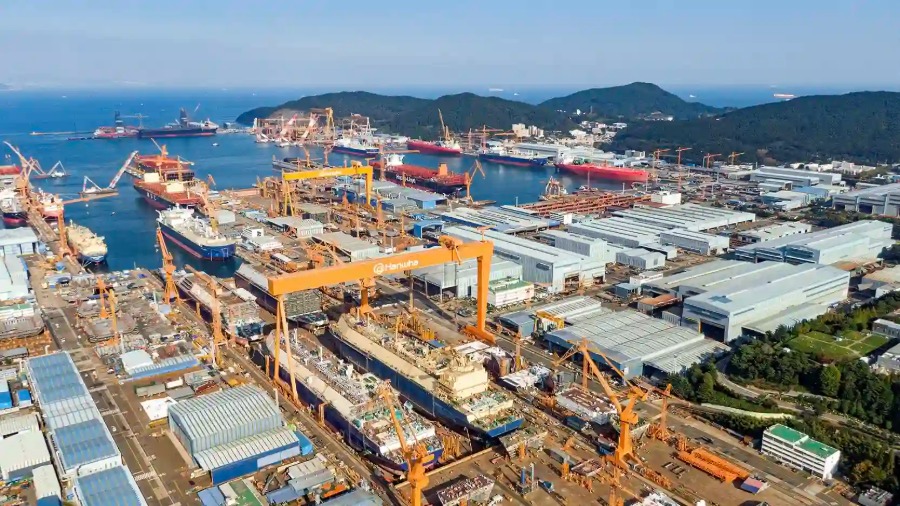
A Japanese development team visited Ann Arbor, Michigan, from 8 to 11 September to discuss the next stage of the program with its U.S. counterparts. The two sides confirmed plans to develop and validate robotics technologies using the hull mock-up, jointly develop high-precision sensors for shipbuilding robots, and demonstrate a simulation platform using actual shipyards in Japan and the United States.
The simulation work will recreate shipyard environments in virtual space to verify robot operations before application at actual yards. The September meetings also included workshops in Detroit and Ann Arbor involving government, academia and industry representatives. Japan’s Ministry of Land, Infrastructure, Transport and Tourism said 12 U.S. AI and robotics-related startups expressed interest in participating in the R&D program.
U.S. participants listed by MLIT included the University of Michigan, Fraser Shipyards, Huntington Ingalls Industries (HII) and Path Robotics, along with the U.S. Department of Commerce and the State of Michigan. Japanese participants included universities, research bodies and companies such as MTI, Namura Shipbuilding, Kawasaki Heavy Industries and Daihatsu Infinearth.
The bilateral project formally began in July, when a U.S. team from the University of Michigan, MIT and the American Bureau of Shipping visited Japan. The teams agreed on a development schedule aimed at establishing an AI simulation platform capable of incorporating actual ship hull blocks and shipyard environments to evaluate robot operations and related production processes. Demonstrations at shipyards in both countries were also discussed.
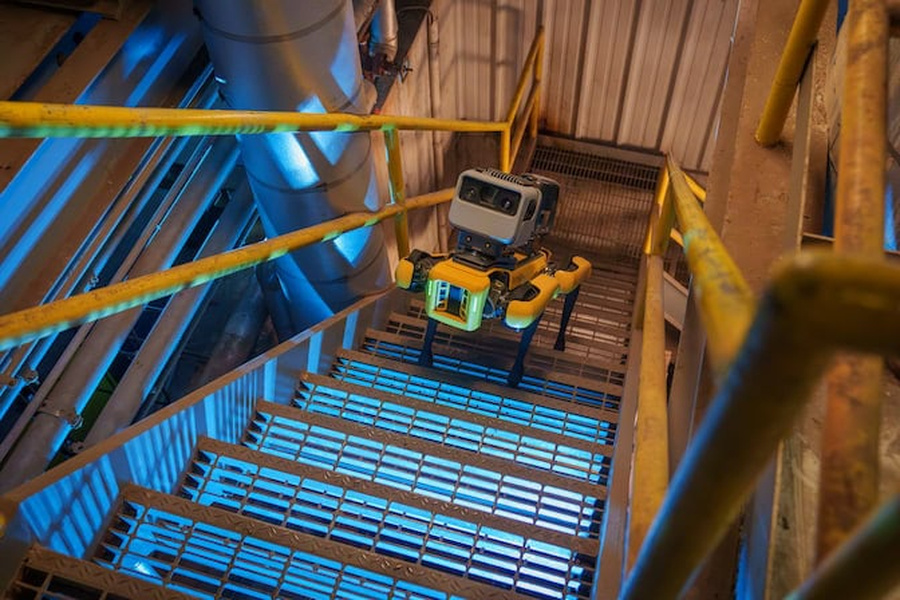
A related U.S. research effort led by University of Michigan Engineering is supported by a $6.2 million grant from Japan’s MLIT. That part of the program focuses on autonomous robots and AI systems that can collect LiDAR and camera data from ships under construction, build a digital representation of the as-built structure and compare it with the intended design. The system is intended to identify mismatches and provide information that workers can use when deciding how to adjust construction work.
The U.S. researchers will test the technology with a reconfigurable physical ship section known as the Shipbuilding Test Block. The University of Michigan team is working with MIT, while complementary Japanese research projects are being led by Yokohama National University, Osaka University, Osaka Metropolitan University and the National Maritime Research Institute.
The broader work forms part of Japan’s BRIDGE program for technology development toward next-generation shipyards using AI. Official program documents cover research into AI plate-bending robots, autonomous mobile AI welding and painting robots, AI welding and quality-inspection robots, AI surface-preparation robots, general-purpose AI collaborative robots and AI ship-interior cleaning robots. Separate work covers an AI production-process simulation platform, AI-assisted design systems and an AI worksite management system.
The National Maritime Research Institute selected 14 R&D projects under the program in March. Japan Maritime Daily reported that the selected work includes an AI plate-bending robot project proposed by Japan Marine United and several Japanese universities and shipbuilders, as well as an AI production-process simulation project proposed by MTI, Japan Marine United, Imabari Shipbuilding, Shin Kurushima Dockyard and three Japanese universities.
A separate Japan-U.S. collaboration advisory project was proposed by MTI, with ClassNK and ABS expected to participate. According to Japan Maritime Daily, the project is intended to provide technical advice to the AI shipbuilding robotics research and support coordination between the Japanese and U.S. shipbuilding sectors.