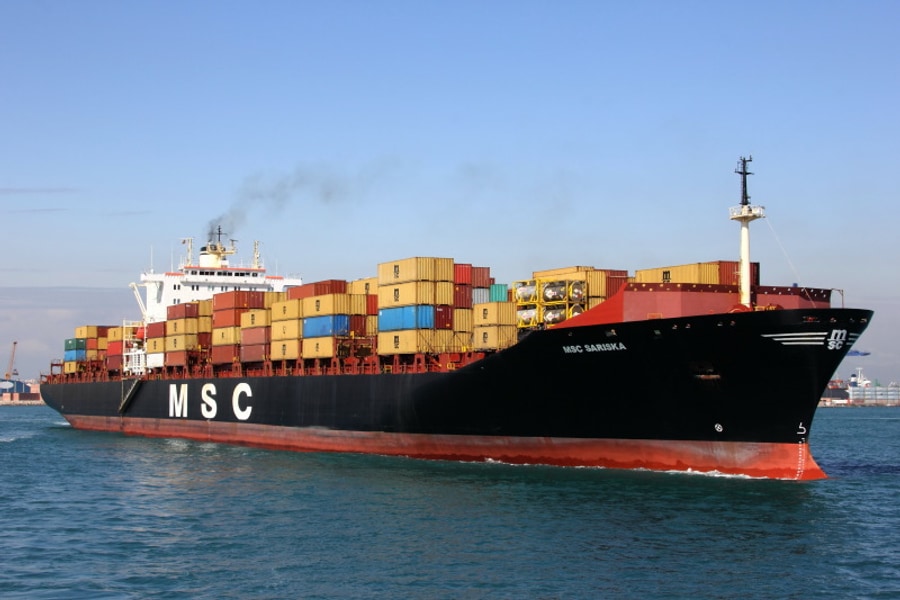
The Panama-flagged MSC Sariska V has been damaged in an apparent attack off Iraq, adding to security concerns for vessels operating in the northern Arabian Gulf.
UKMTO said it received a report involving a cargo vessel about 40 nautical miles southeast of Umm Qasr. The ship was transiting the Arabian Gulf when an unknown projectile struck its starboard side, causing a large explosion.
A later UKMTO update said the vessel suffered a second impact, which caused a fire. The fire was extinguished, and no crew injuries were reported. UKMTO also said it was not aware of any environmental impact at the time.
Video shared on social media appeared to show significant damage above the waterline on the starboard side of MSC Sariska V. The vessel’s operator had not publicly commented on the incident.
Maritime analyst Sal Mercogliano said MSC Sariska V had been inside the Persian Gulf since the U.S.-Iran conflict began on 28 February. He said MSC had established a regional feeder and overland network through Saudi Arabia and the UAE after deep-sea services were disrupted.
The damage appeared inconsistent with a mine strike. Martin Kelly, head of advisory at EOS Risk Group, assessed that MSC Sariska V was likely struck by an uncrewed surface vessel in Iraqi territorial waters after completing cargo discharge at Umm Qasr. He also said MSC remained a target due to Israeli affiliation.
The incident follows two earlier UKMTO reports in Iraqi territorial waters. On 4 March, a tanker anchored southeast of Mubarak Al Kabeer, Kuwait, reported an explosion on its port side and saw a small craft leaving the area. On 11 March, two tankers were hit by unknown projectiles south of Al Basrah, causing fires and crew evacuations. No injuries or environmental damage were reported in those incidents.
The latest case shows that regional shipping risks extend beyond the Strait of Hormuz. It also comes as shipping executives at Posidonia in Athens warned that any U.S.-Iran agreement would need credible security guarantees before operators fully return to normal activity in the region.