
Search
Close this search box

Wattlab Says Solar System Cuts Auxiliary Fuel Use 2–5%

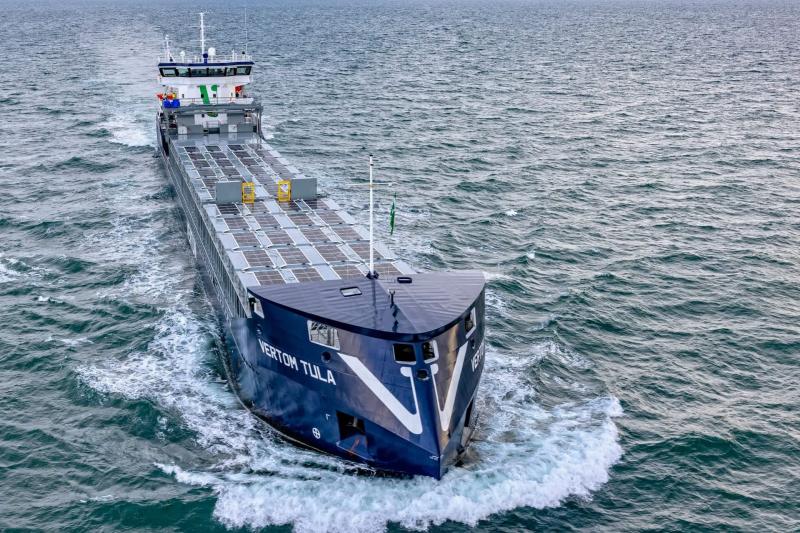
Wattlab said its Solar FlatRack system can cut auxiliary fuel use by 2–5% after vessel pilots and full-scale installation, with development now moving toward larger bulk carriers.
Photo Credit: Wattlab

SHARE ARTICLE

Dutch firm Wattlab has said its solar power system can cut auxiliary fuel consumption by 2–5% after pilot projects and a full-scale installation at sea. The company said the result showed shipboard solar power had moved beyond a test stage and into practical use.

The system has been demonstrated on vessels, including Vertom Tula. On that ship, 44 solar panels reduced about 20% of the onboard hotel load, according to Wattlab. The company said the outcome supported lower fuel use while creating direct benefits for CO2 emissions and compliance with FuelEU Maritime and the EU ETS.

Developed with Dutch research organisation TNO and shipping company Vertom, the Solar FlatRack system is designed to work without affecting cargo operations. Wattlab said the panels can stay in place during loading or be stored if required.

The company is now seeking to extend the technology beyond Supramax vessels. Development is underway for Panamax and Capesize bulk carriers, while market interest is rising.

Bo Salet, CEO and co-founder of Wattlab, said solar power at sea was no longer an experiment but a working solution. He added that the company had already engaged with more than 200 international parties interested in applying Solar Flatracks across their fleets.
Editorial Note:
This article was prepared with the assistance of AI tools to enhance clarity and efficiency.
All information has been reviewed and verified by the HMT News editor.
Piracy and armed robbery incidents in Asia fell 64 percent in the first half of 2026, although the Singapore Strait remained the main area of concern, ReCAAP reported.
INTERCARGO bulk carrier safety report on liquefaction and flooding risks
INTERCARGO's latest report shows fewer bulk carrier losses over the past decade while identifying cargo liquefaction and flooding as the leading causes of seafarer fatalities.
ReCAAP ISC reported two security incidents involving bulk carriers in the Singapore Strait from 2-8 June, with no crew injuries and one case involving stolen service kits and a DG turbo charger.

Subscribe to HMT WEEKLY

Receive HMT WEEKLY in your mailbox.

Heavy Marine Transport News, Delivered Daily — Stay informed on shipping, offshore, and global logistics.

SECTION

INFORMATION

CONTACT

For general inquiries and to contact us,
please email: info@hmt-news.com