Lloyd’s Register (LR) has completed a live vessel trial of an AI-based navigation platform developed by Orca AI, marking further progress in validating computer vision systems for maritime operations.
The five-day trial was conducted onboard a feeder containership sailing 828 nautical miles from Gioia Tauro, Italy, to Marsaxlokk, Malta, via Bar. The route included high-traffic areas such as the Strait of Messina and tested performance in congested waters, port approaches and reduced visibility conditions.
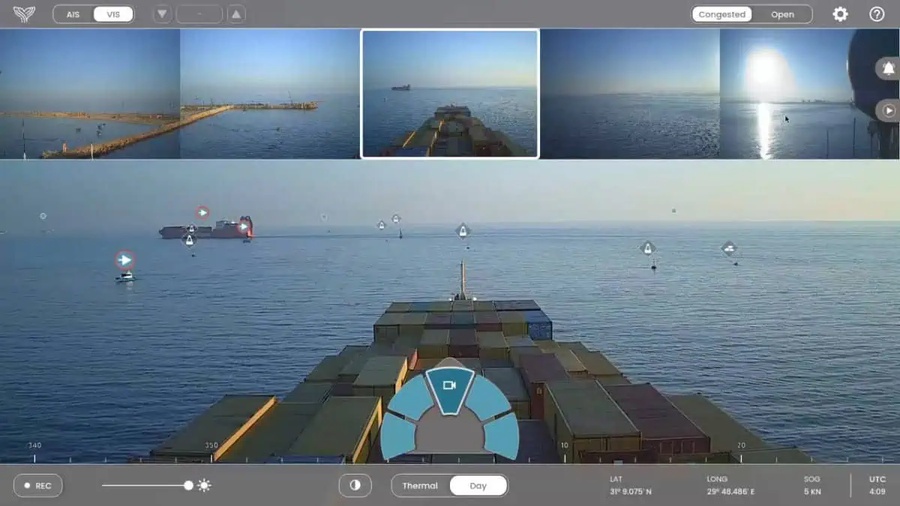
During the voyage, the system operated alongside Radar, AIS and traditional visual watchkeeping. The platform demonstrated the ability to detect close-range and low-signature targets, including small or non-AIS vessels, which were not consistently identified by conventional systems.
The trial was assessed onboard by LR’s ship performance specialist Han Beng Koe, who monitored usability and system performance against established navigation benchmarks. The evaluation combined operational data with structured feedback from bridge teams.
According to LR, the project introduced a structured methodology for assessing situational awareness technologies, using precision and recall metrics together with crew input to reflect real operational conditions.
The system recorded 739 relevant targets during the trial, achieving 94% precision and 98.6% recall, while maintaining uninterrupted operation throughout the voyage.
The collaboration also included human factors workshops led by LR, aimed at improving how user feedback is collected and integrated into system development. These sessions focused on ensuring that AI-enabled tools effectively support bridge teams in demanding environments.
The trial forms part of ongoing efforts to establish practical frameworks for evaluating AI-driven navigation systems as the maritime sector moves toward increased automation and data-led decision-making.