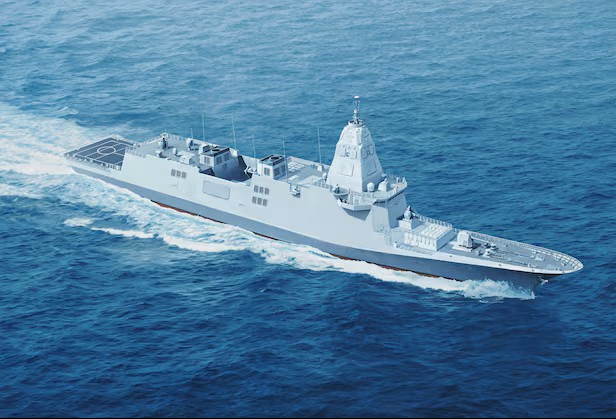
A formal head-to-head contest is taking shape between HD Hyundai Heavy Industries and Hanwha Ocean as South Korea’s KDDX next-generation destroyer programme advances into open competition, with scoring factors and design continuity set to influence the outcome.
A key variable is the security-related deduction tied to HD Hyundai Heavy Industries. The company faces a 1.2-point penalty that could affect its bid in a procurement environment where contracts can be decided by fractions of a point. The deduction is linked to a case in which employees were convicted of illegally photographing and sharing military secrets, including KDDX concept design drawings that belonged to then-DSME, now Hanwha Ocean. Final guilty verdicts were issued to eight employees in November 2022 and to the remaining individual in December 2023. Under the applicable rule, penalties remain valid for three years from the date of final conviction. DAPA treated the rulings separately, applying a 1.8-point deduction until November 2025 and an additional 1.2-point deduction through December 2026. Whether the deduction is applied in the evaluation is expected to be determined during proposal assessment in May 2026.
At the same time, the detailed design proposal phase favours the bidder who completed the preceding stage. HD Hyundai Heavy Industries carried out the KDDX basic design, giving it a broader base of data and a more direct path to refine the work into a detailed design package. Hanwha Ocean, which performed the concept design, must first review the basic design drawings that DAPA has publicly disclosed before finalising its own detailed design proposal. The preparation period is approximately two months.
The programme itself targets domestic construction and deployment of six 6,000-ton “mini Aegis” destroyers by 2030. In the typical naval shipbuilding sequence—concept design, basic design, detailed design, and lead ship construction, followed by follow-on vessels—Hanwha Ocean led the concept design, and HD Hyundai Heavy Industries led the basic design.
The move to competitive bidding follows an extended dispute over whether the detailed design and lead ship contract should be awarded through private negotiation or open competition. DAPA initiated contractor-selection procedures in December 2023, but the disagreement delayed progress for nearly two years. In December 2025, DAPA decided the award would proceed through competitive bidding.
Industry sources say DAPA will issue a public tender notice in March 2026. The agency held a preliminary briefing session on 11 February 2026 to present project details to prospective bidders, a step that effectively signalled the start of full-scale preparations.
DAPA’s stated schedule is to release the tender in March 2026, receive and evaluate proposals in May 2026, finalise negotiations and implementation plans in June 2026, and sign the contract in July 2026.