The unveiling of Glovis Leader on 28 April showed a clear shift in global shipbuilding. The vessel is owned by HMM and operated by Hyundai Glovis, but it was built by Guangzhou Shipyard International, a subsidiary of China State Shipbuilding Corporation.
The case reflects a broader trend: Korean shipbuilders are losing share in labor-heavy, lower-margin ship types as Chinese yards expand their presence.
Car carriers require multiple internal vehicle decks made with thin steel plates, making labor cost a key factor. While many car carriers have 13 decks, Glovis Leader has 14 decks covering an area equal to 28 football pitches. It is also the first vessel in its class to carry more than 10,000 vehicles.
Industry sources said Chinese yards are winning orders through lower prices and faster delivery schedules. Korean shipbuilders, meanwhile, are giving priority to higher-margin vessels such as LNG and LPG carriers.
Car carriers are not regarded as highly complex or especially profitable compared with LNG or LPG carriers. Chinese shipyards have used this opening to raise their basic construction capabilities and meet European Union environmental standards, helping them secure more orders.
Industry officials still warned that Korea should not abandon the segment. Car carriers can be used in emergencies to move military equipment, including tanks and armored vehicles, giving them value beyond commercial transport.
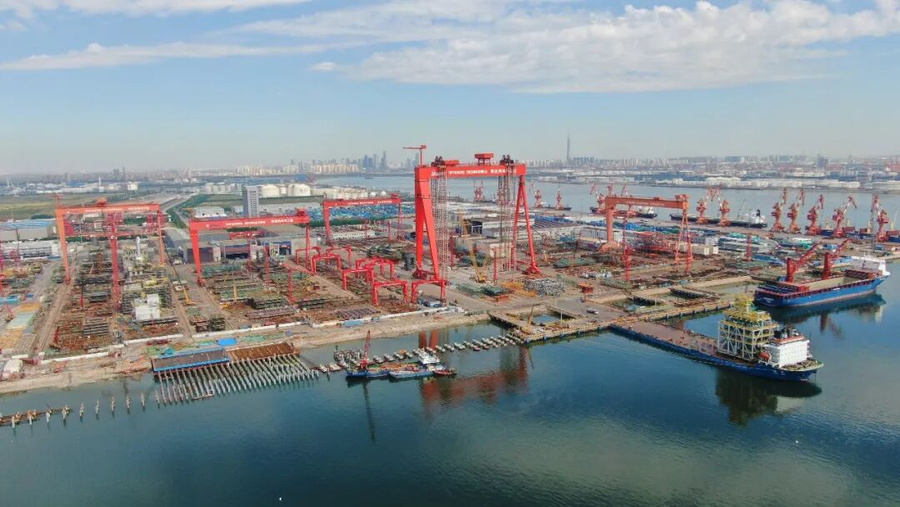
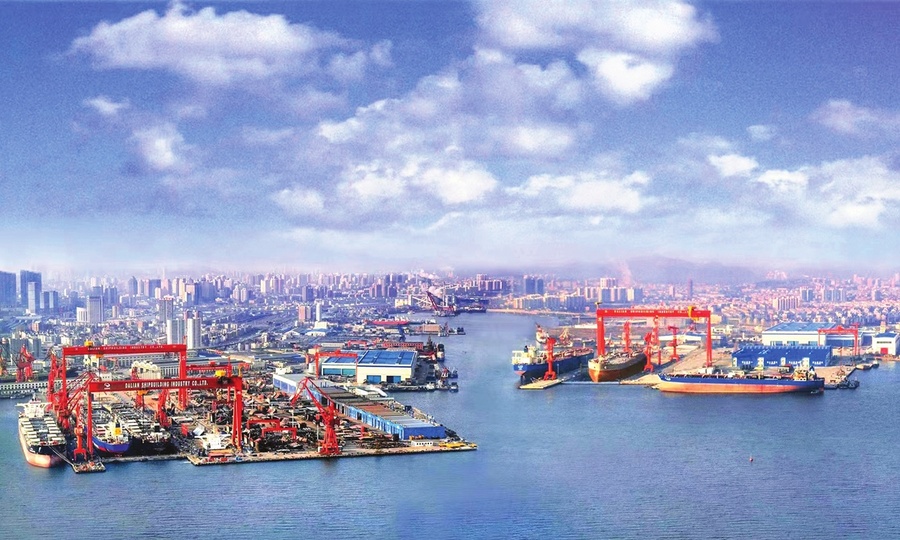
China’s strength is not limited to car carriers. It has also expanded in standard ship types such as bulk carriers and container ships. According to Clarkson Research, China accounted for 63% of global shipbuilding output in CGT terms last year, compared with Korea’s 20%.
The gap was smaller than in 2024, when China held 71% and Korea 14%, but China remains far ahead. Yang Jong-seo, visiting professor of naval architecture and ocean engineering at Seoul National University, said China has also moved ahead in large tankers, container ships and mid-sized tankers.
Korean yards have focused on high-value LNG and LPG carriers, where they still hold a technology advantage. However, experts warned that depending too much on a narrow group of vessel types could create risk if market demand changes.
Of the 56.43 million CGT in global ship orders last year, standard vessels, including container ships, accounted for 23.13 million CGT. Bulk carriers accounted for 9.34 million CGT, while LNG and LPG carriers made up less than 10%.
The shift is also affecting Korea’s marine equipment supply chain. According to the Korea Marine Equipment Association, member companies’ revenue rose from $1.23 billion in 2020 to $1.34 billion in 2024, led mainly by engines, machinery and electrical systems.
Other areas weakened. Sales of outfitting equipment such as valves, pipes and anchoring systems fell from $320 million to $309 million. Hull-related equipment, including structural parts and welding systems, dropped from $151 million to $108 million.
Industry sources said Korean suppliers face limits in price competitiveness and economies of scale compared with China.
Yang said possible US port fees on Chinese-built ships may provide only short-term relief. He added that Korea needs to maintain enough shipbuilding scale and support equipment suppliers with national security in mind.