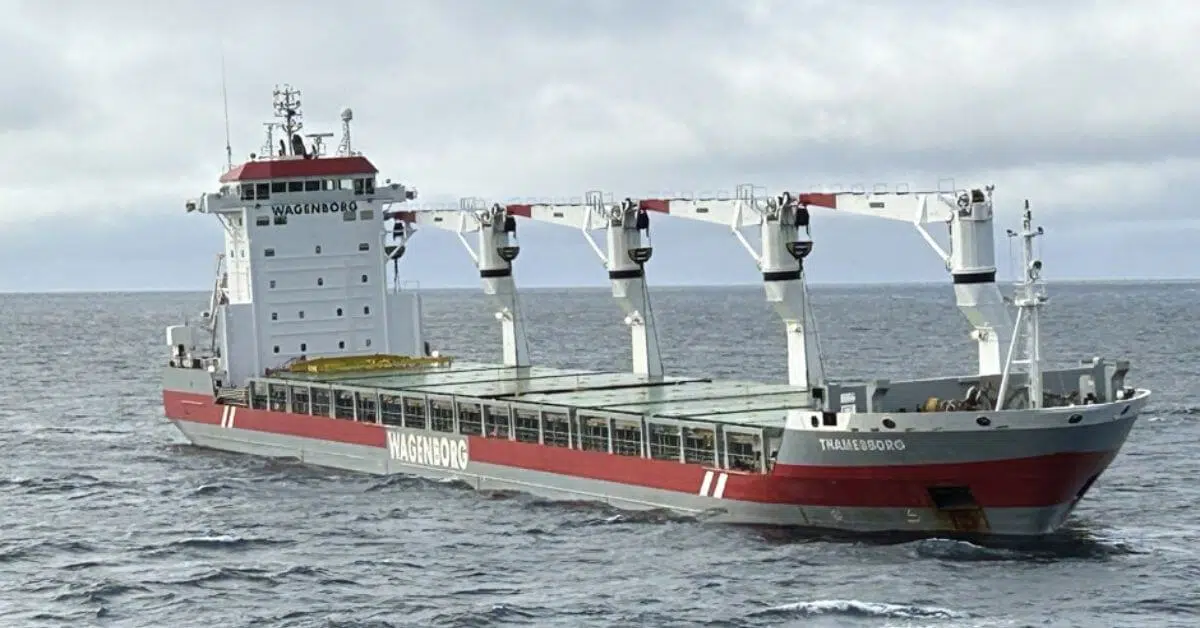
Royal Wagenborg is expediting efforts to refloat its cargo vessel Thamesborg, which ran aground in the Franklin Strait in the Canadian Arctic earlier in September. The operation has become a race against time as winter sea ice begins to form in the region.
Incident Overview and Salvage Efforts
The Thamesborg grounded on September 6 while transiting the Franklin Strait near Prince of Wales Island, Nunavut. The vessel was reportedly carrying carbon blocks for industrial use when the incident occurred. Approximately 4,000 tons of cargo have already been offloaded onto support vessels to lighten the ship.
Wagenborg is working in coordination with the Canadian Coast Guard and specialized salvage teams to refloat the vessel. Current operations include pumping out water from flooded ballast tanks and removing additional weight to reduce draft. The offshore support vessel MSV Botnica has joined the operation to provide towing and potential icebreaking assistance.
Weather Pressure and Ice Formation
With sea temperatures dropping and Arctic ice formation underway, time is running short. Experts warn that rapidly freezing conditions in the Northwest Passage could soon make the refloat operation impossible until next summer.
Should the refloat attempt fail before heavy ice sets in, Wagenborg is reportedly preparing contingency measures to ensure the vessel’s stability through the winter.
Current Status
All 15 crew members remain safely aboard, accompanied by an ice advisor, and no pollution or oil leakage has been reported. The Canadian Coast Guard continues to monitor the site closely and provide logistical support.
Once the Thamesborg is refloated, the vessel will undergo a full inspection to assess potential damage before resuming operations under its own power if conditions allow.
The ongoing situation highlights the growing operational risks of Arctic shipping, where a short navigation season, unpredictable weather, and limited infrastructure continue to challenge even experienced operators.