
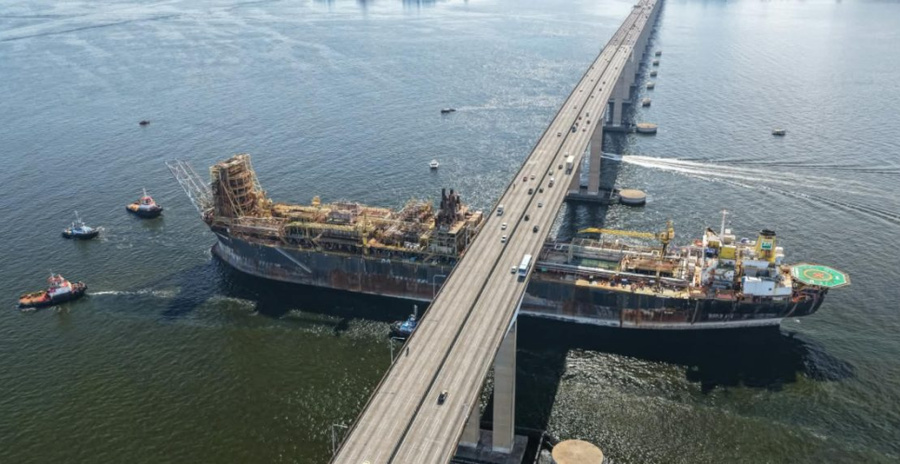
The P-35 FPSO, operated by Petrobras for 27 years at the Marlim field offshore Brazil, has completed a complex towing operation beneath the Rio-Niterói Bridge to reach the Clip Offshore facility in Rio de Janeiro.
The operation took place on 2 November 2026, involving seven towing and support vessels and approximately 100 personnel from several organisations, including the Brazilian Navy, Petrobras, the Rio de Janeiro State Environmental Institute (Inea) and the Fire Department.
Measuring approximately 330 metres in length and weighing 27,000 tonnes, P-35 required structural modifications before its passage beneath the bridge. The flare was removed and part of the turret dismantled to reduce the unit’s overall height.
According to Petrobras executive Wagner Victer, the manoeuvre had been planned for months and required suitable tidal and weather conditions. The FPSO passed within a few metres of the bridge’s central span while road traffic remained operational.
Marine traffic restrictions were also arranged for the operation. Navigational warning S 9242/26 specified temporary restrictions in designated Rio de Janeiro port channels during the tow.
Environmental monitoring formed part of the transfer. Inea said participating authorities were responsible for preventing incidents and ensuring compliance with environmental requirements in Guanabara Bay.
The FPSO was moved from the Brazilian Navy’s facilities to the former Inhaúma shipyard in the Caju district, now operated by Clip Offshore. The facility is being developed to support offshore unit maintenance, cleaning and dismantling activities, according to Brazil’s National Organisation of the Petroleum Industry (ONIP).
P-35 is undergoing decommissioning following its service at the Marlim field. Inea has indicated that part of the unit will be dismantled at the yard.
However, Petrobras has not confirmed a final decision on the FPSO’s overall disposition. Earlier company statements indicated that reuse and dismantling options remained under evaluation.