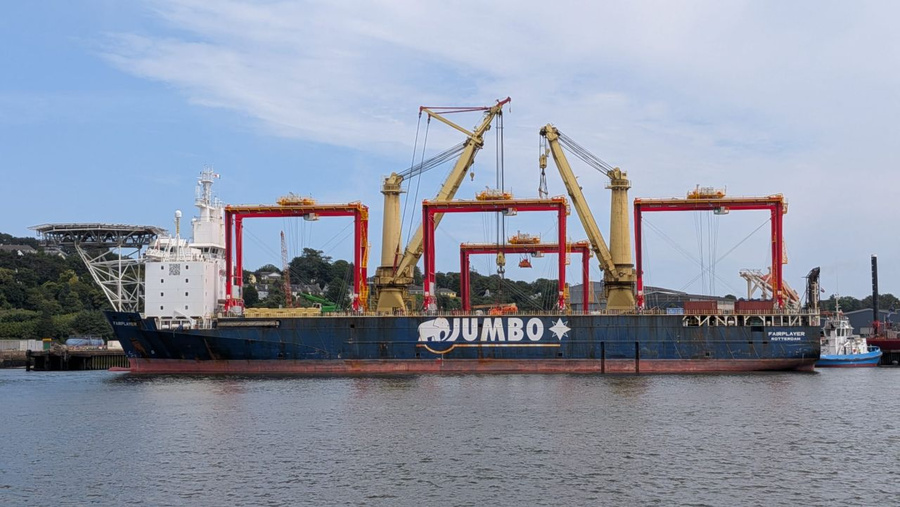
Jumbo has completed a wind-assisted propulsion trial aboard its heavy lift vessel Jumbo Jubilee as part of its fleet decarbonisation programme.
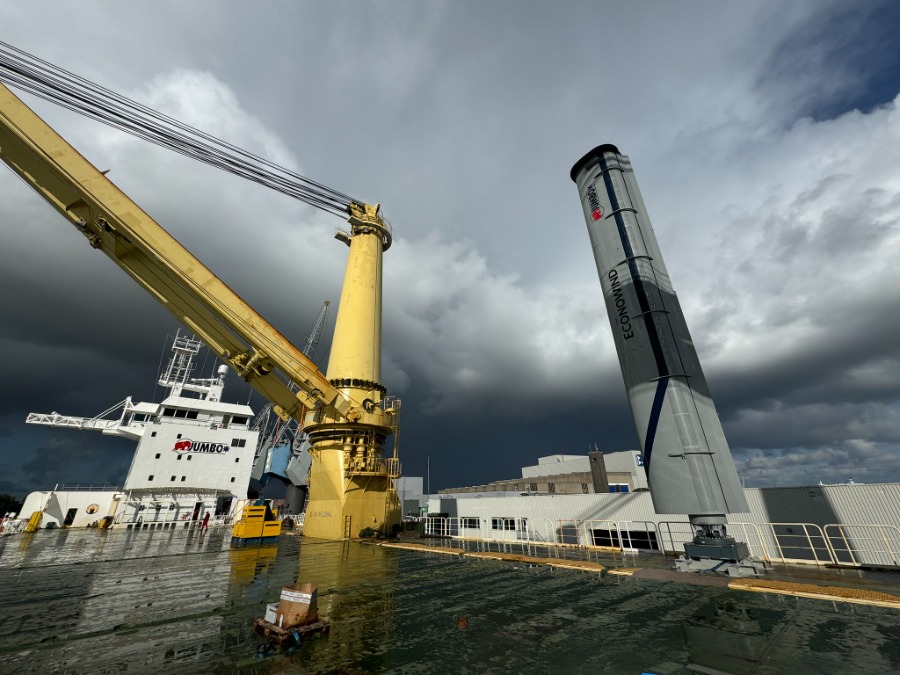
Two mechanical sails were installed on Jumbo Jubilee to collect operational data during normal commercial voyages. The trial is intended to determine whether wind-assisted propulsion can reduce fuel consumption without limiting the vessel’s ability to handle changing heavy lift cargo requirements.
According to the company’s first Sustainability Report, the sails can be repositioned or removed when required. This allows the vessel to retain deck space for different cargo configurations and lifting operations.
The wind propulsion trial is one of several efficiency measures being assessed on Jumbo Jubilee. Jumbo has also installed torque and thrust sensors, conducted ETA sailing and speed management trials, evaluated underwater efficiency measures and used B100 biofuel on selected voyages to meet FuelEU Maritime greenhouse gas intensity requirements.
Operational data from the mechanical sails will be used to measure their contribution to fuel savings under commercial conditions. The findings will also support technical optimisation and an assessment of whether the technology could be applied more widely across the fleet.
Jumbo plans to complete its fleet decarbonisation roadmap in 2026. The company also expects to establish corporate Scope 1 greenhouse gas reduction targets during the same year.
In 2026, Jumbo plans to decide whether to conduct further wind-assisted propulsion pilots based on the operational experience gained from Jumbo Jubilee.