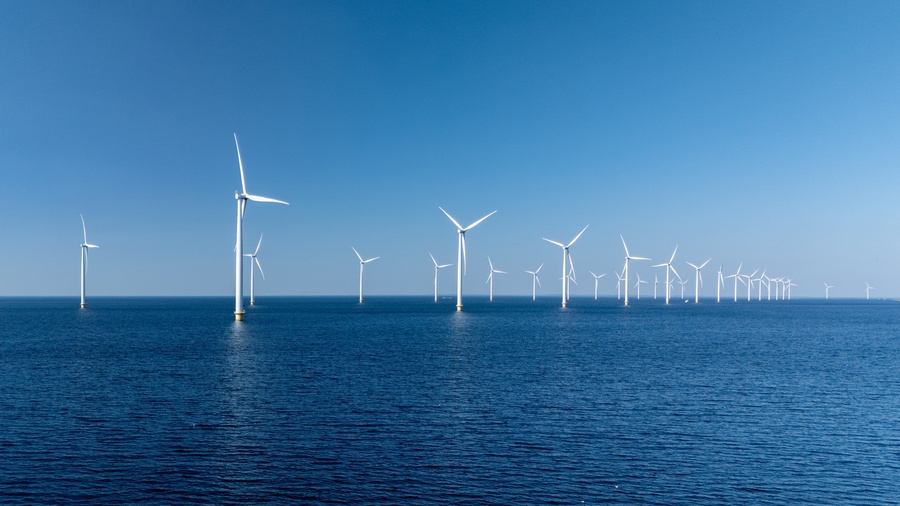
Taiwan’s Ministry of Economic Affairs (MOEA) has set out a new offshore wind roadmap targeting installed capacity of 18.3–19.9GW by 2035 and 24.7–27.9GW by 2039.
The targets would represent a substantial increase from Taiwan’s installed offshore wind capacity, which was estimated at around 3.4GW last year.
The roadmap identifies several requirements for further expansion, including clearer policy pathways, stronger domestic supply chains, broader green financing mechanisms, more effective mobilisation of private capital, and improvements to the offshore wind permitting process.
Yong Neng Chan of Pinsent Masons said the plan showed that offshore wind remained part of Taiwan’s long-term energy security and decarbonisation strategy despite recent market pressures. He said the roadmap demonstrated continued government support for the sector at a time of rising costs, difficult financing conditions, and stronger global competition for capital.
Taiwan is seeking to advance its renewable energy programme while managing higher construction, supply chain, and energy import costs, as well as inflation and financing constraints.
As part of the revised approach, the government plans to hold regular offshore wind auctions and release around 8GW of capacity every four years. The procurement framework is intended to provide greater flexibility and support foreign investment.
The roadmap follows the launch of Taiwan’s Round 3.3 offshore wind development programme on 1 April 2026. The auction offers up to 3.6GW of capacity, with projects expected to connect to the grid between 2030 and 2031.
Applications for Round 3.3 will remain open until the end of September 2026. The government is expected to announce the successful bidders by the end of the year.
Wee Jian Ang of Pinsent Masons said it remained unclear how international developers and package contractors would respond to the roadmap and the current auction round. He said localisation requirements, rising costs, and construction risks had weakened enthusiasm among participants in Taiwan’s offshore wind sector, while some of those issues had led to disagreements and disputes.
He said greater flexibility in future local content requirements could improve project bankability and investor sentiment as auction rounds continue towards 2039.
Earlier in 2026, Taiwan was reported to be set to miss its target of generating 20% of its electricity from renewable sources by the end of the year. Environmental and land-use laws appeared to have obstructed project development.
The new roadmap signals continued government support for renewable energy as Taiwan faces disruption to oil and gas supplies linked to the ongoing conflict in the Middle East.
The government also plans to accelerate floating offshore wind through demonstration projects and wider deployment in deeper-water areas.
Yong Neng said floating wind could create development opportunities beyond conventional fixed-bottom sites. He noted that operational demonstration projects in other markets had shown that floating foundations were no longer only a theoretical concept.
Wee Jian said floating offshore wind involved substantial risks but could also provide significant returns when projects were properly structured, built, and operated.