Search
Close this search box

South Korea Moves to Extend Offshore Wind Contracts to 25 Years

South Korea is moving to extend offshore wind fixed-price contracts from 20 to 25 years, giving operators more time to recover investment and potentially offer lower electricity prices.
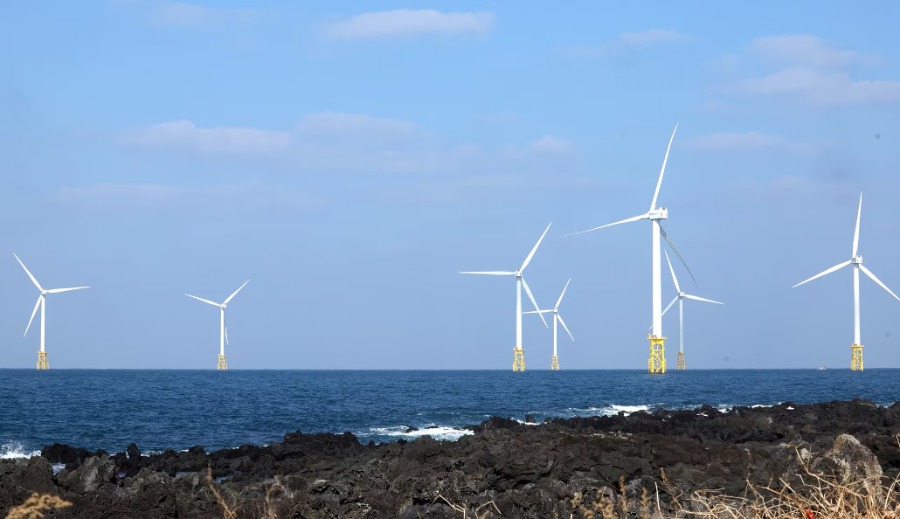
Jeju Hallim Offshore Wind Power (Image credit: Korea Electric Power Corporation)

SHARE ARTICLE

South Korea has set a policy direction to extend fixed-price offshore wind contracts from 20 years to 25 years. The government is still reviewing how the longer contract period will be applied.

The fixed-price bidding system was introduced in 2022. Under the current framework, an operator selected through the bidding process receives a guaranteed electricity price for 20 years.

The system allows offshore wind operators to secure stable revenue while enabling the government to procure electricity at a lower price.

Offshore wind projects require initial construction spending measured in trillions of won. Industry participants requested a longer contract period to spread investment recovery over additional years while maintaining a stable revenue period.

A longer term could also allow operators to submit lower electricity prices in future bidding rounds.

The government is considering whether to apply a uniform 25-year contract or permit operators to choose a term between 20 and 25 years.

Implementation could begin as early as the second half of next year. The government is reviewing how much the longer contract period could reduce the unit price of offshore wind electricity.
Editorial Note:
This article was prepared with the assistance of AI tools to enhance clarity and efficiency.
All information has been reviewed and verified by the HMT News editor.
HD Hyundai Samho has delivered the 93,000 m³ Jane Maersk, its first very large ammonia carrier and the first of five VLACs ordered by Maersk in November 2023.
HD Hyundai Heavy Industries Gunsan shipyard in South Korea
A subcontractor died in an equipment accident at HD Hyundai Heavy Industries’ Gunsan Shipyard. Authorities are investigating the incident, while panel factory assembly lines remain suspended.
Modules weighing around 5,000 tonnes each have been installed on the 45,000-tonne Tlaloc FPU under construction in South Korea for the Trion project.

Subscribe to HMT WEEKLY

Receive HMT WEEKLY in your mailbox.

Heavy Marine Transport News, Delivered Daily — Stay informed on shipping, offshore, and global logistics.

SECTION

INFORMATION

CONTACT

For general inquiries and to contact us,
please email: info@hmt-news.com