Construction has started in Shanghai on a large-scale floating research facility that will support work in marine equipment, ocean resources and marine science.
The project, described as one of China’s major scientific research infrastructure programmes, began construction on 28 March 2026. It is being built by Shanghai Jiao Tong University and is scheduled for completion by 2030.
The facility will consist of three main systems: the main platform, shipborne laboratories and shore-based support. The laboratories will cover marine disasters, meteorological observation and research, and the marine underwater physical environment, among other fields.
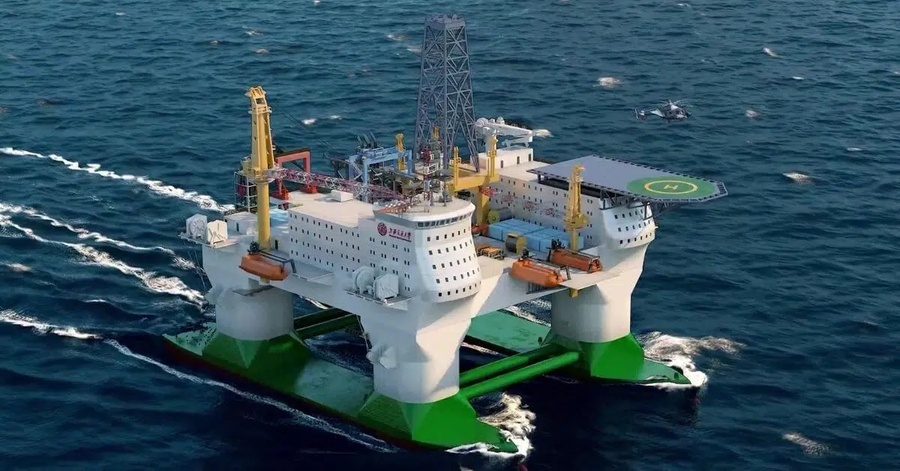
Designed as a semi-submersible twin-hull vessel, the platform will be able to carry out sea trials for large deep-sea equipment weighing up to about 100 tonnes. It will also support scientific exploration and experimental research at ocean depths of up to 10,000 m.
The platform is intended to remain in deep-sea mission areas for extended periods, allowing cross-seasonal scientific observation and engineering trials. It can also be mobilised and deployed quickly, making it possible to adjust operating areas with flexibility.
After completion, the facility will provide a real-sea testing platform for deep-sea mining systems, key marine equipment and offshore oil and gas equipment, helping accelerate the use of marine resources.
It will also support research into seasonal patterns in marine ecosystem evolution and the origins and evolution of life, while contributing to improved typhoon forecasting accuracy and stronger disaster prevention and mitigation capability.