Bureau Veritas Marine & Offshore (BV) has awarded Approval in Principle (AIP) certificates to five advanced vessel projects developed by Hudong-Zhonghua Shipbuilding (Group) Co., Ltd. The approvals cover LNG and ethane transportation concepts, an LNG FSRU design, an onboard carbon-capture-ready LNGC concept, and a 3D classification initiative.
BV granted the AIPs after a detailed review of classification-related elements, including principal dimensions, cargo handling arrangements, and cargo containment systems. The assessment placed particular emphasis on energy efficiency, carbon emissions performance, and operational adaptability, confirming compliance with international standards and BV Rules.
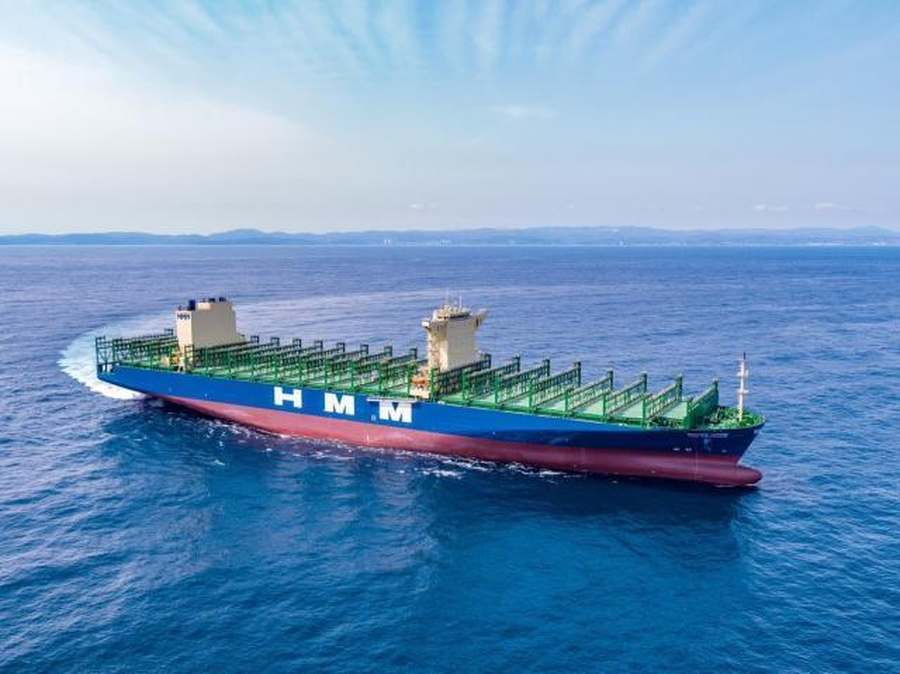
One of the approvals addresses an OCC-ready 271,000 cu m LNG carrier concept. BV’s AIP confirms the feasibility of integrating a future onboard carbon capture system, with key integration and safety-compliance aspects assessed at the design stage.
In parallel, BV and Hudong-Zhonghua Shipbuilding (Group) Co., Ltd. entered a Joint Development Project to carry out design approval based on 3D classification for an 18,600 cu m LNG bunkering vessel (Hull No. H1930A). The work targets classification fidelity and procedure approval to support more efficient digital design practices in shipbuilding.
BV also validated the newly developed “P-Flex” 201,000 cu m Panama-Max LNG carrier concept aimed at improving route flexibility in global LNG trades. Compared with classic 174,000 cu m LNG carriers, the design increases cargo capacity by 15.5%, reduces energy consumption per unit of cargo by up to 5% through optimized hull lines and an efficient propulsion system, and shows more than 8% annual carbon emissions reduction in fleet-operations analysis.
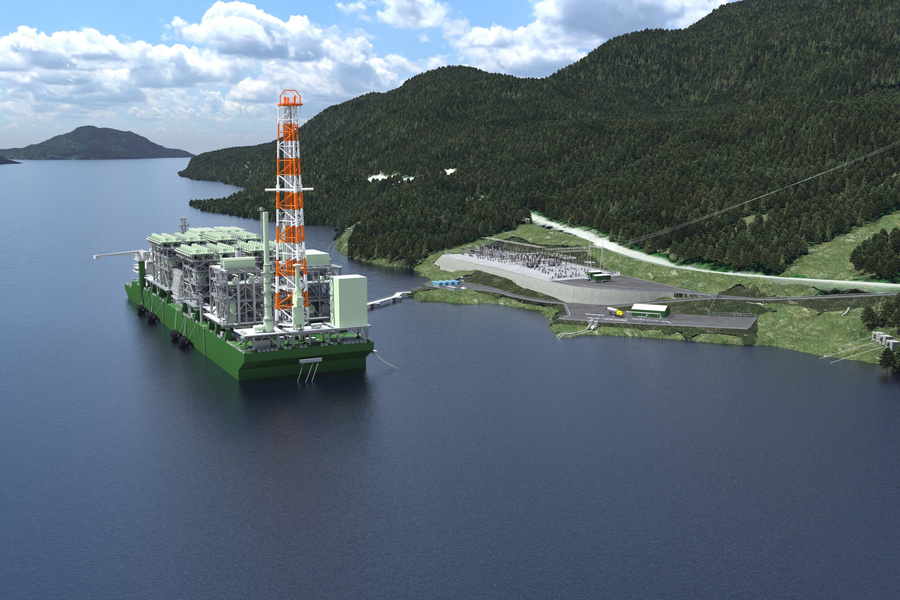
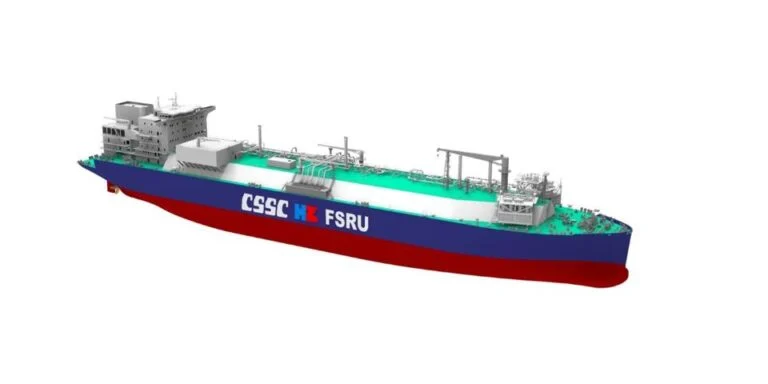
Another AIP covers an innovative 174,000 cu m LNG FSRU designed to operate as both an FSRU and an LNG carrier. The concept uses a propulsion system suited to both modes and applies the NO96 GW containment system, removing loading level restrictions during FSRU operation. Environmental power generation units deliver up to 7% lower fuel gas consumption, while a hybrid heating setup provides scalable regasification capacity from 750 to 1000 MMSCFD across varying seawater temperatures.
The fifth approval supports a new-generation 150,000 cu m ULEC designed for rising ethane transport demand. A membrane containment system delivers an approximately 15% lower boil-off rate compared with independent Type B tanks. The vessel is specified with high-pressure dual-fuel engines and an SCR system for fuel flexibility and lower NOx emissions, and it is designed as LNG-ready with hull structure and low-temperature piping provisions for potential future conversion.