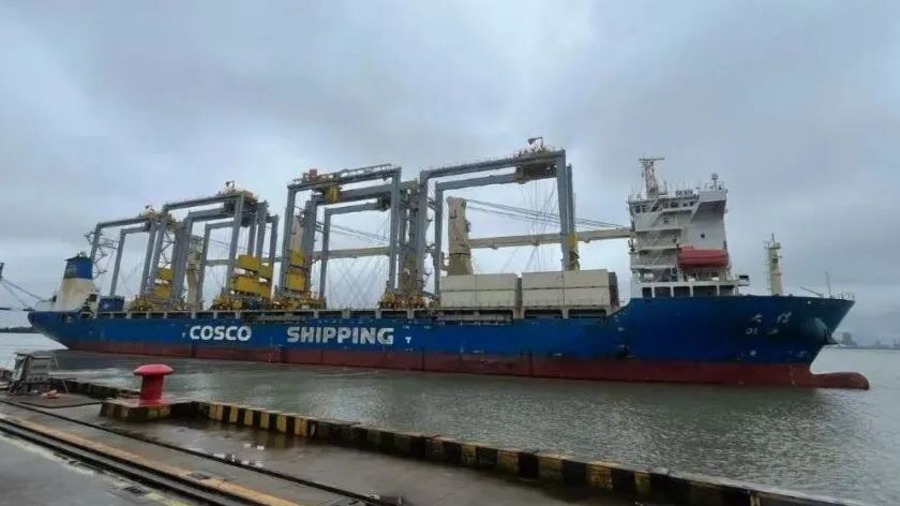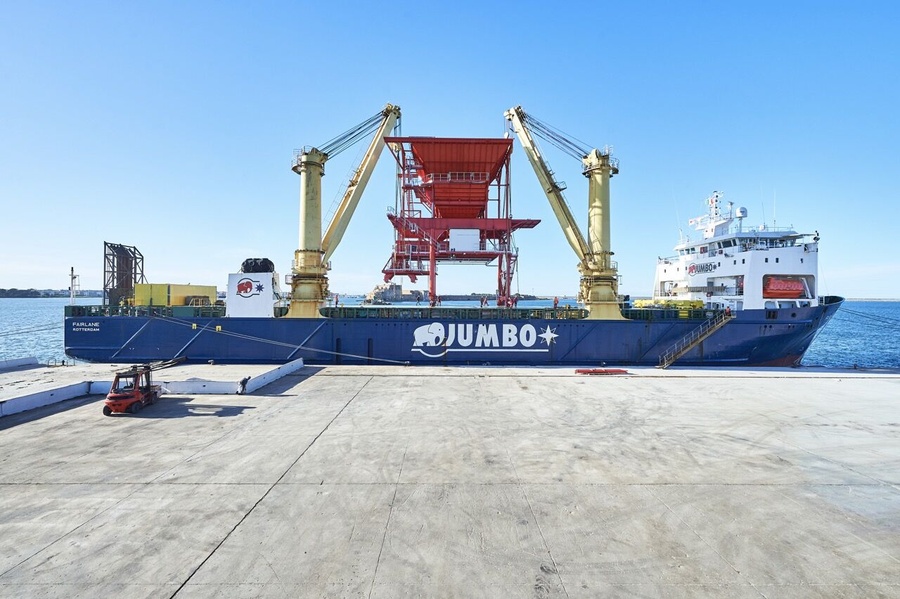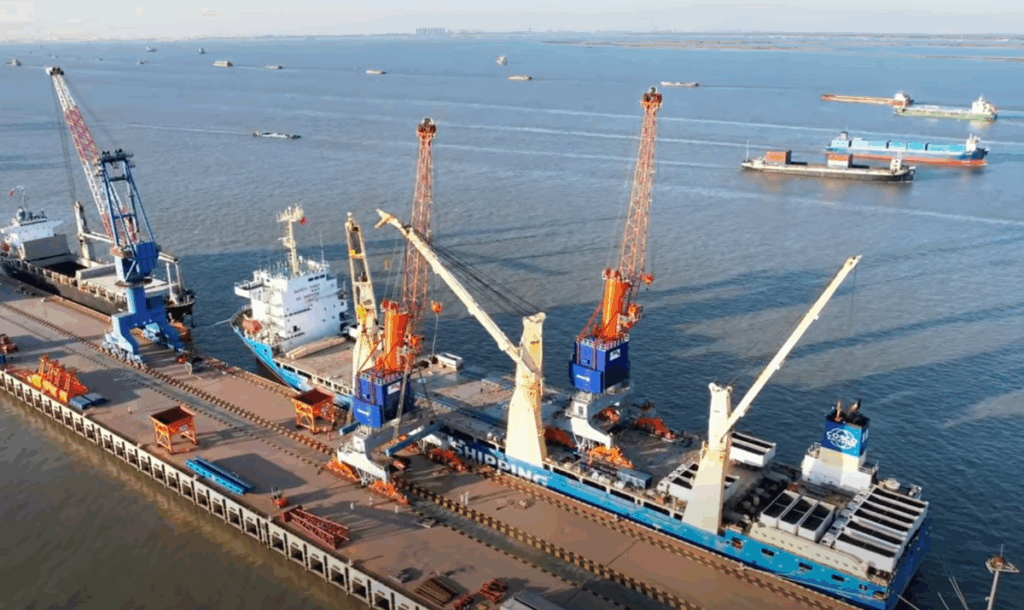
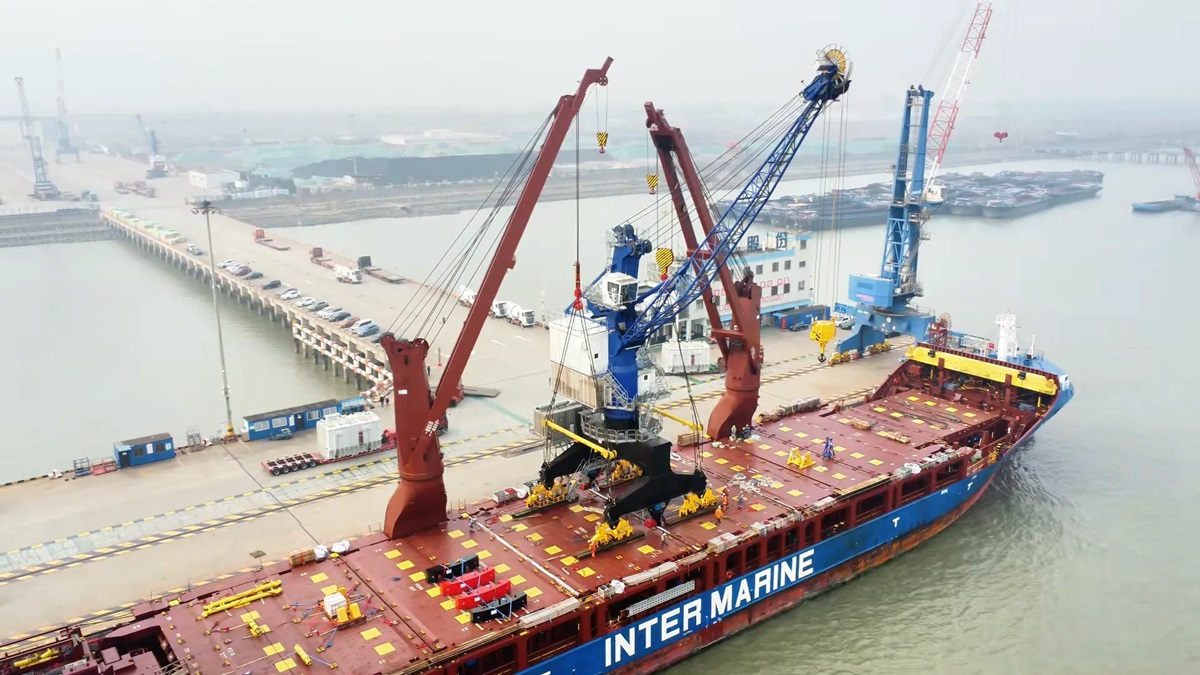
GENMA has completed the overseas delivery of its first independently developed rail-mounted mobile harbor crane that operates without a shore power connection. Designed for diverse port environments and flexible handling tasks, the crane can efficiently process containers as well as bulk cargoes such as coal. The successful shipment marks a key milestone for GENMA in independently developing port machinery tailored to specific operating scenarios.
Unlike conventional rail-mounted cranes that draw electricity from terminal power networks, this model is powered by onboard diesel generator sets. Without reliance on fixed shore-side electrical infrastructure, the crane can be deployed at ports and temporary work locations where power supply is constrained, shore power systems remain underdeveloped, or frequent relocation of equipment is required.
In terms of its drive systems, the crane adopts a hybrid concept. Variable-frequency electric drives are applied to hoisting and traveling motions, while hydraulic systems control slewing as well as luffing movements. This combination is engineered to maintain stable crane operation and high overall efficiency.
Intelligent functions are also integrated into the machine. In grab bucket mode, an intelligent deep-digging control system supports efficient collection of bulk materials. For container handling, the spreader is equipped with an automatic centering function to position the load accurately and keep lifting operations secure. Together, these features offer an integrated handling process that emphasizes smart, efficient and user-friendly operation.
This new product broadens GENMA’s portfolio of port equipment and demonstrates the company’s R&D capability in delivering green, flexible and sustainable harbor machinery. Looking ahead, GENMA will continue to focus on real-world market demand and leverage its proprietary core technologies to provide global customers with smarter, environmentally adaptive material-handling solutions, supporting the industry’s ongoing move toward higher efficiency and lower carbon emissions.