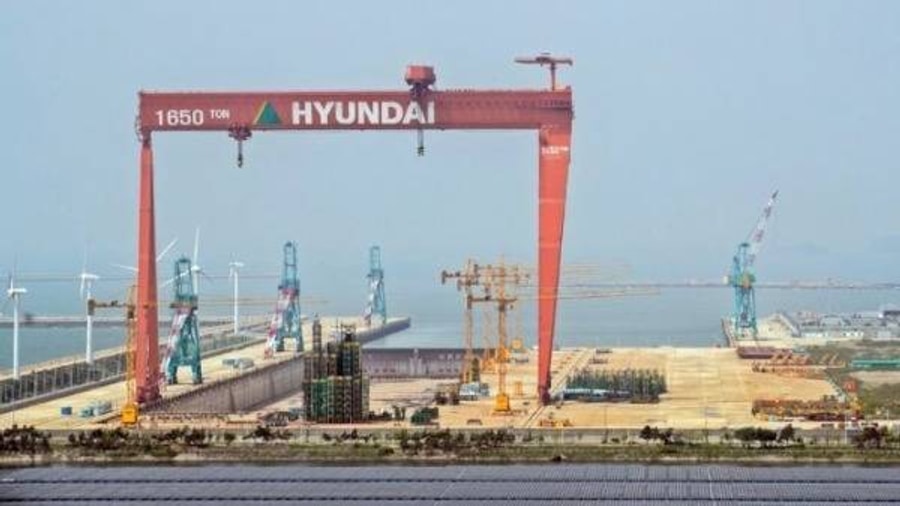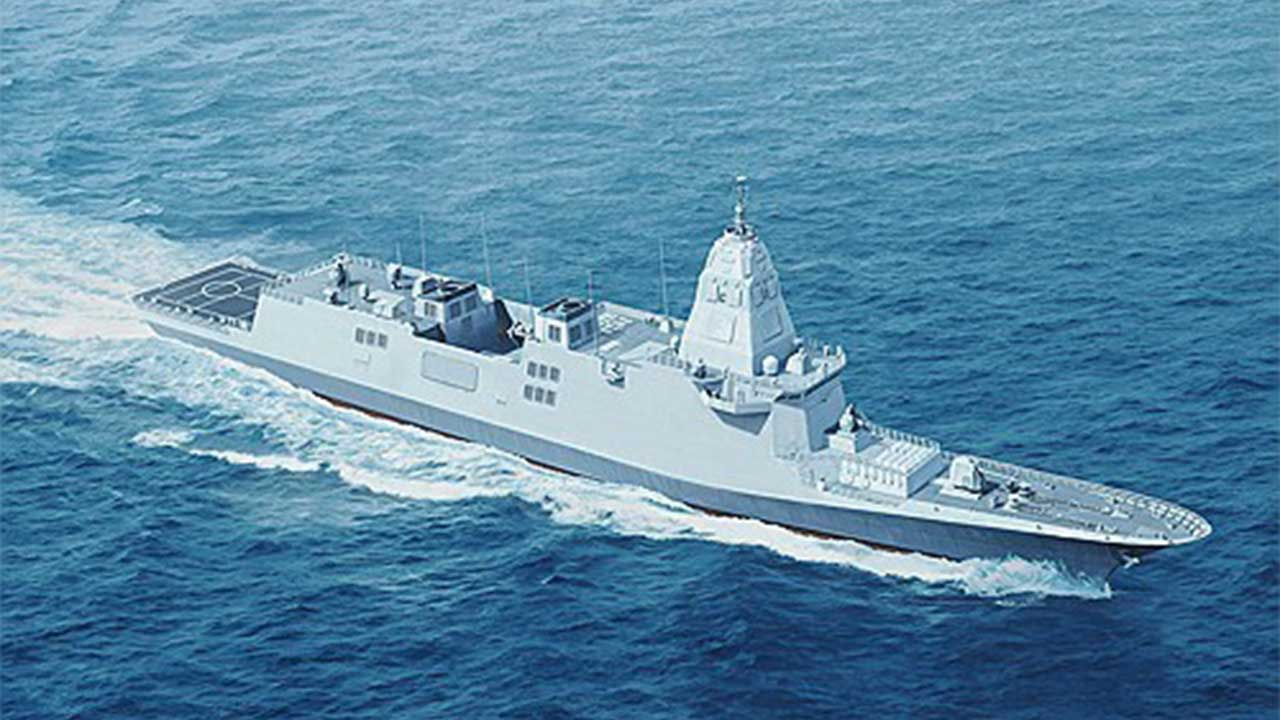
South Korea’s Defense Acquisition Program Promotion Committee has chosen a “designated competition” limited to Hanwha Ocean and HD Hyundai Heavy Industries to move forward with the country’s first destroyer programme, intended to be produced entirely with domestic industrial capabilities.
The KDDX programme traces back to 2011, when South Korea set out to build next-generation destroyers by combining local shipbuilding strength with indigenous combat-system and electronic-warfare know-how. While the Navy has built Aegis-class ships, the KDDX effort has been framed as a route to reduce dependence on foreign weapon systems and equipment.
Early work progressed through a concept-design stage led by Daewoo Shipbuilding & Marine Engineering (DSME) in 2012, followed by a new push in 2020 for further design activity. The selection path later became contentious after it was revealed that personnel at HD Hyundai Heavy Industries had illegally obtained confidential materials tied to the programme, including concept-design data. Court decisions in 2023 confirmed the violations, and the fallout helped fuel a prolonged debate over whether the next contract should proceed without competition.
The original outline called for six destroyers of about 6,000-ton displacement, with a central requirement that key systems be developed and built in Korea. The timing is tied to fleet renewal needs, as the Navy’s older Gwanggaeto-class destroyers are expected to be phased out between 2028 and 2032.
Both yards have continued to promote different design directions. HD Hyundai Heavy Industries has highlighted a 6,500-tonne proposal featuring fully electric propulsion and a 25MW propulsion motor, alongside higher levels of automation across ship operations. Hanwha Ocean, which acquired Daewoo Shipbuilding & Marine Engineering (DSME), has also presented an electric-propulsion concept and has discussed a 7,000-tonne “smart” design, including references to counter-drone and laser weapon systems.
The committee’s decision ends a long impasse by setting up a head-to-head contest for the detailed design contract that leads into construction. Media reports cited in coverage said the contract is expected to be finalised by the end of 2026 for a programme valued at about $5.3 billion. The schedule referenced in reporting continues to target delivery of the first ship by 2030, with the broader programme running through 2036.