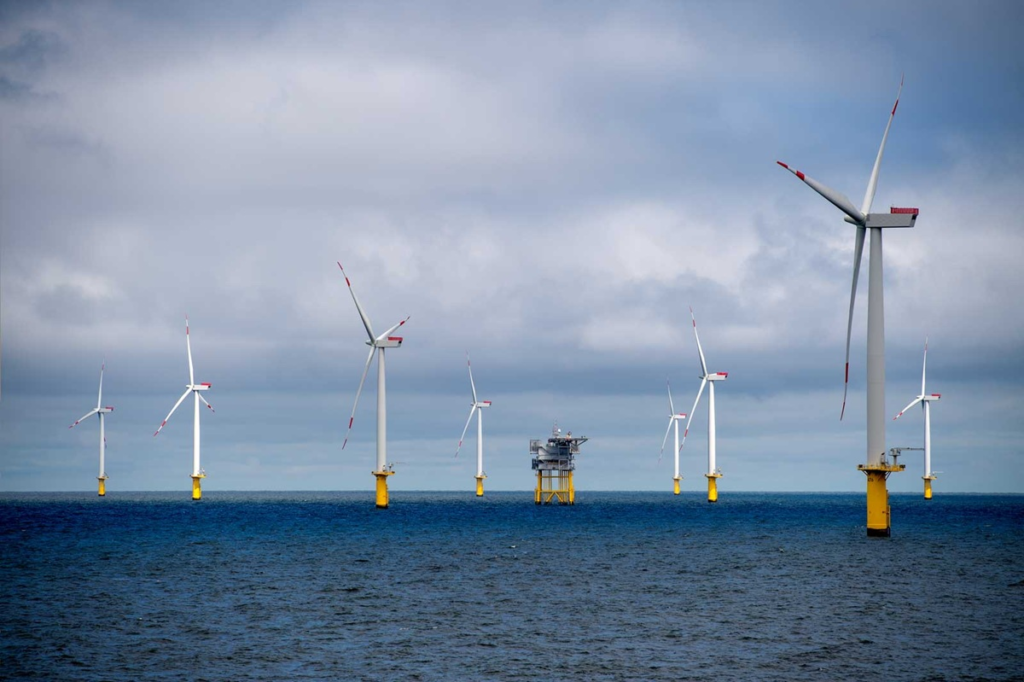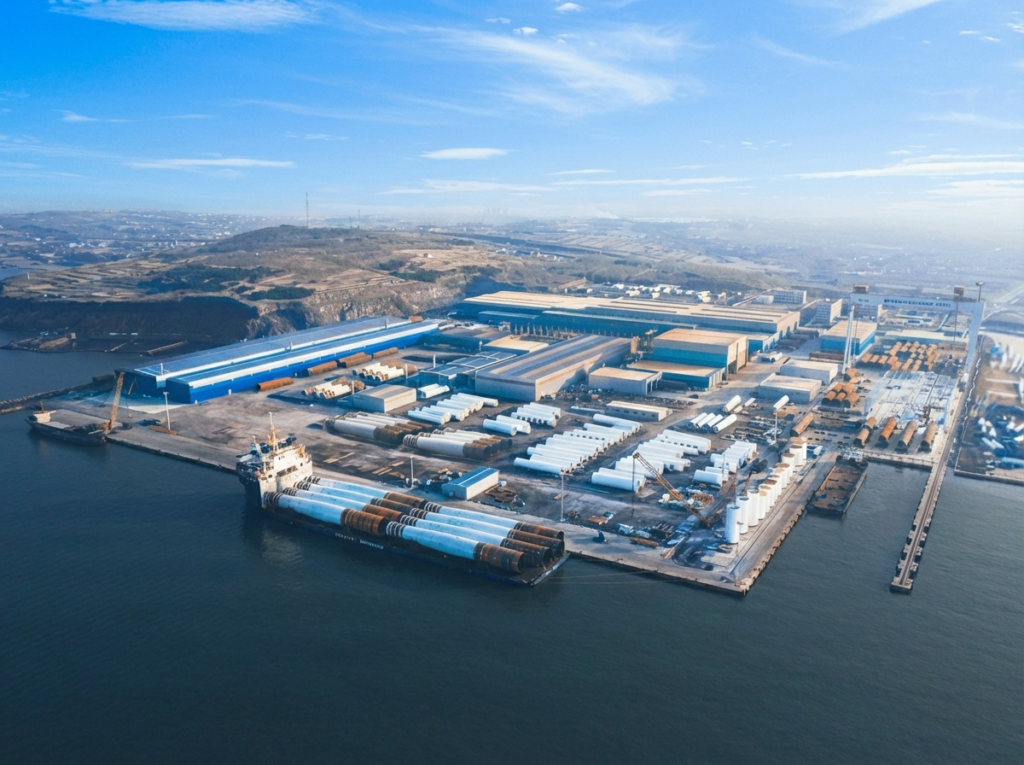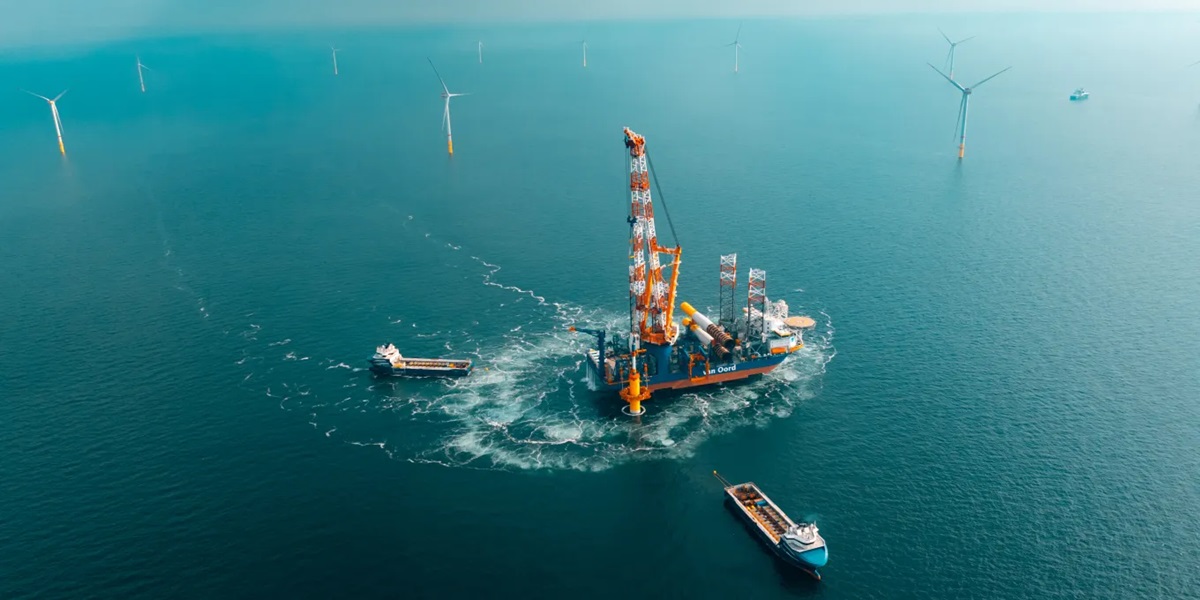
Van Oord’s new offshore wind installation vessel Boreas has completed its first project, successfully installing 45 monopiles at Nordseecluster A in the German North Sea — the initial phase of the 1.6 GW Nordseecluster offshore wind farm jointly developed by RWE (51%) and Norges Bank Investment Management (49%).
The completion of this milestone marks the first phase of a total contract for 105 extended monopiles across both stages of the Nordseecluster project. The remaining 60 monopiles will be installed during Nordseecluster B, scheduled for 2027. When fully operational, the two phases together will supply renewable electricity equivalent to the annual consumption of around 1.6 million households.
The Boreas, christened in June this year, is the largest and most sustainable vessel of its kind, and the first in its class to be equipped with dual-fuel methanol engines. Operating on methanol reduces its carbon footprint by more than 78%. The vessel also features Selective Catalytic Reduction technology to reduce nitrogen oxide emissions and a battery pack of more than 6,000 kWh to lower overall fuel consumption and emissions. During its maiden assignment, the vessel demonstrated its advanced lifting and positioning capabilities under challenging marine conditions.
“With the Boreas now operational and its first assignment successfully completed, we are well-positioned to accommodate the increase in scale in the offshore wind industry,” said Maurits den Broeder, Managing Director Offshore Energy at Van Oord. “This milestone underscores our commitment to enhancing the energy transition.”
Henk Jan van Dijk, Project Director at Van Oord, added: “The strong performance of the Boreas on its first project marks a major milestone, made possible by the dedication and expertise of everyone involved. The timely and precise installation of the first 45 monopiles reflects both the vessel’s capabilities and the strength of our team.”
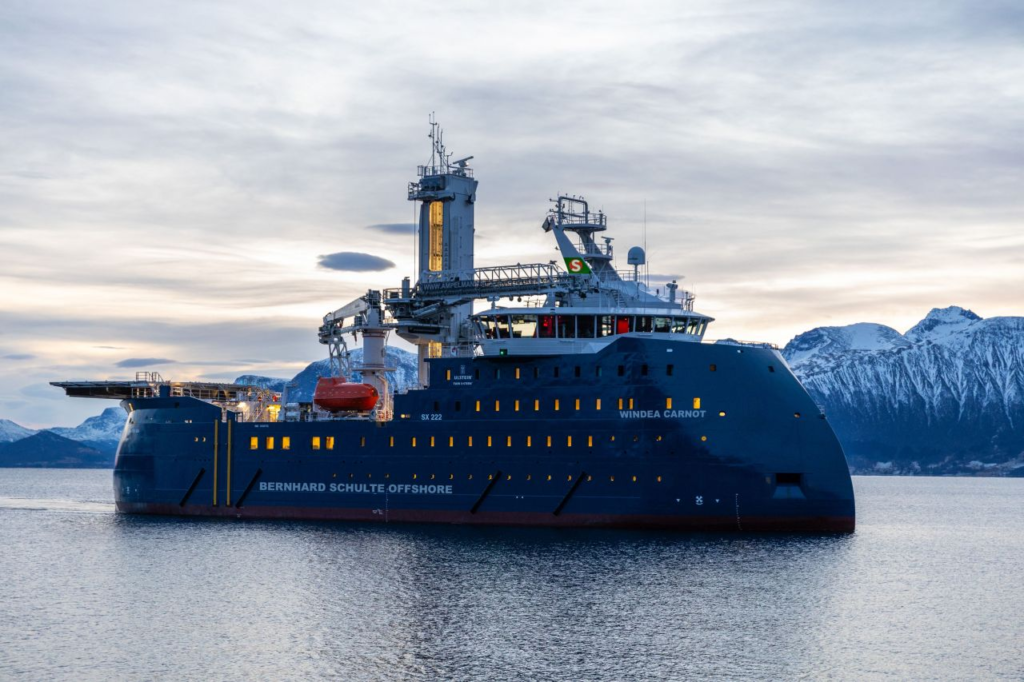
Supporting the Boreas were several vessels from Van Oord’s fleet. The offshore wind installation vessel Aeolus installed secondary steel components, while flexible fallpipe vessels Stornes and Bravenes carried out rock installation around the monopile foundations to prevent seabed erosion caused by strong currents and waves.