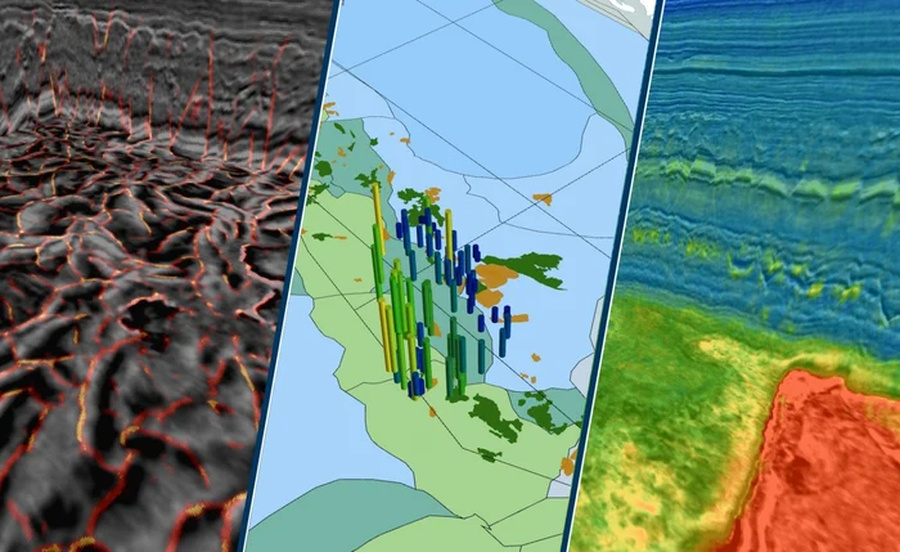
TGS has started reprocessing more than 23,000 sq km of 3D seismic data in the Norwegian Sea as part of three projects spanning Norway, Canada and Ghana.
The Atlantic Margin South Reprocessing project covers an underexplored section of the Norwegian continental shelf where intrusive and extrusive volcanic rocks create subsurface imaging challenges.
TGS will apply a full pre-stack depth migration workflow using machine learning-based denoising, adaptive demultiple and dynamic matching elastic full-waveform inversion. Interim early-out products are due in the third quarter of 2026, followed by the final full integrity volume in the second quarter of 2027.
Offshore Newfoundland and Labrador, TGS has also begun the Orphan 3D PSDM Phase 2 reprocessing project. The programme will upgrade about 13,300 sq km of 3D seismic data across Cretaceous and Jurassic intervals.
Advanced full-waveform inversion and proprietary imaging workflows will be used to improve image clarity, structural definition and reservoir characterisation. Early products are expected during 2027, with final migrated volumes scheduled for the third quarter of 2027.
The Norway and Canada projects are supported by industry funding.
In Ghana, the country’s Petroleum Commission has awarded TGS a contract to create an offshore 2D-cubed project across the Keta Basin.
Phase 1 of the Gulf of Guinea 2D-cubed project will use 5,500 sq km of 3D data and more than 14,700 km of 2D data from several surveys. The inputs will be used to create a 25,300 sq km project covering shelf and deepwater areas offshore Ghana.
The 2D-cubed process combines existing multi-vintage 2D and 3D data into a single structurally conformable 3D seismic volume. Its interpolation workflow fills gaps between survey lines and suppresses legacy migration artefacts.
Final products from the Ghana project are expected in the first quarter of 2027.