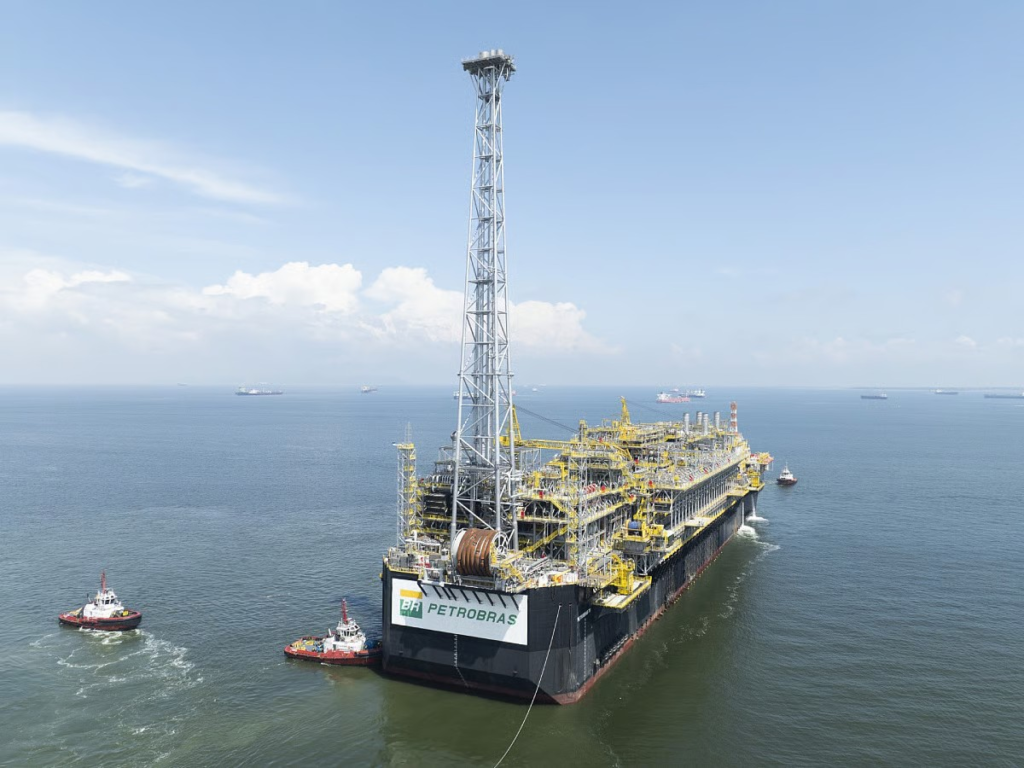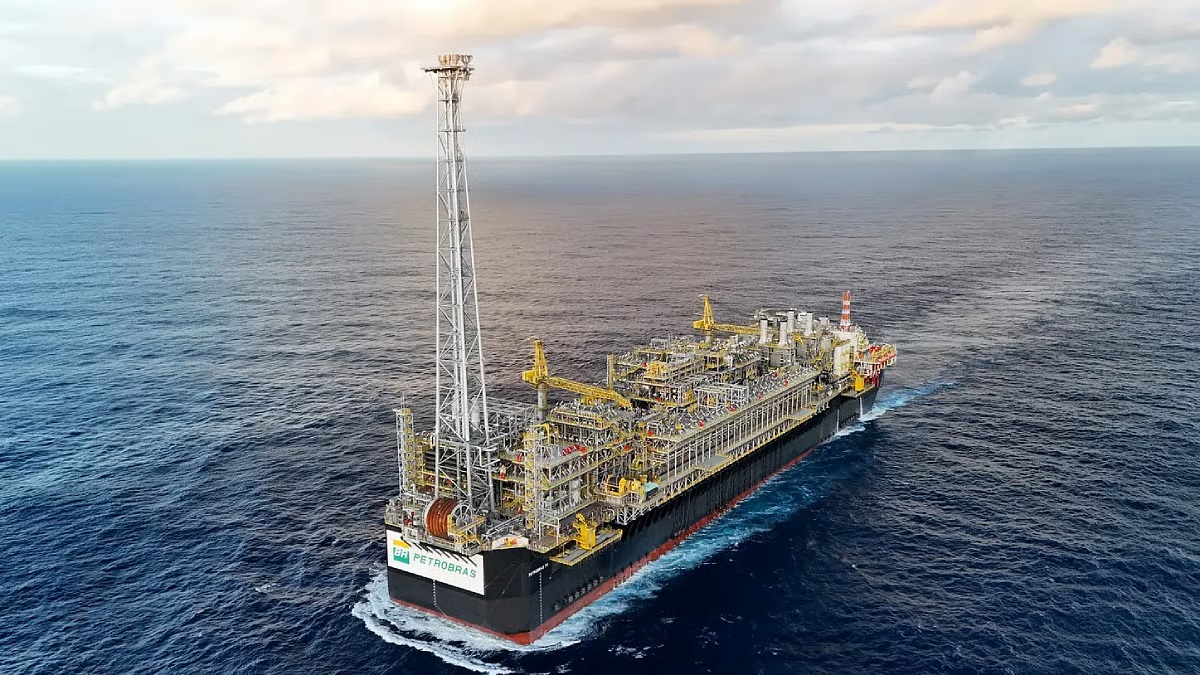
Petrobras plans to start production from a new floating production, storage and offloading unit (FPSO) at the Buzios field in December, continuing its expansion at what is currently the world’s biggest oil field.
The P-78 FPSO, which arrived in Brazil in late September, has a production capacity of 180,000 barrels per day, said Renata Baruzzi, head of engineering and technology. The vessel’s startup will mark another milestone in Petrobras’s deepwater operations.
The ramp-up at Buzios and other projects lifted Petrobras’s oil output to 2.6 million barrels per day in October, up from an average of 5.2 million barrels per day in the third quarter, according to Sylvia Anjos, head of exploration and production. The company also expanded capacity on existing FPSOs by 115,000 barrels per day, which helped deliver stronger third-quarter earnings.
“Buzios is a spectacular reservoir,” Anjos said on a call with analysts. “The rock and cavity structures allow the field to produce more than we expected.”
Buzios is part of Brazil’s pre-salt basin, which transformed the country into one of the most dynamic oil regions 18 years ago. The field has become Petrobras’s primary growth driver, contributing to an output increase surpassed only by the United States among non-OPEC nations over the past year.
Chief Financial Officer Fernando Melgarejo said Petrobras continues to deliver projects ahead of schedule and within its budget, which has helped avoid cost inflation. He added that 85% of capital expenditures in the third quarter were allocated to exploration and production activities.
Melgarejo noted that the company is adjusting to lower oil prices and may postpone some planned investments. He also said Petrobras is unlikely to pay any extraordinary dividend this year due to the current price environment.