Japan’s Major Carriers to Invest in MILES for LCO2 Ship Standardization
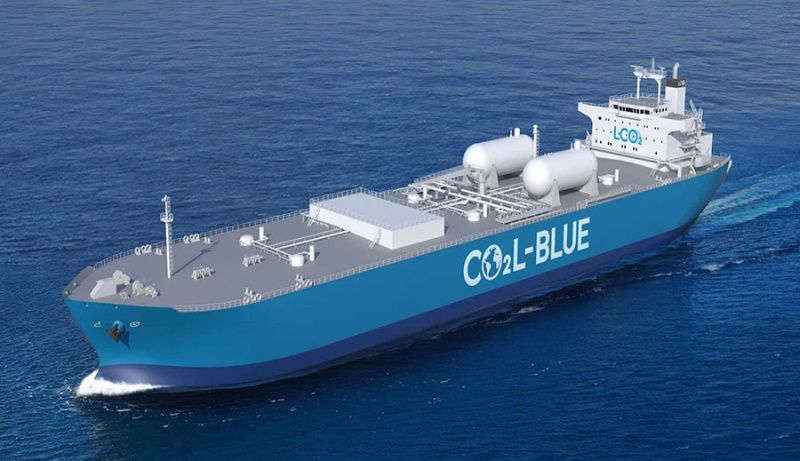
Japan’s three largest shipping companies—NYK Line, Mitsui O.S.K. Lines (MOL), and “K” Line—are moving to acquire stakes in MILES, a joint venture established initially by Mitsubishi Heavy Industries and Imabari Shipbuilding. This strategic investment focuses on the collaborative design of liquefied CO2 (LCO2) carriers and advanced vessel models.
Currently, Mitsubishi Heavy Industries owns 51% of MILES, with Imabari Shipbuilding holding the remaining 49%. While the exact investment ratios for the shipping lines have not been finalized, the parties are expected to hold equal stakes. This initiative represents a historic milestone, marking the first time Japan’s leading carriers and shipyards have jointly funded the development and design of a new ship classification to enhance the nation’s industrial competitiveness.
The groundwork for this partnership began last year with a joint study involving the three carriers and four major shipbuilders: Mitsubishi Heavy Industries, Imabari, JAPAN MARINE UNITED CORPORATION (JMU), and Nihon Shipyard (NSY). The consortium aims to create standard specifications and hull forms for LCO2 carriers to meet surging demand driven by global decarbonization. MILES, formerly known as “MI LNG” since its launch in 2013 for LNG carrier design, was renamed in December 2024 to reflect its expanded mandate.
Under the new structure, the organization will accelerate the development of LCO2 transport vessels and expand into new fuel technologies, including ammonia-fueled vessels. The objective is to share standardized designs across domestic shipyards, thereby addressing labor shortages and improving productivity through mass production.
Industry leaders view this consolidation as essential for survival. Takaya Soga, President of NYK, emphasized that securing engineering talent is urgent and described the joint standardization effort as a practical measure to address shipyard capacity limitations. Hitoshi Nagasawa, chairman of the Japanese Shipowners’ Association, highlighted that while Japanese shipbuilding excels in custom designs, closing the price and resource gap with China and South Korea is critical. He suggested that Japan might require a dedicated design organization comparable to CSSC-SDARI in China to reinforce its maritime industrial base.