A senior Indian official has indicated that New Delhi plans to deepen cooperation with South Korea in shipbuilding and maritime security, outlining how Seoul’s industrial strengths align with India’s long-term maritime ambitions. The remarks were delivered in a written interview with Yonhap News Agency on 25 November 2025.
Sarbananda Sonowal, India’s minister of ports, shipping and waterways, said that South Korea’s record in building reliable, high-quality vessels positions it as a key partner in the country’s “Viksit Bharat 2047” strategy. The initiative aims to transform India into a developed nation by the centenary of its independence and includes major maritime-sector goals.
India intends to reach the top ten shipbuilding nations by 2030 and advance into the top five by 2047. To achieve this trajectory, the government plans to invest US$24 billion and increase its commercial fleet from 1,500 to 2,500 vessels to enhance domestic capability.
The minister noted that South Korea’s precision engineering, LNG expertise, and high-efficiency production systems offer the type of support India requires as it scales up its shipbuilding capacity. He also underscored that Korea’s economic development model — built on focused industrial policy, technology absorption, and a disciplined workforce — provides practical lessons for India’s own transformation plans.
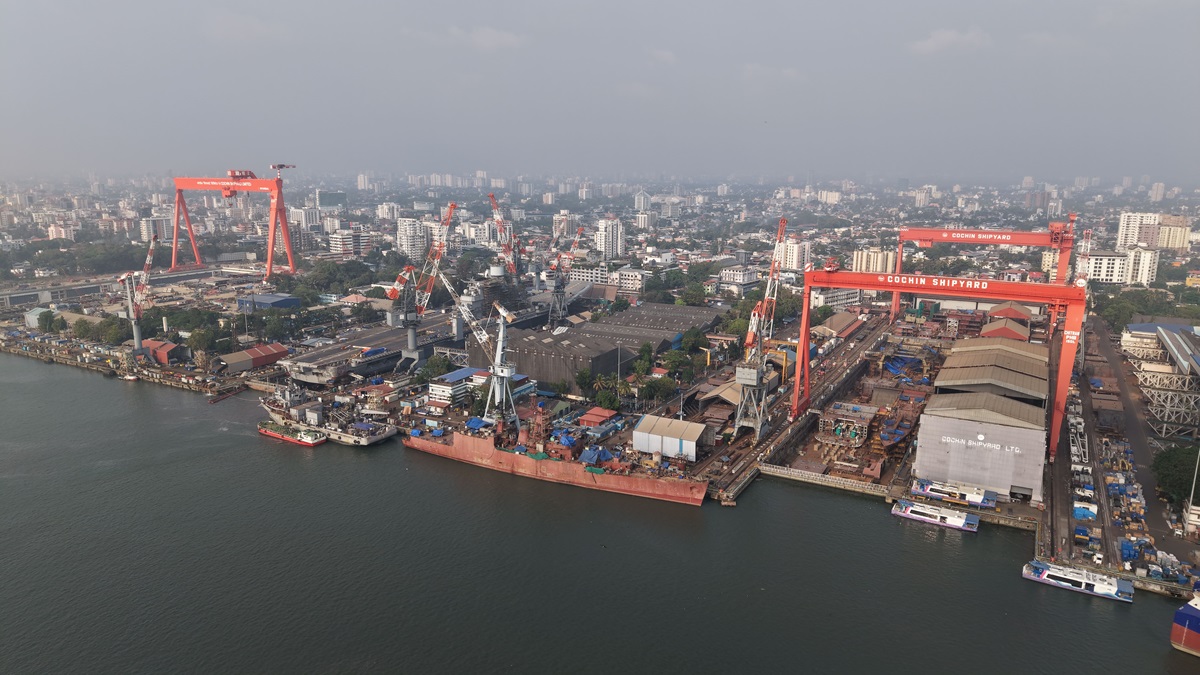
India is already cooperating with major Korean shipbuilders, including Hanwha Ocean and HD Hyundai. In July, HD Hyundai established a partnership with the state-owned Cochin Shipyard Ltd., marking the first formal collaboration between shipbuilders from the two countries. Sonowal said such partnerships are expected to drive skill transfer, new shipbuilding clusters, and a more comprehensive supply chain ecosystem, adding that joint-venture shipyards could emerge over the next five to ten years to meet domestic and international demand.
According to Sonowal, India offers a large market, skilled manpower, and cost competitiveness that complement South Korea’s technological strengths. He added that India’s position near Africa, South Asia, West Asia, and the Asia–Europe maritime corridor gives Korean companies logistical advantages for production and sourcing.
Foreign shipbuilders may face initial challenges in India, including long project cycles and early infrastructure adjustments, but Sonowal said New Delhi is working to ease those obstacles. In September, the government approved a package worth 697 billion rupees (US$8 billion) to reinforce domestic shipbuilding and strengthen the wider maritime sector.
He added that India seeks broader cooperation with South Korea in port digitalization, green shipping, maritime cybersecurity, technology partnerships, and skill development, noting that Korea can play a central role in supporting advanced ship designs, automated production and global-standard technologies.
Source: Yonhap News Agency