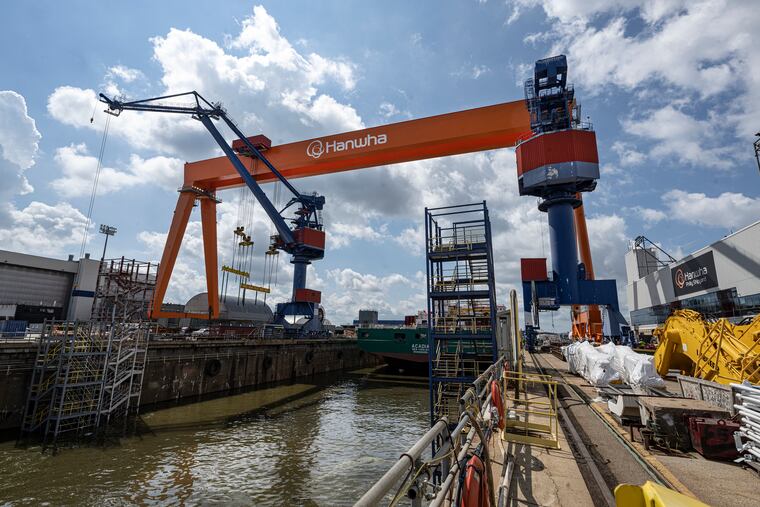
Hanwha Group is stepping up preparations at Hanwha Philly Shipyard in Philadelphia as the United States advances a major naval shipbuilding expansion under the “Golden Fleet” banner, with the yard positioning itself for potential future workshare on high-end naval platforms.
At the center of the effort is capacity-building. Hanwha Defense USA’s shipbuilding leadership has described ongoing recruitment and training to expand the workforce, along with facility investment and readiness work related to technology transfer. The company has also been seeking specialists with experience in the design, construction, and operation of Virginia-class submarines, including modular production and block-assembly capabilities central to nuclear-submarine manufacturing.
While preparation work is underway, executives have emphasized that any transition to actual submarine production would depend on government-level coordination and decisions between Washington and Seoul, including timing and approvals.
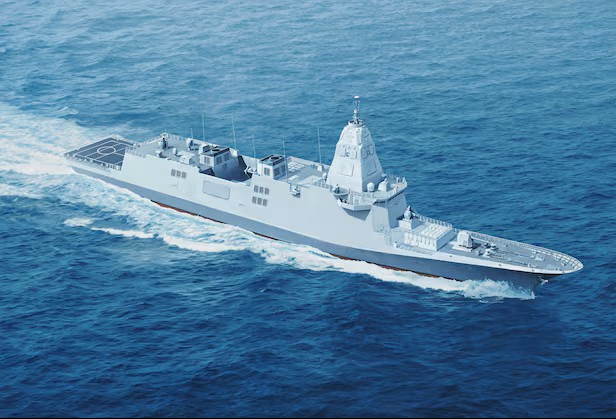
The push coincides with US policy signals aimed at rebuilding domestic shipbuilding throughput, including new surface-combatant initiatives linked to the Navy’s evolving fleet mix. In parallel with submarine industrial-base discussions, US Navy planning has also highlighted a future class of smaller combatants, commonly referred to as the FF(X) concept, designed to complement larger multi-mission warships and broaden operational flexibility.
Hanwha Group officials have also outlined a working assumption for a two-track production approach: US Navy nuclear-powered submarine construction centered in Philadelphia. At the same time, Hanwha Ocean’s Geoje shipyard in Korea supports Korea’s own nuclear-submarine ambitions, subject to intergovernmental approvals and implementation frameworks.
Investment commitments are another pillar. Hanwha has said it will direct an additional $5 billion into the Philadelphia yard under a bilateral cooperation effort branded “MASGA,” following an earlier $100 million acquisition of the shipyard at the former Philadelphia Navy Yard. The company has linked the plan to broader Korea–US shipbuilding cooperation discussions that remain focused on structure, governance, and deployment of funding.
In Korea, market sentiment has tracked these policies and industrial signals. Shares of Hanwha Ocean and other defense-linked manufacturers have moved sharply alongside US statements about allied participation in future frigate construction, underscoring investor attention on whether industrial-base plans translate into funded procurement and sustained yard workloads.