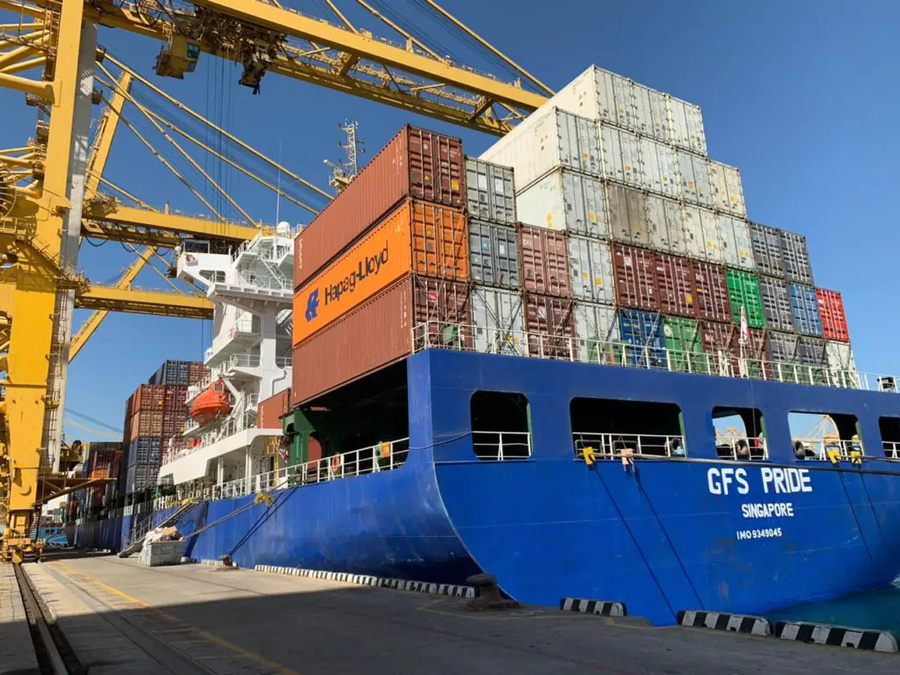
Singapore’s Maritime and Port Authority (MPA) has confirmed the GFS Pride sinking in the Strait of Hormuz. The authority said the entire crew of 21 had been evacuated, with no injuries reported.
The authority’s 14 October statement covered separate incidents affecting two container ships on Singapore’s register. GFS Pride was damaged and caught fire following a reported projectile strike on 13 October 2026. A separate reported strike on GFS Giselle occurred on 14 October. MPA specified Singapore time for both dates.
Hull damage did not prevent GFS Giselle from proceeding to a safe anchorage using its engines. All 22 people in its crew were safe. Neither vessel carried Singaporean nationals. MPA said it was maintaining contact with the ships’ management company.
With capacity for 2,824 TEU, GFS Pride was under the management of GFS Ship Management FZE, based in the UAE. Marine Insight, citing a navigational warning from Pakistani authorities, reported that containers were adrift after the vessel went down.
Independent verification of the cause remains unavailable. Marine Insight reported an Iranian Revolutionary Guards claim that the ship had hit a mine on a route the Guards regarded as unauthorised. The publication also cited MARISKS as saying independent corroboration of that account was lacking. The claim that the vessel carried more than 2,500 containers came from the Guards; MPA’s statement did not provide a cargo count.
A separate loss involved the Antigua and Barbuda-flagged bulk carrier Cape Dao. Reuters, citing International Maritime Organization (IMO) data, reported that the vessel had sunk near the strait after an attack on 23 September. Maritime sources cited by the agency said one seafarer died and the surviving crew left the vessel in an evacuation following the strike.
The wider pattern of attacks on shipping in the Strait of Hormuz continued during October. Marine Insight, drawing on UK Maritime Trade Operations reports, put the number of vessels attacked that month at more than 20, with tankers accounting for most cases. It also cited IMO figures recording injuries to over a dozen seafarers during the month, while two others remained missing.
Oil export volumes have declined as well. Marine Insight cited Kpler data putting the weekly average for crude shipments via Hormuz at 8.5 million barrels per day for the week ending 12 October, a shortfall of nearly 40% against the pre-war level. The report said September exports had matched pre-war volumes while US forces assisted tanker passages.
The same report described substantial daily variation: Monday’s volume was approximately 3 million barrels, against 6 million on Friday. It placed total Middle Eastern shipments at 14 million barrels per day, nearly 20% short of pre-war volumes, including supplies piped to the Gulf of Oman and Red Sea.
MPA voiced concern over the repeated attacks and urged compliance with international law to safeguard ships and seafarers.