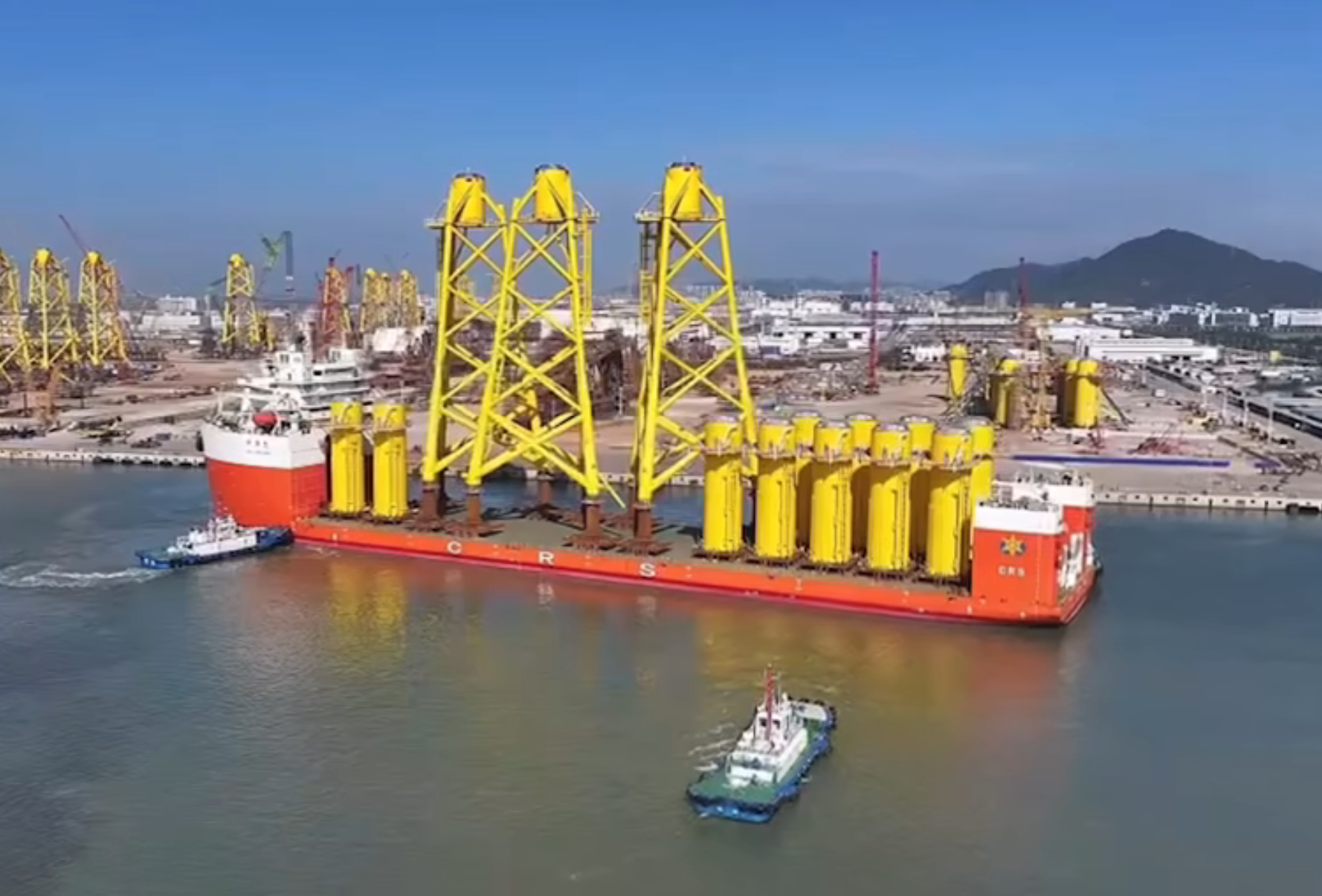
On 23 December 2025, the first shipment of large offshore wind foundations built in China for Scotland’s Inch Cape Offshore Wind Farm left port, initiating physical deliveries from Asia into the North Sea project. The cargo was manufactured by CNOOC Engineering Zhuhai, which is supplying key steel structures for the development.
Under its scope of work, CNOOC Engineering Zhuhai is fabricating 18 jacket structures, supporting steel piles and 24 monopile transition pieces, with total steel volumes exceeding 60,000 t. The initial shipment consists of 3 jacket foundations, each 95.19 m high and weighing about 6,400 t, along with 11 monopile transition pieces measuring 31.73 m in height, with a maximum diameter of 8.31 m and a combined weight of 7,450 t.
The foundations are designed for water depths of 40–60 m in the North Sea. They are described as China’s largest single-unit capacity jackets delivered to a European offshore wind project. Fabrication applies a “side-V” process together with a “modular pre-installation + real-time monitoring calibration” method, enabling sub-millimetre alignment accuracy on structures weighing several thousand tonnes.
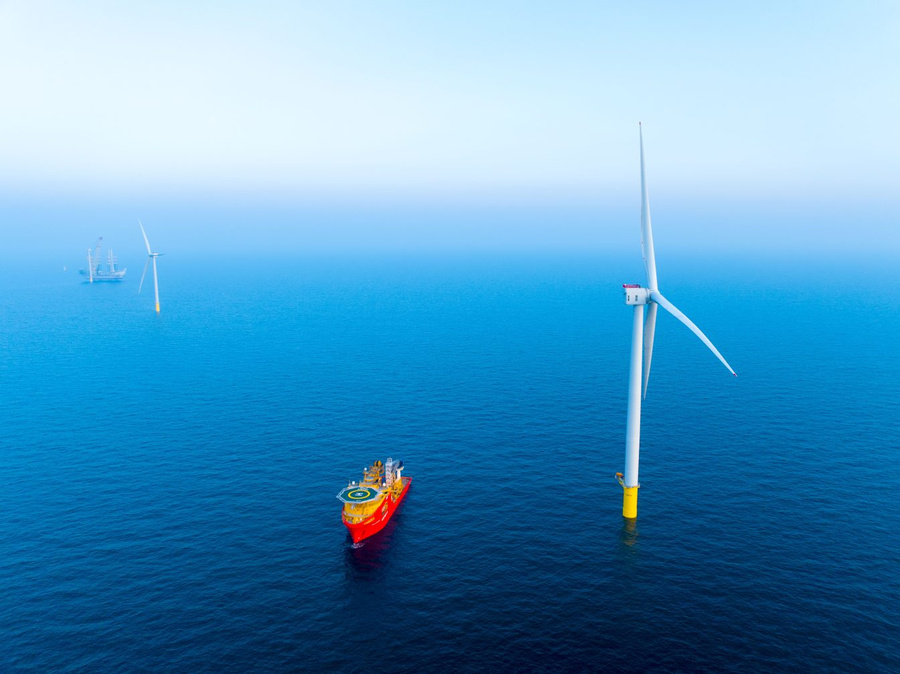
These Chinese-built components form part of the 1.08 GW Inch Cape Offshore Wind Farm, a £4.166 billion project that will install 72 Vestas 15 MW turbines. Once operational, the wind farm is expected to generate 5 TWh of electricity per year, supplying power to more than 1.6 million households in Scotland.
By taking on the construction of over 60,000 t of critical equipment and now completing the first shipment, Chinese companies are demonstrating advanced engineering capability, large-scale production capacity and cost-focused execution for offshore wind foundations. Their involvement provides practical support for the delivery of large clean energy projects in Europe.
The Inch Cape project is being co-developed by SDIC Redstone Energy, a UK-based wholly owned subsidiary of China’s SDIC Power, and Ireland’s ESB. The 23 December shipment illustrates how China’s manufacturing and supply chain are contributing to the build-out of international offshore wind capacity.