Global new ship orders increased sharply in November compared with the previous month, although overall volume remained slightly below the same month a year earlier. Year-to-date contracting continued to decline, while Chinese yards retained the largest share of both monthly and cumulative orders.
According to figures from Clarkson released on 5 December, newbuilding contracts in November covered 152 vessels with a combined 5.13 million CGT (compensated gross tons). On this basis, ordering was about 1% lower than in November last year, when 5.17 million CGT was booked, but 72% higher than October’s 2.99 million CGT.
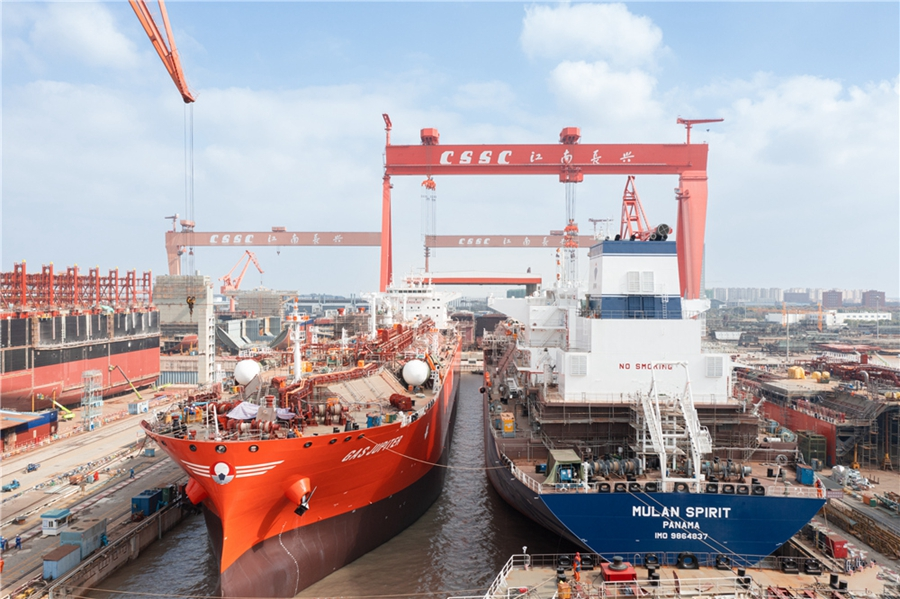
By ordering country, Chinese shipbuilders won 2.58 million CGT of business for 100 vessels in November, giving them a 50% share of global contracting and first place in the monthly rankings. South Korean yards followed with 1.97 million CGT across 40 vessels, equivalent to a 38% market share.
From January through November, global new ship orders reached 44.99 million CGT on 1,627 vessels, down 37% from 71.52 million CGT and 2,994 vessels in the same period a year earlier. Over this eleven-month period, Chinese shipyards took 26.64 million CGT of orders for 1,067 ships, corresponding to a 59% market share. Their order intake fell 47% year-on-year but remained the largest in the market. South Korean builders secured 10.03 million CGT and 223 vessels, representing a 22% share, with volumes down 5% year-on-year and ranking second.
At the end of November, the global newbuilding orderbook stood at 168.4 million CGT, about 1.2 million CGT lower than at the end of October. Chinese yards held 103.69 million CGT of this total, 8.48 million CGT more than a year earlier but around 10,000 CGT below the previous month, for a 62% share. South Korean shipbuilders had 33.76 million CGT in their backlog, down 3.66 million CGT year-on-year and 420,000 CGT month-on-month, giving them a 20% share and second position.
The Clarkson Newbuilding Price Index was assessed at 184.33 at the end of November, a slight 0.54-point decrease from October’s 184.87 and broadly indicating stable pricing. Compared with November 2020, the index is 47% higher, showing that the general upward trend in newbuilding prices has continued.
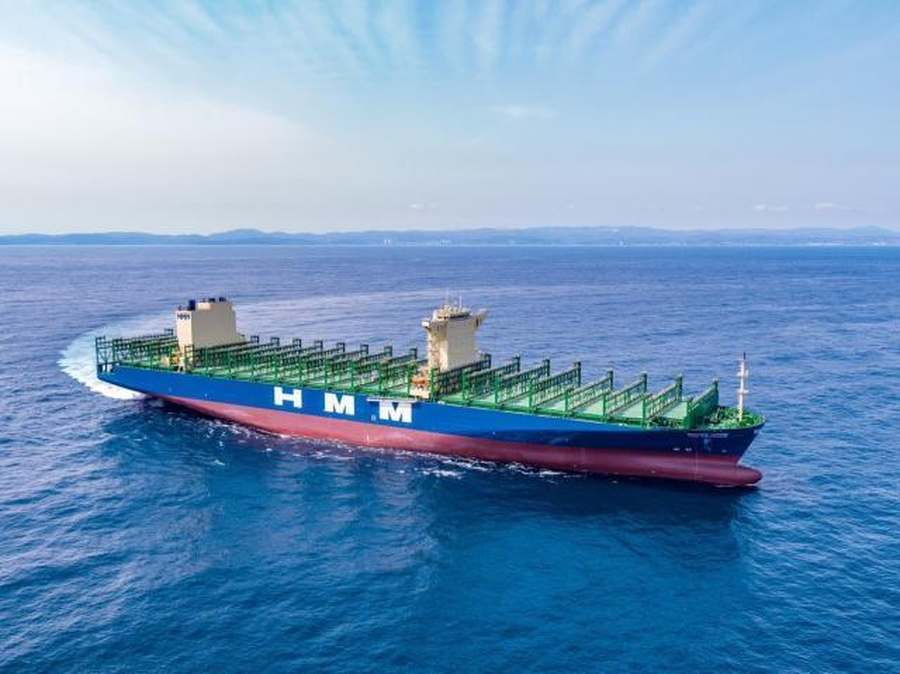
By vessel type, the indicative price of a 174,000 m³ large LNG carrier was around $248 million, unchanged from the previous month. A VLCC crude carrier was priced at about $127.5 million, $1.5 million higher than in October. Very large container ships in the 22,000–24,000 TEU range were quoted at roughly $264 million, down $2.5 million month-on-month.
Market analysis attributes the continued high level of newbuilding prices to requirements such as specialised designs to comply with decarbonisation rules, the shift to alternative fuels including ammonia, LNG, and methanol, changes to main engines, installation of desulfurisation systems, and additional low-carbon equipment. Because the unit cost of this equipment is significantly higher than on more conventional ship types, overall contract prices for new ships have remained firm.