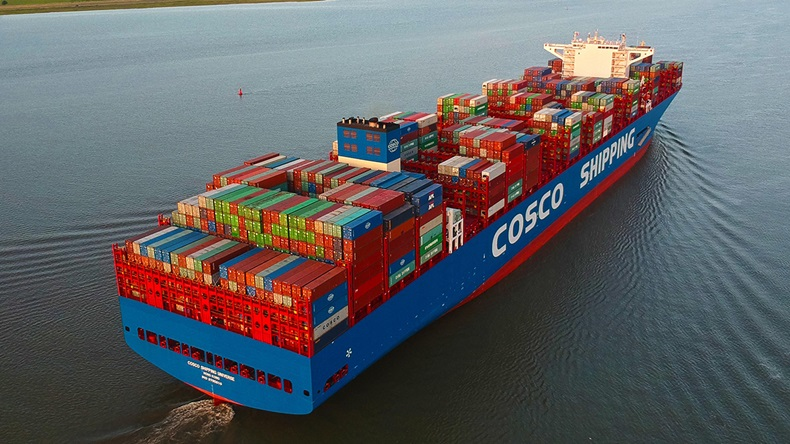
COSCO Shipping has agreed to a large-scale fleet renewal framework with China State Shipbuilding, covering the construction of 87 new vessels across its fleet. In a stock exchange filing, China State Shipbuilding indicated a notional contract value of about $7 billion, while stressing that prices and other terms could change as individual projects move ahead.
Chinese media say the deal ranks as the largest shipbuilding contract so far between a Chinese shipping company and a domestic yard, and it was unveiled with a high-profile signing ceremony.
COSCO presents the agreement as a major step to adjust its fleet to current market conditions. The group says the new tonnage is intended to keep its scale advantages while renewing and streamlining its vessels, with designs reflecting trends toward larger ships, lower emissions and more intelligent onboard systems.
The companies have not released a detailed timetable for deliveries. They said the framework extends across all of COSCO’s main business lines, including container shipping, dry bulk, oil and gas transportation, specialised vessel services and passenger operations. Vessel types referenced in the plan include ultra-large container ships, ultra-large bulk carriers, ultra-large oil tankers, grain carriers, multi-purpose heavy lift vessels, MR tankers, ro-ro vessels and small containerships.
The order framework follows a recent restructuring at China State Shipbuilding Corporation aimed at improving efficiency and competitiveness. The group said most of its key yards and related entities are expected to participate, naming Jiangnan Shipyard, Dalian Heavy Industry, Wuchang Shipbuilding Industry, Guangzhou Shipbuilding International, China Shipbuilding Chengxi and Beihai Shipbuilding among those involved.
The move comes as the U.S. plans to introduce fees on Chinese-built and Chinese-owned vessels. It had been noted that COSCO might have faced charges running into the billions of dollars if the U.S. had not agreed, as part of trade negotiations, to delay the measures for one year.
The new framework may absorb part of COSCO’s previously announced newbuildings, but it also appears to enlarge an already substantial orderbook. According to Alphaliner, the group already has 82 containerships on order with a combined capacity of 1.1 million TEU. Media reports say that so far this year COSCO has ordered 25 Capesize bulk carriers, and two months earlier it added 23 additional bulk carriers and six ultra-large tankers to its backlog.
Analysts say an order programme of this size is likely to affect the industry for many months.