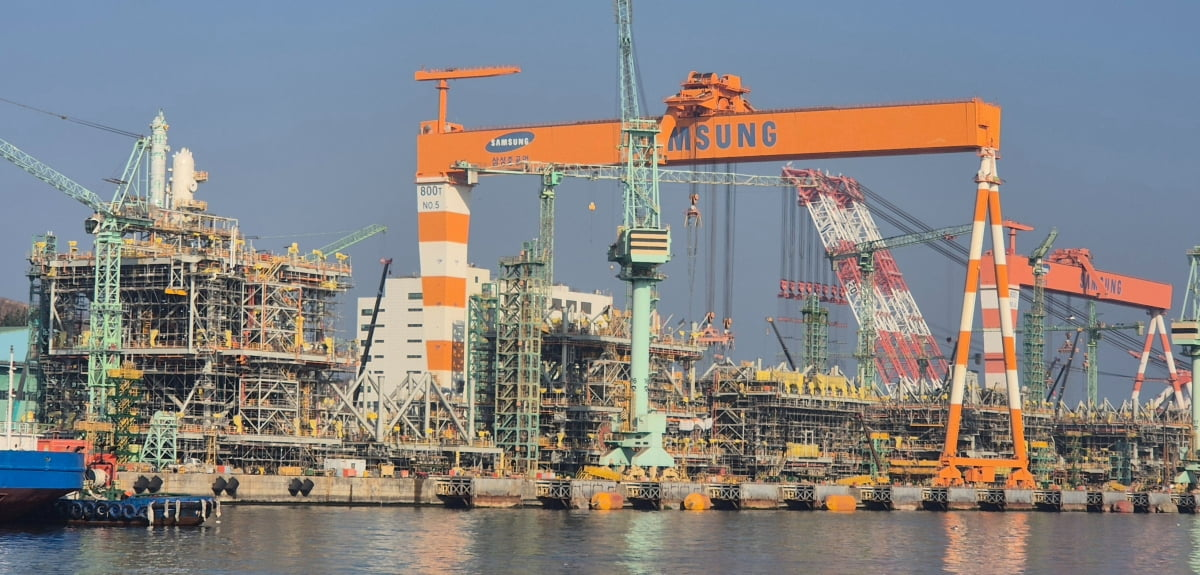
South Korea’s major shipbuilders are intensifying cooperation with U.S. partners under the Make American Shipbuilding Great Again (MASGA) initiative, as Samsung Heavy Industries (SHI) joins the effort with renewed focus on trans-Pacific industrial collaboration. The move signals that all three of Korea’s leading shipbuilding groups are now advancing their U.S. engagement strategies.
On 6 November, Samsung Heavy Industries announced a strategic partnership agreement with DSEC, a design and equipment procurement specialist with extensive operations in the U.S. market. DSEC provides ship design, component supply, maintenance, and shipyard consulting for both commercial and specialized vessels. As of 2023, U.S.-related contracts accounted for 73% of DSEC’s total revenue.
Under the new partnership, SHI and DSEC will cooperate across several fields in the U.S., including medium-sized commercial ship construction, shipyard modernization consulting, retrofits and LNG cargo tank repair, green and digital technology solutions, and R&D facility utilization. The collaboration aims to integrate SHI’s shipbuilding and offshore engineering capabilities with DSEC’s established U.S. experience in design and procurement to build a value chain optimized for the MASGA framework.
The deal follows SHI’s August partnership with a U.S. marine group for Navy support vessel maintenance, repair, and overhaul (MRO), marking the company’s second major U.S. cooperation initiative this year.
Samsung Heavy Industries’ move comes as its domestic rivals—HD Korea Shipbuilding & Offshore Engineering (HD KSOE) and Hanwha Ocean—also expand their U.S. partnerships within the Korea–U.S. cooperation framework under discussion by the Ministry of Trade, Industry and Energy (MOTIE) and industry.
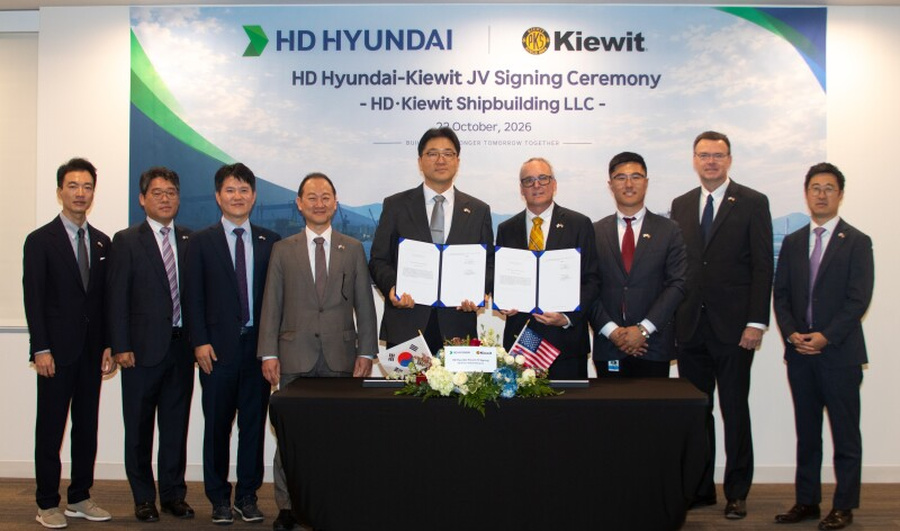
HD Hyundai, the holding company of HD KSOE, recently signed a cooperation agreement with Siemens of Germany to enhance production efficiency through digital transformation and workforce training initiatives. In addition, HD Hyundai and Cerberus Capital Management have pledged $5 billion toward a U.S. shipyard modernization program.
Hanwha Group has separately announced plans to invest $5 billion in Philly Shipyard, aiming to upgrade its production capacity and facilities.
South Korea’s Ministry of Trade, Industry and Energy (MOTIE) is actively coordinating with industry stakeholders to develop detailed operational plans for the $150 billion shipbuilding cooperation fund announced during the latest Korea-U.S. summit on 29 October. The ministry has been holding individual consultations with the “Big Three” shipbuilders, rather than collective sessions, to gather input on how government and private investments should be managed to maximize benefits for domestic firms.
An MOTIE official confirmed that the ministry is also conducting a demand survey for the Korea-U.S. Shipbuilding and Offshore Industry Technology Cooperation Center. This government project will receive approximately ₩6.6 billion in next year’s budget. The ministry plans to finalize allocation plans once the bilateral investment memorandum is released.
“The goal is to design a fund management structure that ensures Korean shipbuilders can directly benefit,” the official said. “Once the memorandum on U.S. investments is made public, we will arrange meetings with the shipbuilding companies and the Korea Offshore & Shipbuilding Association to present proposals reflecting industry input.”
According to the summit statement, the two governments agreed to allocate $150 billion of the $350 billion U.S. investment package to the MASGA initiative. The funding will be led primarily by private Korean firms, combining direct investments, ship financing, and guarantee-based support mechanisms. The memorandum detailing the investment structure is expected to be unveiled later this week.
The MASGA initiative, envisioned as a bilateral framework to revitalize U.S. shipbuilding capacity, now includes active participation from all three leading Korean shipbuilders—Samsung Heavy Industries, HD KSOE, and Hanwha Ocean—alongside support from Seoul’s trade ministry.
Source: Hankyoreh Newspaper (6 November 2024)