Japan is shifting its shipbuilding strategy from production scale to technology and value creation. The government and the Shipbuilders’ Association of Japan (SAJ), representing 17 major shipbuilders, plan to invest a combined $6.5 billion by 2035 to modernize the industry through eco-friendly and digital innovations.
SAJ will contribute around $2.3 billion, with additional public funding to upgrade domestic shipyards—introducing advanced automation, digital technologies, and large cranes. A Japan–U.S. MoU aims to deepen maritime cooperation, while Washington is pursuing similar talks with South Korea.
According to Intermodal, Japan is advancing zero-emission, autonomous, and IoT-integrated vessels through partnerships with universities and R&D centers. Analyst Nikos Tagoulis noted Japan’s focus has shifted “from volume to innovation and value,” adding that by 2040 the nation seeks to lead in autonomous and zero-emission shipbuilding.
Japan’s global shipbuilding share dropped from 26% in 2017 to about 10% in October 2025, with 737 vessels totaling 40.7 million tons on order. Of these, 10% use methanol fuel, 4% are LNG-fueled, and 32% are equipped with scrubbers.
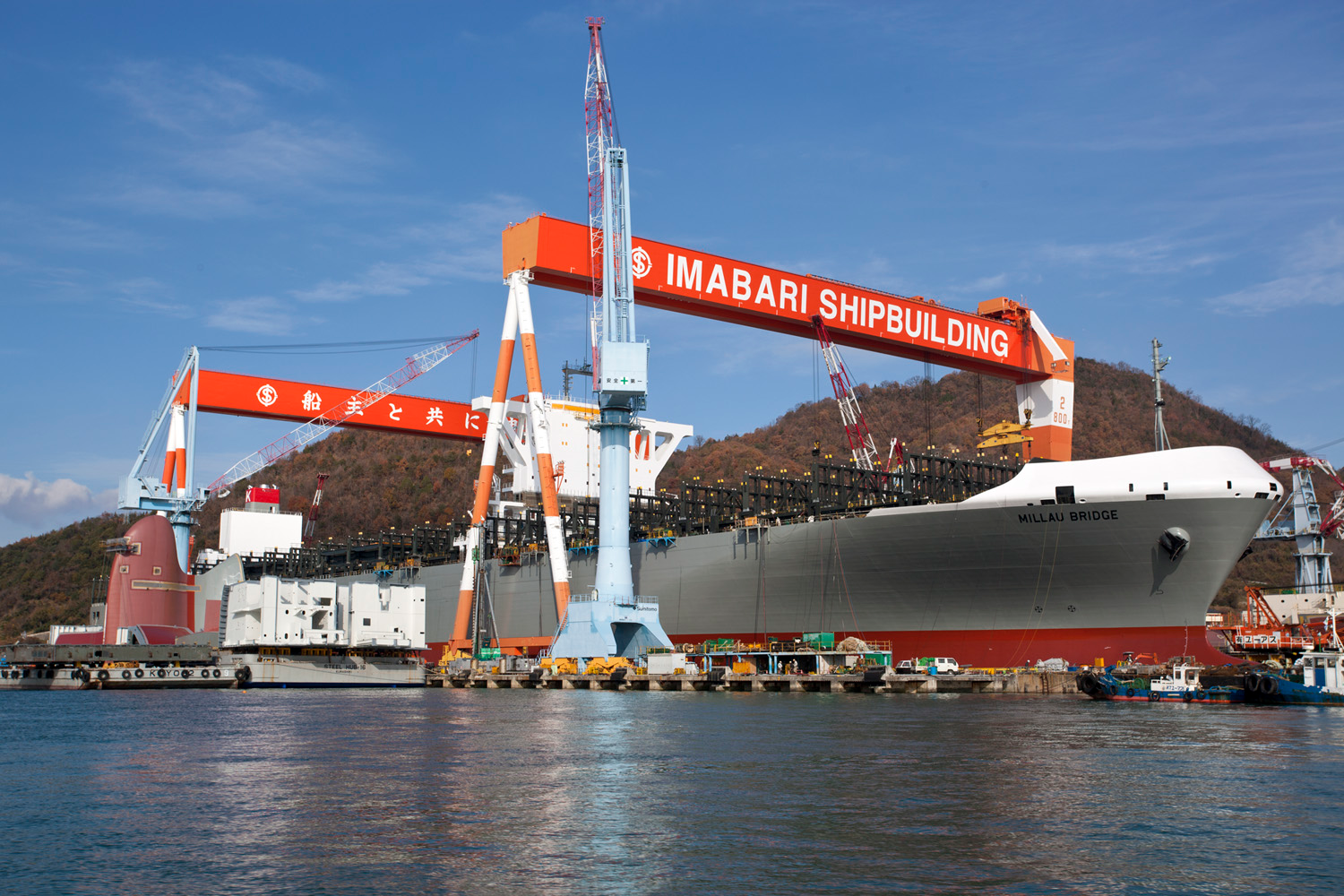
Industry consolidation continues: Imabari Shipbuilding has acquired a stake in Japan Marine United (JMU), Mitsui E&S transferred its shipbuilding arm to Tsuneishi, and Sasebo Heavy Industries exited newbuilding in 2022. Despite limited coastal space, upgrade investments are expected to enhance capacity at existing facilities.
Foreign workers now make up 20% of Japan’s shipbuilding workforce, compared with nearly none a decade ago, as companies recruit abroad and establish specialized training centers to support skills development.