South Korea’s major shipbuilders posted robust earnings for the third quarter of 2025, supported by high-value LNG carrier deliveries. However, rising orders for container ships have sparked concerns about declining profitability amid intensifying competition from Chinese yards.
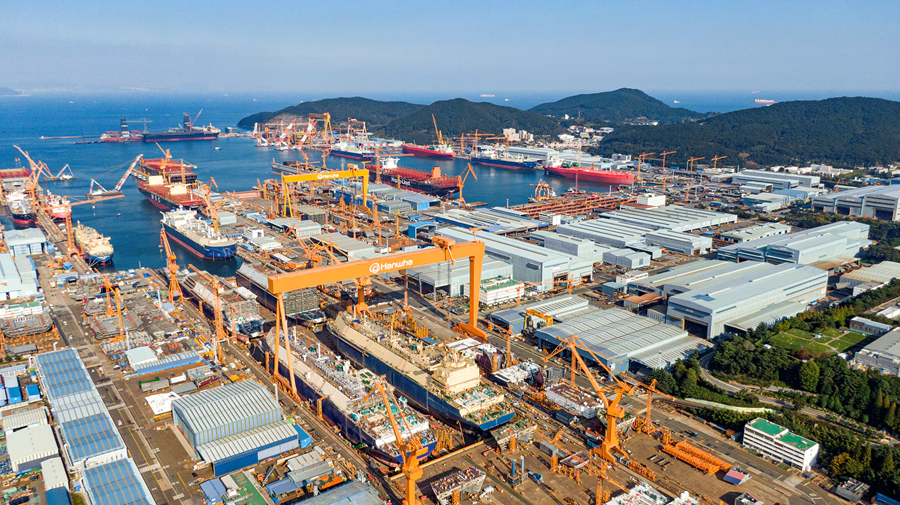
According to industry data released on 29 October, Hanwha Ocean reported an operating profit of KRW 289.8 billion, a 1,032% year-on-year surge. Samsung Heavy Industries posted KRW 238.1 billion, up 99%, while HD Hyundai Heavy Industries is estimated to have achieved KRW 482.7 billion, an increase of 134% from a year earlier.
Analysts noted that the three leading Korean builders have maintained their strong earnings base mainly through LNG carrier projects, a segment known for its high unit prices and margins. Yet, with global order trends shifting, Korean shipyards are adapting their order portfolios toward container vessels to sustain production volumes.
This year, HD Korea Shipbuilding & Offshore Engineering has filled 59 out of 95 new orders with container ships, while Hanwha Ocean secured 13 container carriers among 32 total orders.
While the surge in container ship orders helps maintain yard utilization rates, it poses a risk to profit margins. Unlike LNG carriers, container ships offer lower profitability due to intense price competition, particularly from Chinese builders that offer roughly 10% lower prices. Consequently, Korea’s global market share for container ship orders dropped from 32% in 2022 to 25% between January and September 2025, while China’s share rose from 60% to 71% during the same period.
Industry observers note that Chinese shipyards have expanded their market dominance through aggressive pricing, supported by state subsidies. Meanwhile, Korean yards continue to face challenges stemming from workforce shortages and quality issues that followed large-scale restructuring in 2016. The layoffs created a shortage of skilled labor, forcing yards to rely heavily on less-experienced foreign workers, which some industry participants say led to lower production quality.
The situation was further aggravated after 2021, when a sharp rise in ship prices prompted owners to favor Chinese-built vessels, accelerating China’s technological catch-up.
An industry source commented, “Although U.S. restrictions on Chinese-built ships entering its ports have temporarily boosted Korean orders, China still holds a dominant market position. The perception that Korean vessels no longer match their former quality has also spread among shipowners.”
The source added, “Over the past decade, limited investment has caused Korea’s shipbuilding sector to fall behind in green and smart technologies. However, as the skill levels of foreign workers improve and productivity rises, conditions are now in place to restore product quality.”