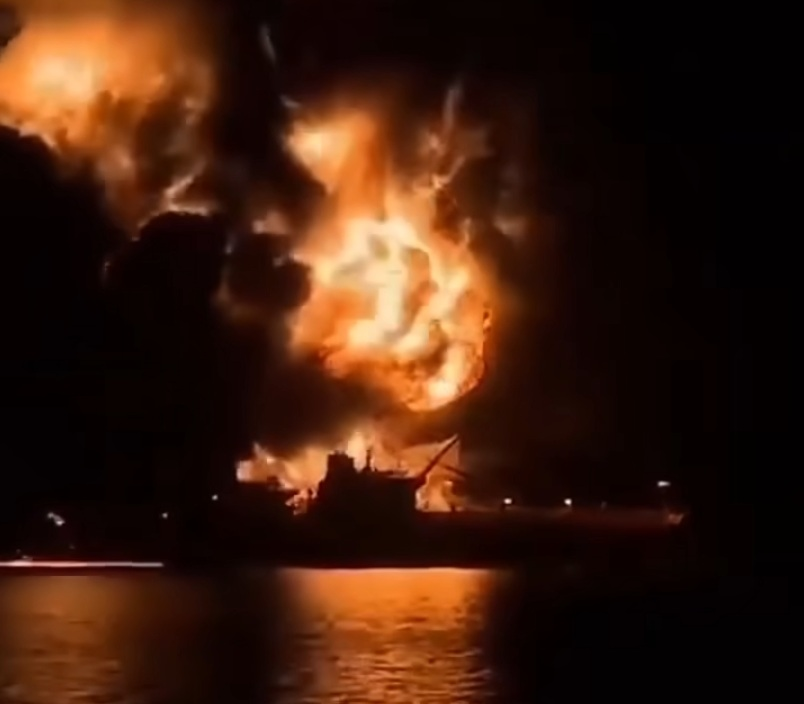
Two product tankers, MT SAFESEA VISHNU and MT ZEFYROS, were set ablaze during a ship-to-ship transfer operation in Iraqi territorial waters off Umm Qasr, in an incident that has sharpened security concerns for commercial shipping in the northern Gulf. Iraqi port officials said the vessels were hit while operating in the STS loading area, and rescue work was launched after explosions and fire spread across both ships.
Initial reports said at least one crew member was killed, while dozens of foreign seafarers were rescued from the scene. Iraqi authorities also indicated that an oil spill had been detected after the attack, although the scale of any marine pollution had not yet been fully detailed as of 12 March 2026. MT SAFESEA VISHNU was identified as Marshall Islands-flagged, while MT ZEFYROS was identified as Malta-flagged.
The incident is significant for more than the direct damage to the two tankers. STS zones off southern Iraq are a critical part of the country’s offshore export logistics, handling cargo transfers and supporting the movement of petroleum products and condensate linked to the Basra trade system. A disruption in this area can therefore affect not only vessel safety, but also port continuity and export scheduling. This is an operational context based on the location and cargo handling role of the area, not a conclusion about longer-term market impact.
The attack also came amid a broader deterioration in regional shipping security. Reuters and other reports said multiple merchant vessels were damaged across Gulf waters on the same day, underscoring the pressure now facing shipowners, operators and charterers navigating the region’s energy corridors. Iraq subsequently called for protection of maritime routes after the two tanker strikes, highlighting the wider concern over uninterrupted sea-lane access.
For the tanker sector, the latest case is a reminder that vessels engaged in cargo operations can face acute exposure when fixed in a defined operating area. In practical terms, incidents of this kind place greater weight on voyage risk assessment, terminal coordination, emergency response planning and war-risk review for ships trading to Iraq and the wider Gulf. That is a shipping-risk implication drawn from the nature of the operation and the reported attacks, rather than speculation about the final findings of the investigation.