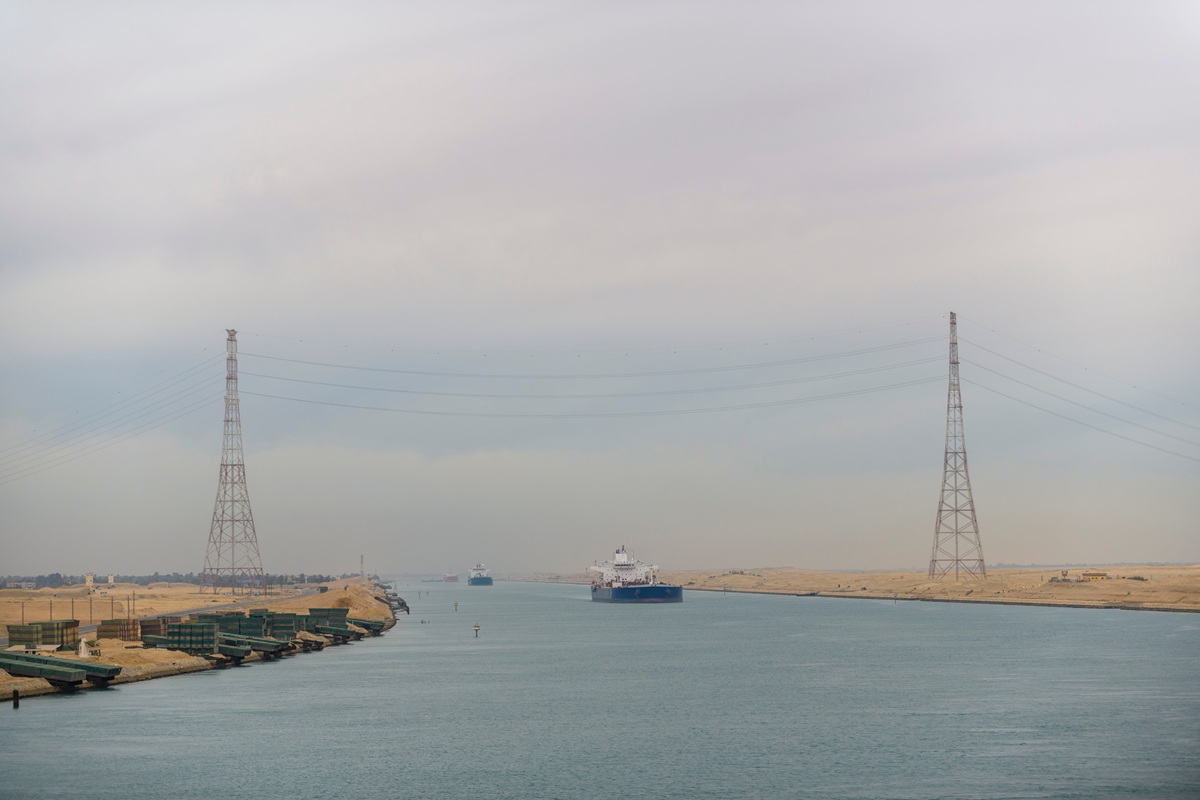
The Suez Canal Authority said traffic through the waterway is operating normally in both directions, even as some major shipping lines temporarily suspend transits due to regional security concerns. Admiral Ossama Rabiee, Chairman and Managing Director of the Suez Canal Authority, said the canal is providing navigational services around the clock without disruption.
Operational data issued by the authority showed sustained activity. On the day of the statement, 56 vessels transited the canal with a total gross tonnage of 2.6 million tonnes.
The northbound convoy comprised 24 vessels carrying a combined 1.0 million tonnes in gross tonnage. The southbound convoy included 32 vessels with a total gross tonnage of 1.6 million tonnes. Over the preceding three days, the authority recorded 100 transits with an aggregate net tonnage of 3.8 million tonnes.
Rabiee said shipping lines’ decisions to avoid the canal reflect temporary measures tied to an evolving security environment. He added that the authority remains in continuous contact with clients and shipping lines to support trade flows and supply chain stability.
He acknowledged that the regional security situation has affected freedom of navigation and expressed hope for a rapid improvement in stability, linking security developments to routing decisions taken by major carriers.
Industry analysts have described the suspensions as a risk management approach, as carriers weigh longer transit times around the Cape of Good Hope against risks associated with transiting the Red Sea and the Suez Canal corridor. The authority continues to state that the route is safe and operationally sound.
By releasing convoy and tonnage figures, the authority is seeking to counter perceptions of a shutdown and position itself to recover volumes once the security environment stabilizes. The canal remains open to all vessels that choose to transit, with pilotage and support services continuing without interruption.