A South Korean court has confirmed a rare case in which core domestic defence technology was illegally transferred overseas for use in foreign military submarine construction, convicting a former Republic of Korea Navy commander and a defence company linked to him.
According to South Korean media reports, the Changwon District Court sentenced a former Navy lieutenant commander, identified only as A, to two years and six months in prison for violating South Korea’s export control laws, including the Foreign Trade Act. A was serving as the representative of a defence-related company at the time of the offence. The court also imposed a fine of 15 billion won (roughly $11 million) and ordered the forfeiture of 95 billion won (approximately $72 million) against the company.
The ruling found that A had illegally transferred submarine design data originally developed at Daewoo Shipbuilding & Marine Engineering, now known as Hanwha Ocean, to entities in Taiwan without the required government authorisation. Two former DSME engineers who assisted in the theft were each sentenced to one year and six months in prison, while two other accomplices received suspended sentences.
Court findings show that in August 2019, A signed a $110 million contract with a Taiwanese company to manufacture and supply submarine torpedo tubes and storage compartments. In October 2019, after travelling to Taiwan, A obtained hundreds of confidential submarine-related documents from former DSME employees using the email account of his Taiwanese branch office. The materials included system descriptions, basic and detailed designs, and manufacturing drawings.
The court determined that A subsequently transferred the data to Taiwan using USB drives, CDs, and other portable storage media. Under South Korea’s export control regime, the overseas transfer of strategic or military goods requires prior approval from the Ministry of Trade, Industry and Energy or, for defence items, the Defense Acquisition Program Administration. No such approval was granted.
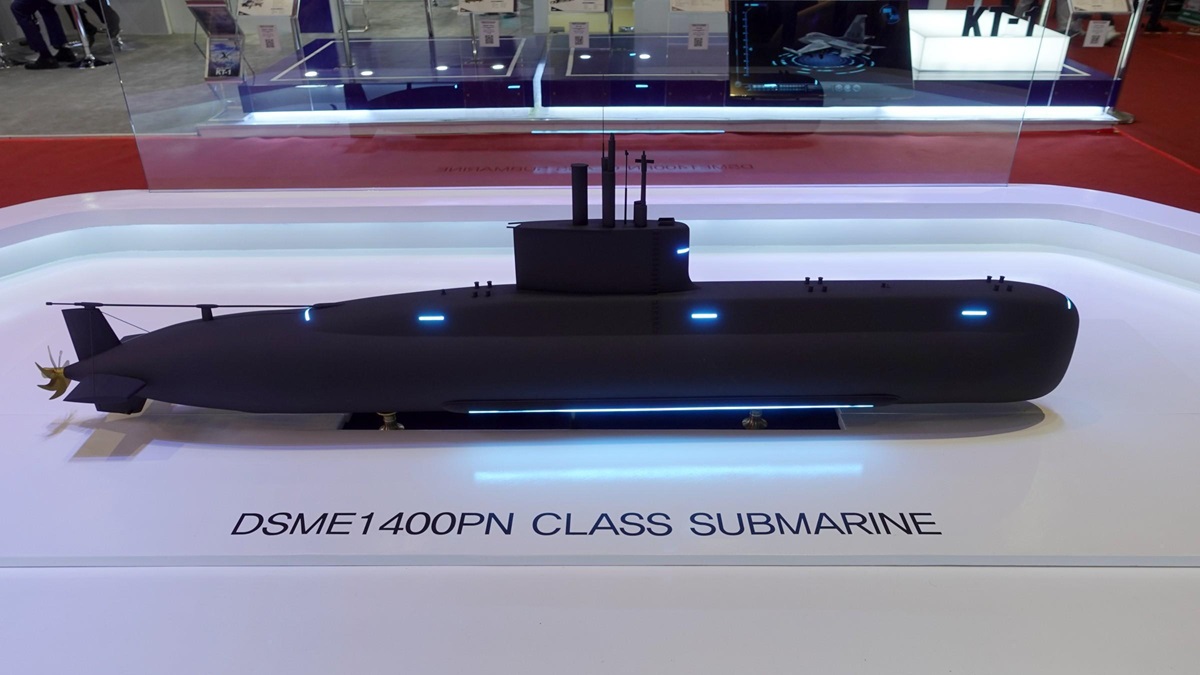
Investigators established that the leaked designs were associated with the DSME1400 submarine, a model previously exported by DSME to Indonesia under a $1.1 billion contract signed in 2011, with deliveries completed in 2019. Prosecutors argued that the unlawfully transferred technology was later applied, at least in part, to Taiwan’s domestic submarine programme.
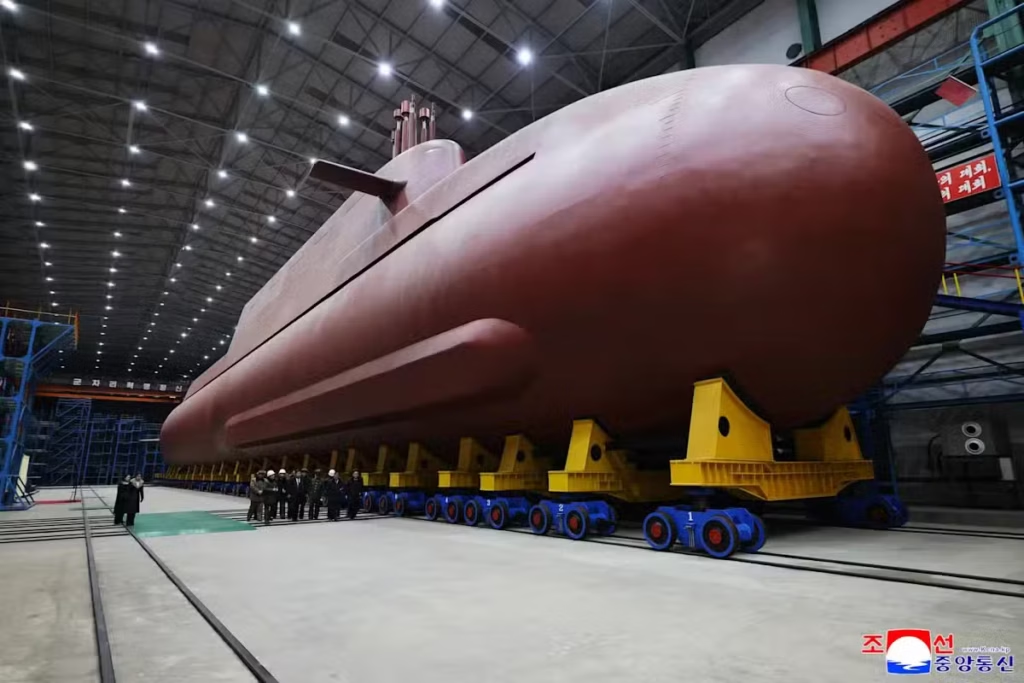
The judgment found that the transferred drawings were used in the construction process of the Haikun submarine, built by CSBC Corporation, Taiwan. The vessel was launched in September 2023 at CSBC’s Kaohsiung shipyard, following an estimated NT$50 billion construction programme, and is scheduled for delivery in 2025.
A argued in court that the drawings were derived from reverse-engineering data supplied by Taiwan, based on submarines acquired from the Netherlands in the 1980s, and therefore did not constitute South Korea’s core technology. The court rejected this defence, noting that the contract explicitly stated that intellectual property rights belonged to A’s company, and that the export licence in question covered the leaked core drawings themselves—not any alleged “refinement” work.
Both the prosecution and A have appealed the first-instance ruling, meaning the case will continue through South Korea’s appellate courts.