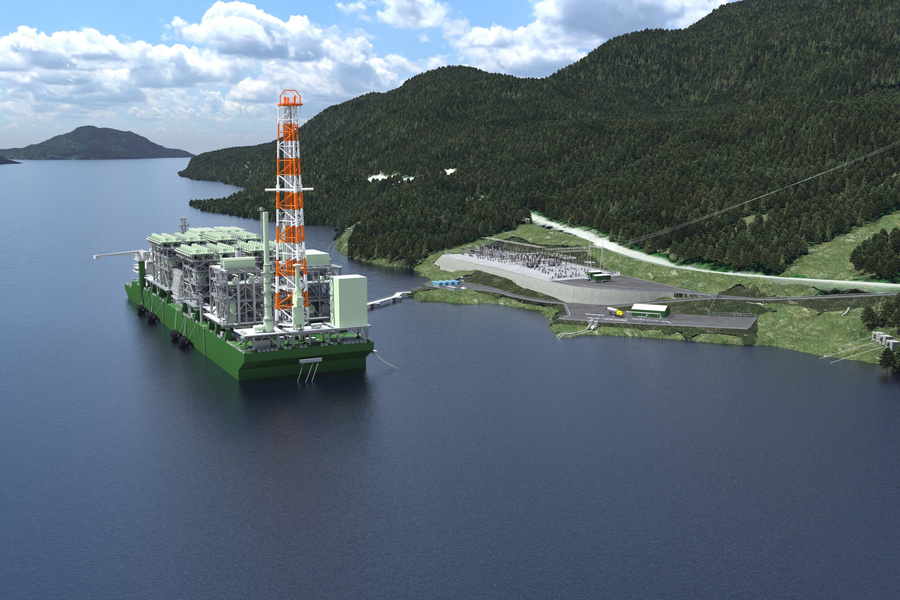
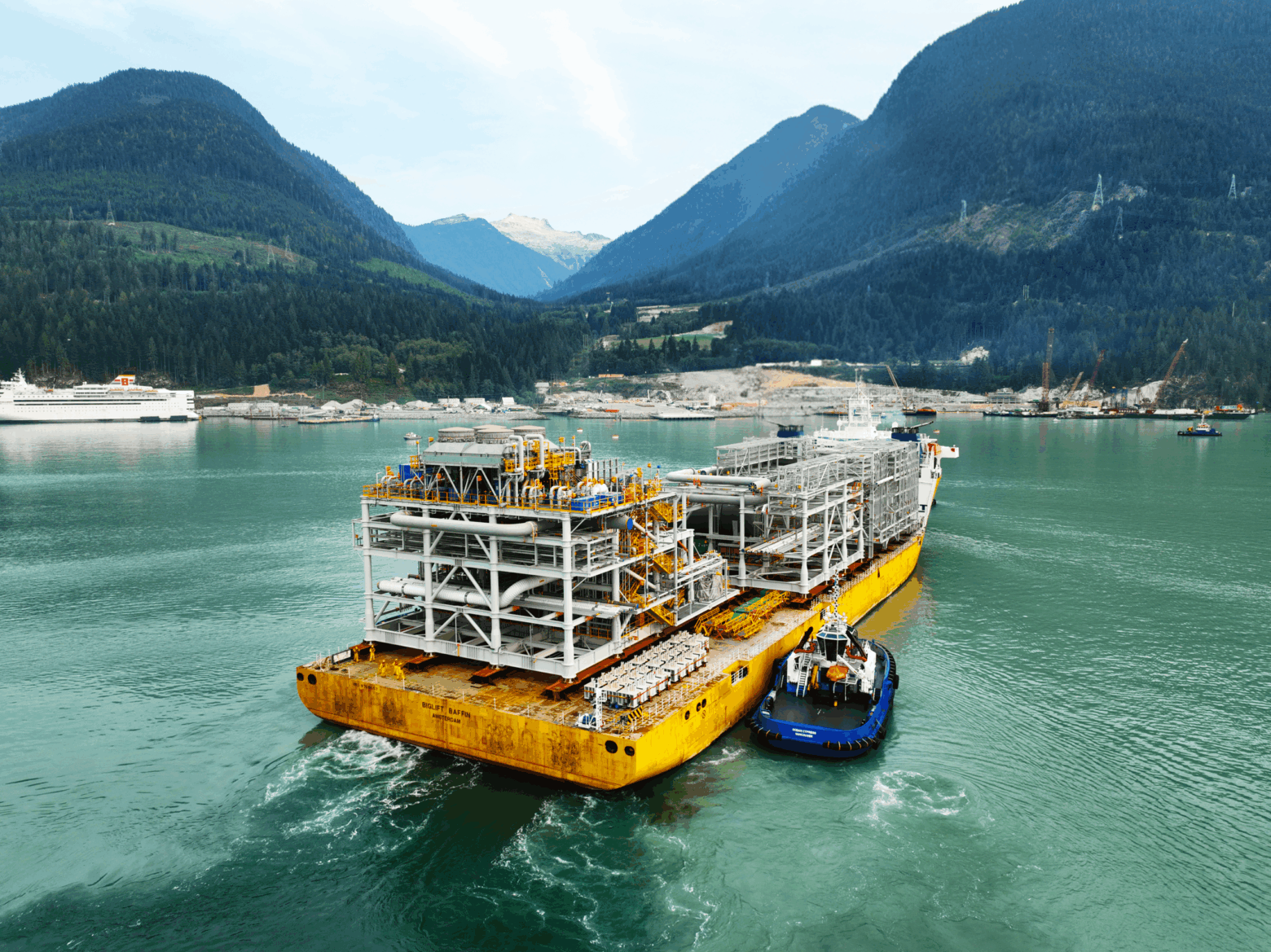
Siemens Energy has reached a major milestone in the Woodfibre LNG project in British Columbia, Canada, as one of its all-electric compression trains has been shipped aboard the latest transport vessel. According to Siemens Energy, the delivery marks “halftime” for the project — a symbolic midpoint on the path toward completing what is expected to be one of the world’s lowest-emission LNG export facilities.
The Woodfibre LNG project is designed to be powered by BC Hydro’s renewable hydroelectricity, allowing it to reduce greenhouse gas emissions by more than 80% compared to conventional LNG plants. Siemens Energy is supplying its all-electric compression technology, which replaces traditional gas-driven turbines, eliminating onsite combustion emissions from compression operations.
The project’s developer, Woodfibre LNG Limited Partnership, is jointly owned by Pacific Energy (70%) and Enbridge (30%). With a planned capacity of 2.1 million tonnes per annum (mtpa), the facility aims to export cleaner liquefied natural gas to Asian markets transitioning away from coal.
The use of renewable power and electrified LNG infrastructure highlights a significant industry trend: integrating low-carbon technologies into the natural gas supply chain to align with global net-zero goals. Siemens Energy noted that its technology offers high operational efficiency and flexibility while reducing both greenhouse gases and local air pollutants.
Woodfibre LNG has stated that the project includes robust environmental management standards and ongoing engagement with the Squamish Nation and local communities.
Once operational, the facility is expected to serve as a model for “hydroelectric LNG”, illustrating how electrification can bridge the global energy transition between fossil fuels and renewables.