Russian captain Vladimir Motin, 59, is on trial at London’s Old Bailey for gross negligence manslaughter after container ship Solong collided with the tanker Stena Immaculate in the North Sea in March 2025, resulting in the death of a crew member. He denies the charge.
Prosecutors say that Mr Motin was on sole watch on the bridge when the Portuguese-flagged Solong struck the anchored, jet-fuel-laden Stena Immaculate near the Humber Estuary, around 13 miles off the port of Hull. Crewman Mark Angelo Pernia, 38, who had been working at the bow of Solong, died in the incident and his body has not been found.
At the opening of the trial, the prosecution told the court that Mr Pernia’s death could have been completely avoided and that he would still be alive but for what they describe as the captain’s grossly negligent conduct. They argue that Mr Motin owed a clear duty of care to keep his crew safe, that the risk of death was serious and obvious, and that his failure to act amounted to gross negligence.
The court heard that Solong, which is 130 m long and 7,852 gross tonnes, left Grangemouth in Scotland at 21:05 on 9 March, bound for Rotterdam with a crew of 14. The main engine was shut down later that evening. Evidence presented to the jury indicates that restarting the engine would have taken about 30–45 minutes, followed by roughly 35 minutes to manoeuvre clear of other shipping.
According to the prosecution, the position of the stationary Stena Immaculate appeared on Solong’s radar display about 36 minutes before the collision. Despite this, and despite what was described as an obvious risk of impact, the captain is said to have maintained course and taken no effective action to prevent the crash.
At the time, Solong was loaded mainly with alcoholic spirits and was also carrying hazardous substances, including empty but unclean sodium cyanide containers.
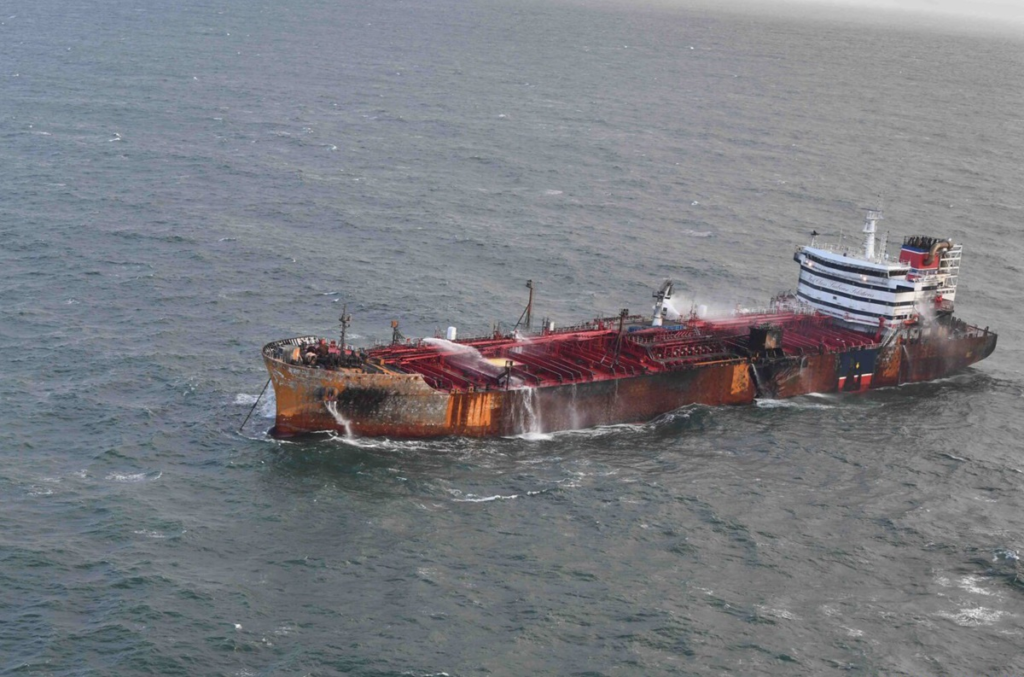
The tanker Stena Immaculate, a US-flagged vessel chartered by the US military, was anchored with about 220,000 barrels of jet fuel in 16 segregated cargo tanks. The owner, Crowley, has said the vessel was operating in line with watch requirements for an anchored ship.
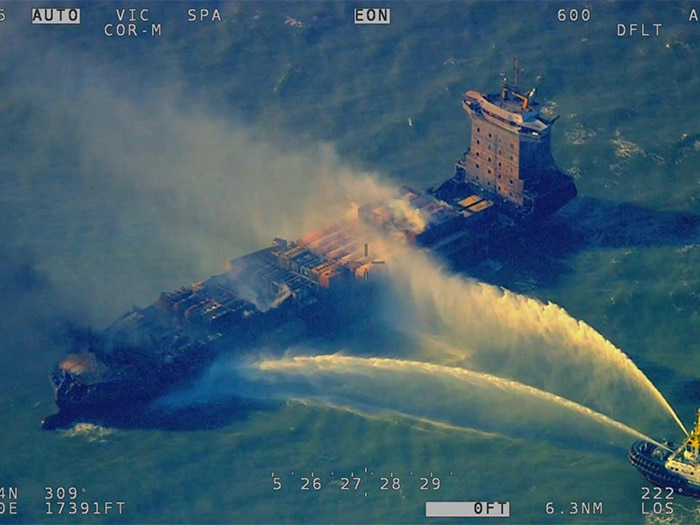
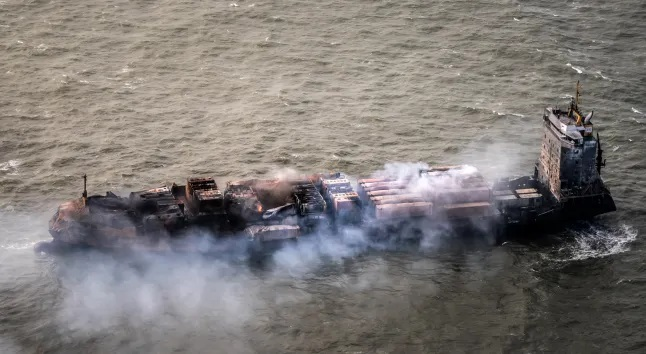
A preliminary report by the UK Marine Accident Investigation Branch found that neither Solong nor Stena Immaculate had a dedicated lookout on the bridge at the time of the collision and that visibility in the area was patchy. Investigators reported that Solong pierced one of the tanker’s cargo tanks, releasing aviation fuel into the sea and across Solong’s bow, and that the fuel caught fire due to heat generated by the force of the impact.
Both vessels were engulfed in flames and were later abandoned, prompting a large offshore rescue and firefighting operation. Fire crews took close to two days to put out visible flames. Crowley later stated that only one cargo tank had been damaged, crediting the tanker’s crew with preventing more extensive harm. The UK government has ruled out foul play in relation to the incident.
After the collision, Solong and Stena Immaculate were moved to different ports so that salvage operations and damage assessments could be carried out. German shipping company Ernst Russ, which owns Solong, and Crowley have since issued legal claims against each other.
Although a major jet fuel spill was avoided, the coastguard coordinated a clean-up after plastic pellets, or nurdles, were found in the sea and washed up on nearby beaches. The pellets came from Solong, which had been carrying 15 containers of the material. Local authorities in north-eastern Lincolnshire reported that more than 16 tonnes of these plastic pellets were removed from affected beaches. The nurdles are non-toxic plastic resin pieces but pose a risk to wildlife.
Mr Motin, from Primorsky, St Petersburg, faces one count of gross negligence manslaughter. The trial at the Old Bailey is expected to last several weeks.