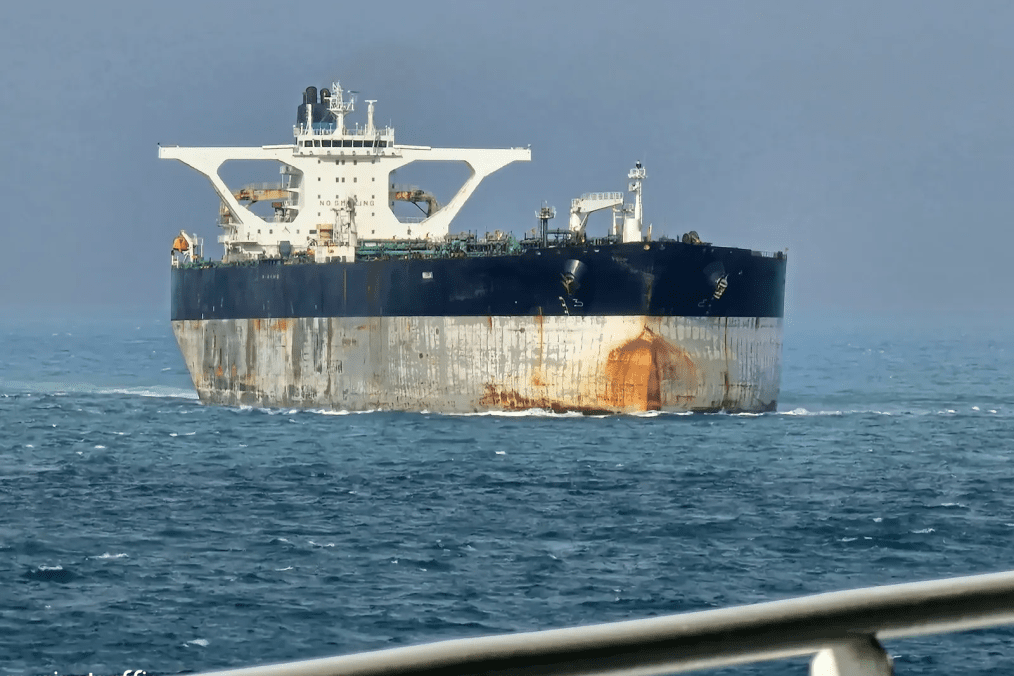
Russia has formally asked the United States to suspend its pursuit of a tanker previously sanctioned for Venezuelan oil trades after the vessel changed both its flag and registered ownership to Russia, according to U.S. media reporting.
The diplomatic démarche was delivered late on New Year’s Eve, coinciding with the tanker’s departure toward the Atlantic. The vessel, Marinera—formerly operating as Bella 1—is a 318,500-dwt crude carrier built in 2002 and classified in the very large crude carrier (VLCC) segment.
According to reporting by the New York Times, Moscow’s request points to the tanker’s updated flag and registered ownership and argues it should be treated as falling under Russian jurisdiction rather than being pursued based on its prior sanctions exposure tied to Venezuela.
The case also draws attention to how regulators and counterparties assess reflagging and ownership changes when vessels have historical links to sanctions. While administrative changes can be legitimate, they may still trigger enhanced scrutiny where transparency around trading history, beneficial ownership, and compliance controls is limited.
For the maritime and offshore transport sectors, the episode underscores persistent compliance challenges facing owners, insurers, and port authorities, particularly when vessels with legacy sanctions exposure attempt to re-enter wider trading routes under new flags and corporate structures.