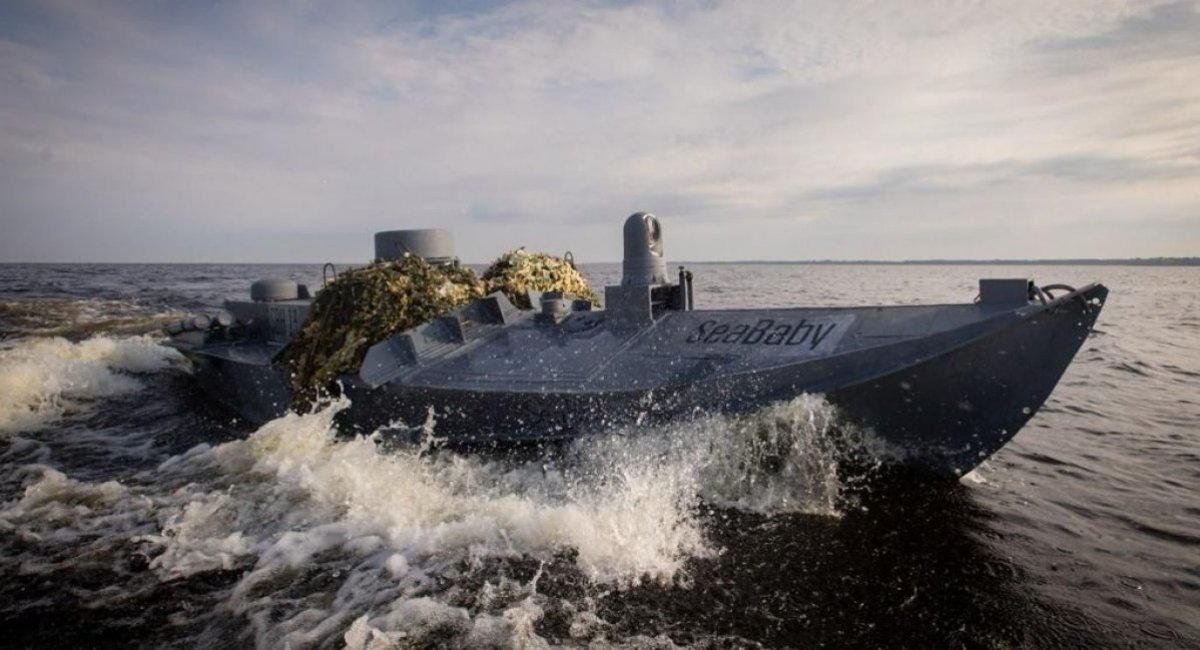
Romania’s armed forces have blown up a Sea Baby-type unmanned surface drone that was found adrift in the Black Sea, after defence authorities judged it a risk to commercial traffic.
In a statement on 3 December, Romania’s Ministry of National Defence said the craft was detected roughly 66 km (about 36 nautical miles) off the coast of Constanța. An explosive ordnance disposal team from the Romanian Naval Forces was dispatched to the area to examine the object, which the ministry described as a danger to vessels using the busy route.
After inspection, the unit determined that the device was a Sea Baby multi-purpose unmanned surface craft developed in Ukraine. The ministry confirmed the model but did not indicate which party might have operated or launched it. The drone was destroyed at around 1 p.m. local time in a controlled blast carried out in accordance with standard procedures, the ministry reported.
Officials emphasised that the unmanned craft was drifting in one of the Black Sea’s main lanes for grain, crude, and oil products. Since Russia began its large-scale attack on Ukraine in 2022, about 150 floating mines have been located and rendered safe in the Black Sea, seven of them by the Romanian Naval Forces. The ministry added that more than 12,000 merchant ships have passed along the corridor under reinforced security measures, while Romania, Bulgaria, and Turkey maintain a joint mine-countermeasures task group to deal with loose explosives in the area.
The Security Service of Ukraine (SBU) later underlined that none of its Sea Baby drones had entered Romanian waters. In comments carried by Ukrainian media, the agency said all Sea Baby units involved in Black Sea operations were fully accounted for and that its unmanned surface systems are used only against Russian targets within defined maritime zones. The SBU also stated that Ukraine acts in accordance with international law and respects the borders of partner countries.
The neutralisation of the adrift drone comes amid broader concerns about safety for ships operating in the region. A series of recent attacks on tankers linked to Russia, some claimed by Ukraine, has contributed to higher war-risk insurance costs for voyages through the Black Sea, which remains a crucial outlet for global grain and energy exports.
On the same day, Turkish Foreign Minister Hakan Fidan and NATO Secretary General Mark Rutte discussed Black Sea security, according to Turkey’s Ministry of Foreign Affairs. The three NATO members on the Black Sea – Romania, Bulgaria and Turkey – continue to coordinate mine-countermeasure missions as they respond to drifting mines, debris and unmanned systems that have complicated navigation since the start of the conflict in Ukraine.