Planet One Oil & Gas has reported the Nya Gyidie-1X discovery offshore Ghana, confirming gas and condensate in a carbonate reservoir system within the Deepwater Cape Three Points (DWCTP) Block, previously operated by ExxonMobil.
The discovery marks the first successful exploration of a carbonate reservoir system in Ghana, according to the Ghana National Petroleum Corporation (GNPC). It establishes a new geological exploration target beyond the sandstone reservoirs associated with the country’s existing commercial oil and gas fields.
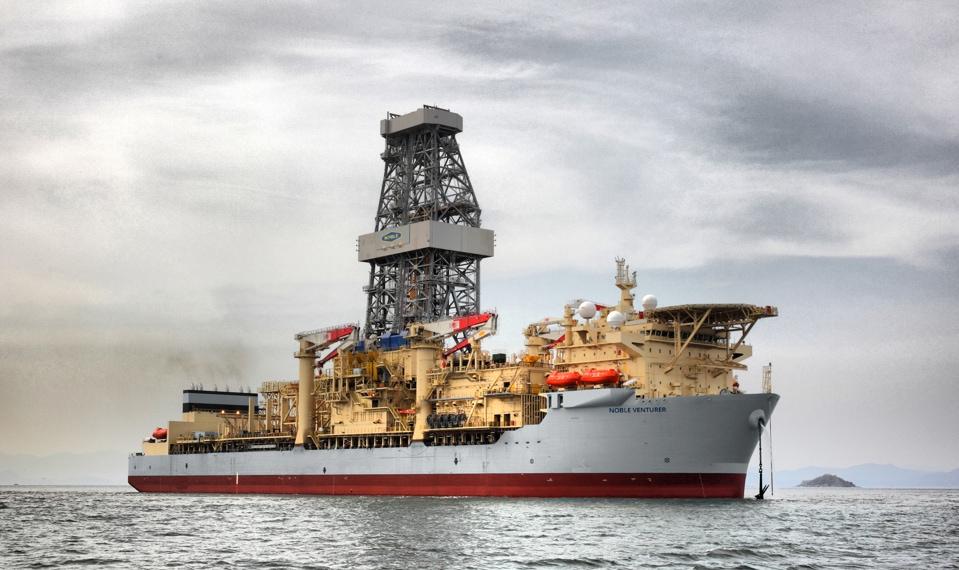
Located approximately 148 kilometres offshore in the Tano Basin, Nya Gyidie-1X was drilled in 2,289 metres of water. Hydrocarbons were encountered in carbonate formations between 3,364 and 3,499 metres measured depth along the wellbore.
The exploration programme targeted Cenomanian-Turonian carbonate formations, with the Albian formation included as a secondary objective.
The discovery follows renewed exploration activity in a block previously operated by ExxonMobil, which withdrew from the petroleum agreement in 2021.
Following the withdrawal, GOIL Upstream was assigned the 80% participating interest previously held by ExxonMobil and was tasked with securing a new exploration partner.
Under a subsequent Farm-out and Joint Operating Agreement, GOIL agreed to transfer a 75% participating interest to Planet One Oil & Gas, subject to the required GNPC consent and government approval.
Planet One Oil & Gas now operates the approximately 1,454-square-kilometre DWCTP Block in partnership with GOIL Upstream and GNPC.
Ghanaian President John Dramani Mahama announced the discovery on 10 November 2026 during the Local Content Conference and Exhibition in Takoradi.
Although the well has confirmed hydrocarbons in a new reservoir type for Ghana, the discovery remains at the exploration stage. No recoverable resource estimate or commercial development plan has been established.
GNPC said further technical evaluation and appraisal are required to determine the accumulation’s size, reservoir characteristics and commercial potential before future exploration or development decisions can be made.